D. Vaughn Becker

Department of Applied Psychology

Arizona State University at the Polytechnic Campus

Me


What I Do

Where to find me

Research Interests


Publications


Personal Interests


Demonstration Experiments


Sample Picture


The Polytechnic Campus, 40 million BC


What I Do

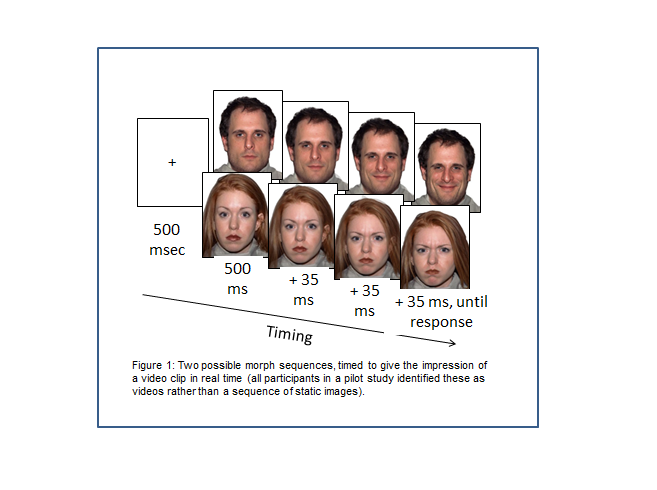
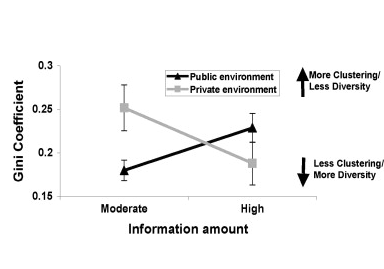
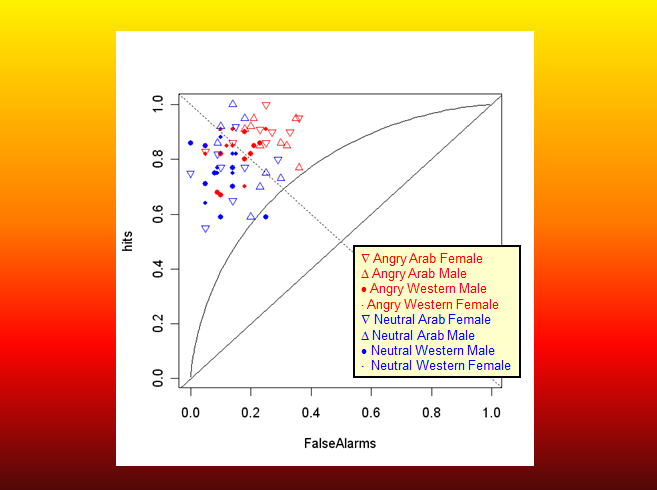
I am a cognitive and social psychologist, strongly influenced by evolutionary theory and complexity science. I’m currently researching signal detection in fundamental social domains, particularly with regard to expression perception (this is part of a larger attempt to flesh out a functionalist psychophysics). In a related vein I am interested in using these tools as assessment methods that identify important task-specific individual differences--for example, assessing a person’s bias to see outgroup members as threatening, and determining whether emotionally evocative situations give rise to such biases. I also have an abiding interest in how the dynamics and self-organization of complex social systems might be influenced by ecological and evolutionary factors, particularly with regard to social traps, mating-related behaviors, and the dynamics of popular culture.  Lastly, I am interested in the role that computers can play in allowing us to visualize complex dynamics, how these visualizations can best assist observers to engage in appropriate regulatory behaviors, and more generally how these displays can augment cognitive capabilities.

Where to find me

My office is in the Applied Psychology Unit, third floor of the Sutton building on the Polytechnic campus, room 340G.

I’m in class teaching “Intro Psych” from 9:00 to 10:15 am on Monday and Wednesday, and Intermediate Statistics (PSY 530), though the location and time are on a need to know basis only.   My office hours are 10:30-11:45 MW and by appointment.

On the Tempe campus, I also run subjects in 331 on Wednesday afternoons.

My Office phone number is 480.727.1151, but e-mail is better, vaughn.becker@asu.edu
Research Interests

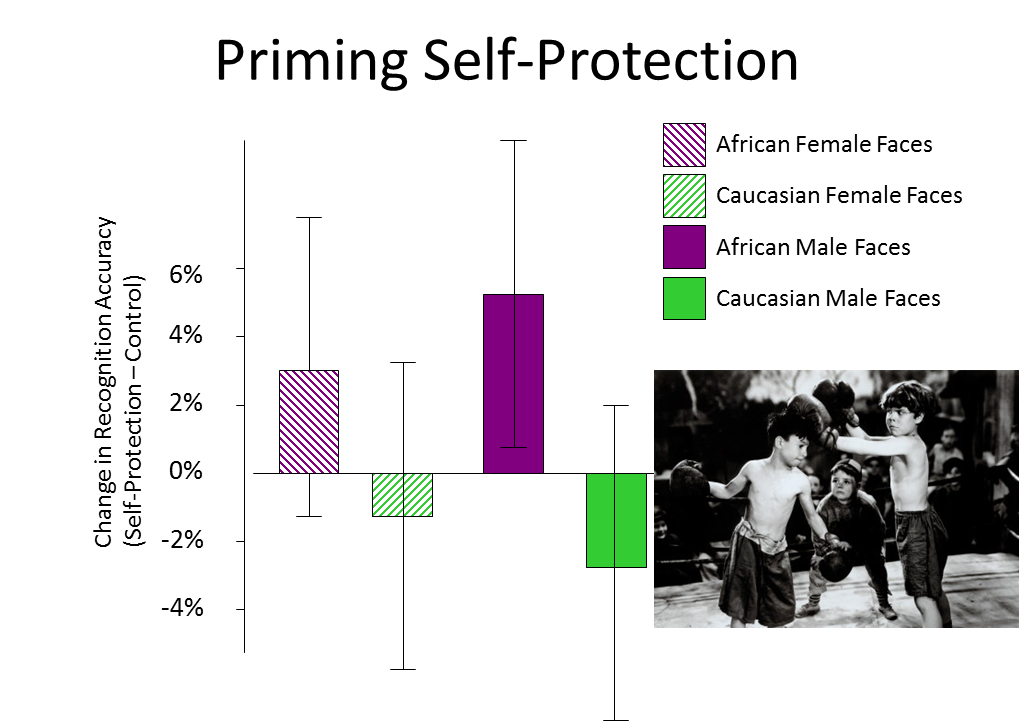
I am a cognitive psychologist interested in developing a psychophysics of human expression perception, and in developing methods to identify biases in such perception. My background has enabled me to become familiar with a wide variety of experimental methods for examining perception and memory with this end in mind. The application of this work will facilitate selecting the right individuals for jobs in which unbiased accuracy and rapid decision-making is essential, for example, in military security or air traffic control. I have an abiding interest in evolutionary psychology, which gives me a valuable perspective on such matters because situations of high arousal and potential threat bring out the more stone-age aspects of the mind. I also have a strong background in social psychology, which has sensitized me to more proximate sources of bias, like stereotypes, self-presentation, and attribution errors. Finally, I have been profoundly influenced by James Gibson’s Ecological approach to perception, which sees perception as having evolved directly coupled to action, a critical thing to be aware of when studying or modeling human performance. My immediate goal is to continue to research how fundamental motivational states—like self-protection, coalition building, and status striving—affect our decisions about the expressions and the intentions of others, and our perception and memory of the environment. I further desire to develop agent based models and dynamical simulations of these scenarios to explore then in ways that cannot easily be instantiated in the laboratory.


Selected Publications
Becker, D.V., Kenrick, D.T., Neuberg, S.L., Blackwell, K.C., & Smith, D. (2007). The confounded nature of angry men and happy women. Journal of Personality and Social Psychology.

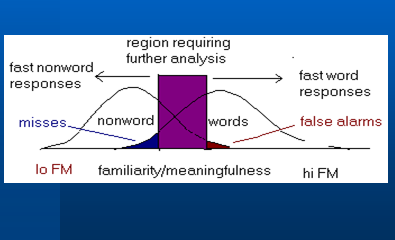
Becker, D.V., Stone G. O., & Goldinger, S. (2006). Perception and recognition memory of words and werds: Two-way mirror effects. Memory and Cognition.

Kenrick, D.T., Delton, A.W., Robertson, T., Becker, D.V. & Neuberg, S.L. (2006). How the mind warps: Processing disjunctions may elucidate ultimate functions. In J. P. Forgas, W. VonHippel, & M. Haselton (Eds.). The Evolution of the Social Mind: Evolution and Social Cognition. New York: Psychology Press.

Ackerman, J.M., Shapiro, J.R., Neuberg, S.L., Kenrick, D.K., Becker, D.V., Griskevicius, V., Maner, J.K., and Schaller, M. (2006). They All Look the Same to Me (Unless They’re Angry): From Out-Group Homogeneity to Out-Group Heterogeneity. Psychological Science, 17, 836-840.

Becker, D.V., Kenrick, D.T., Guerin, S., & Maner, J.M. (2005). Concentrating on beauty: Sexual selection and sociospatial memory. Personality and Social Psychology Bulletin, 12, 1643-1652.

Maner, J. K., Kenrick, D. T., Becker, D. V., Robertson, T., Hofer, B., Delton, A., Neuberg, S. L., Butner, J., & Schaller, M. (2005). Functional projection: How fundamental social motives can bias interpersonal perception. Journal of Personality and Social Psychology, 88, 63-78.

Becker, D.V., Sagarin, B. J., Nicastle, L.D., Millevoi, A., & Guadagno, R.E. (2004). When the sexes need not differ: emotional reactions to hypothetical infidelities. Personal Relationships, 11, 529-538.

Maner, J. K., Kenrick, D. T., Becker, D. V., Delton, A. W., Hofer, B., Wilbur, C. J., & Neuberg, S. L. (2003). Sexually selective cognition: Beauty captures the mind of the beholder. Journal of Personality and Social Psychology, 6, 1107-1120.

Sagarin, B. J., Becker, D.V., Guadagno, R,E. Nicastle, L.D. & Millevoi, A. (2003). Sex differences (and similarities) in jealousy: the moderating influence of infidelity experience and sexual orientation of the infidelity. Evolution and Human Behavior, 24, 17-23.

Kenrick, D.T., Becker, D.V., Butner, J., Li, N.P., & Maner, J.K. (2003). Evolutionary Cognitive Science: Adding What and Why to How the Mind Works. In J. Fitness & K. Sterelney (Eds.). From Mating to Mentality. Sydney: MacQuarie University Press.

Kenrick, D. T., Maner, J.K., Butner, J., Li, N.P., Becker, D.V. & Schaller, M. (2002). Dynamic Evolutionary Psychology: Mapping the domains of the new interactionist paradigm. Personality and Social Psychology Review, 6, 347-356.


Personal Interests

My partner KC and I have a beautiful child, Henry. Here he is expressing his Buddha Nature, and with his equally angelic older sister Audrey:


I (rather infrequently now) practice Shotokan Karate, ride mountain bikes and engage in other fitness endeavors that lead to colorful bruises and extreme rhinoplasty. I also play guitar, which periodically leads to a public performance spectacle. I like the Velvet Underground, Guided By Voices, Broken Social Scene, the Minutemen and Television (the band, not the life-sucking culture vortex). My favorite color is purple, with gold trim.


Back to top

Online Experiments    Note that these are for my students and may require additional plug-ins or information.

Working Memory Measure (Prototype)

The concentration game:

http://www.public.asu.edu/~loids/concentration1.htm

Next,another example of our memory game:

http://www.public.asu.edu/~loids/concguide.htm

A rather emotional memory game:

Emotional men

 A feature detection experiment:

http://www.public.asu.edu/~loids/Lab/featureDoc.html

Our waist to hip ratio experiment (the orthogonal condition of a Garner interference task):

http://www.public.asu.edu/~loids/gern.htm


Last Revised: 6-25-07