Scientific: Afrocarpus macrophyllus (Synonym: Podocarpus macrophyllus)
Common: yew pine, Buddhist Pine
Family: Podocarpaceae (a gymnosperm)
Origin: Central China and southern Japan
Pronounciation: A-fro-CAR-pus ma-crow-FIL-lus
Hardiness zones
Sunset 4-9, 12-24
USDA 7 -11
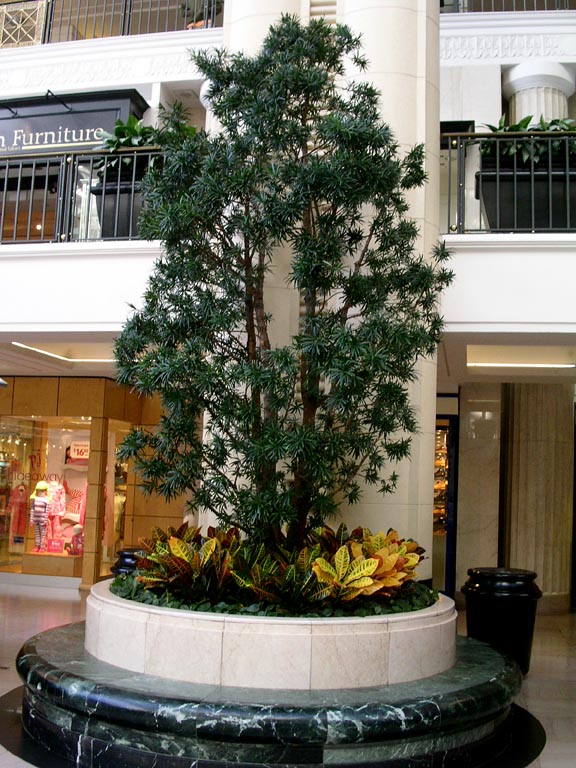
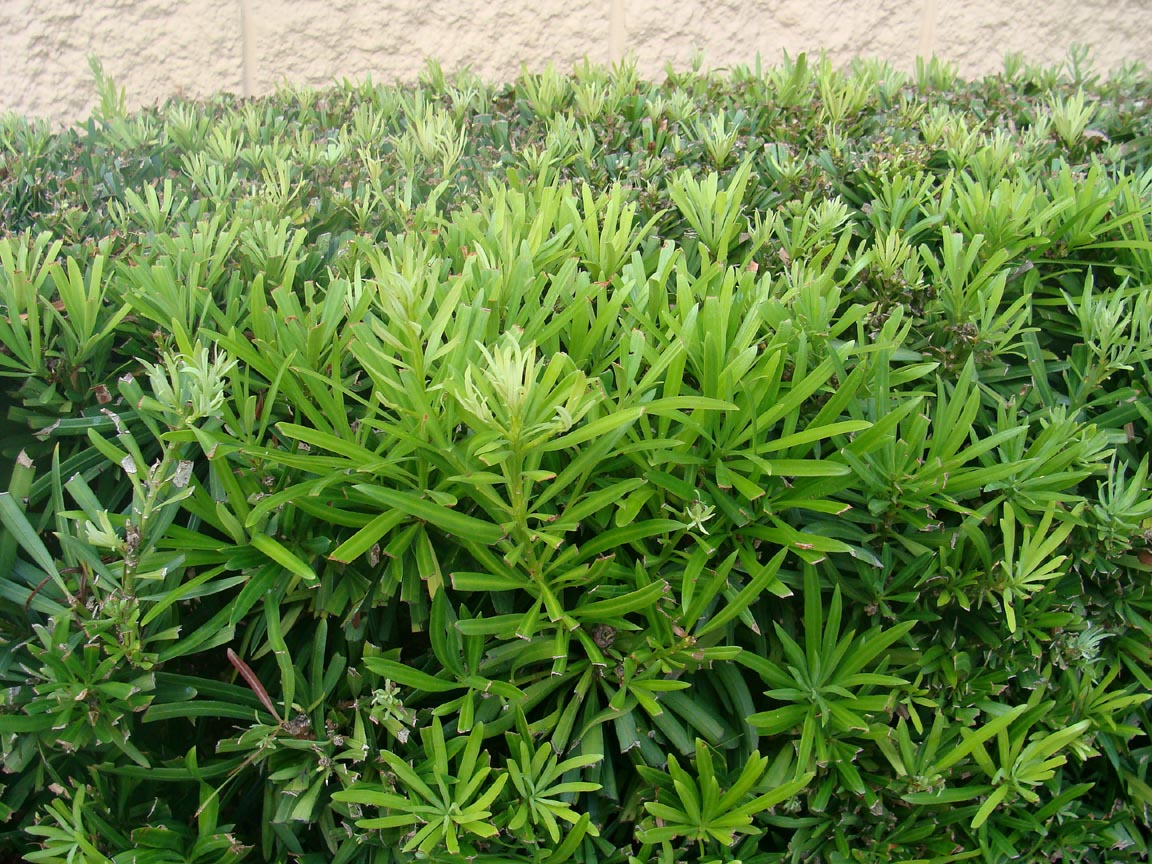
Landscape Use: Medium to large background/screening plant, informal to formal hedges, northern exposures, softens tall stark building faces, container plant, atriums (here's one in the City Tower atrium of Cleveland, Ohio), and mesic landscape designs.
Form & Character: Upright, upright, stiff, columnar, formal, yew like.
Growth Habit: Evergreen, woody, perennial large shrub to small tree, moderate to fast growth rate, 15- to 50-feet tall with ultimate 10-feet spread, though mostly more columnar.
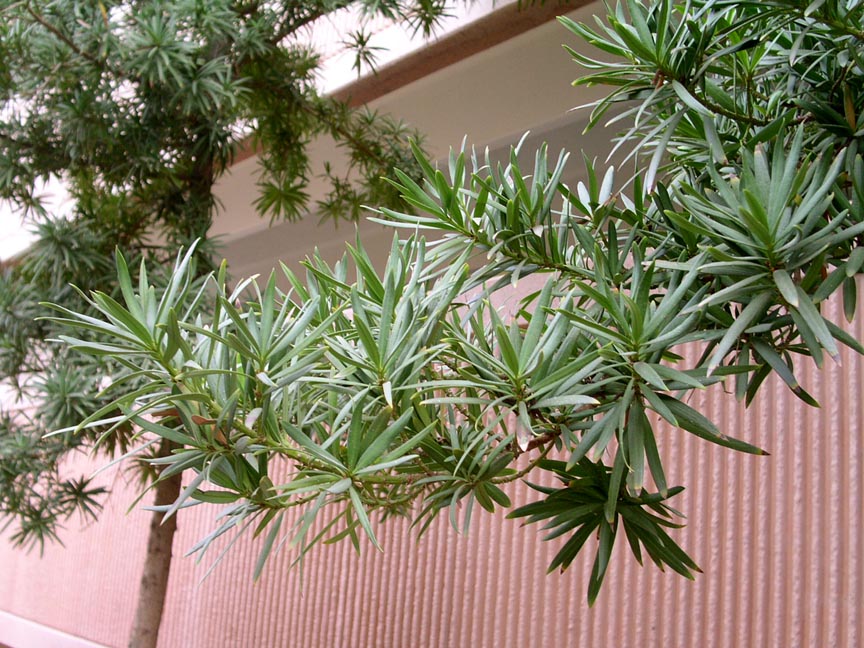
Foliage/Texture: Narrow, lanceolate to linear leaves, 3- to 6-inches long, dull green on dull green angular stems, new foliage bright green; medium texture.
Flowers & Fruits: Flowers are inconspicuous. The flowers are dioecious (individual flowers are either male or female, but only one sex is to be found on any one plant so both male and female plants must be grown if seed is required). Fruits, lack a basal, fleshy receptacle, one or two together at the end of short, leafy branchlets are small, berry like, single seeded, green changing to yellow.
Seasonal Color: None
Temperature: Heat sensitive, especially when young. Plant on east or north sides of buildings for heat protection.
Light: Partial to full shade in Phoenix is required for survival. No reflected sunlight or western exposures. Eastern and northern building exposures are best.
Soil: Tolerant
Watering: Regular, not drought tolerant in Phoenix.
Pruning: Head back, top to control height growth if warranted.
Propagation: Seed or cutting. Seed propagated trees are upright, cutting propagated trees need ample staking when young to establish upright posture. The seed can be sown at any time of the year in a sandy soil in a warm greenhouse, though it is probably best sown as soon as it is ripe.
Disease and Pests: Spider mites
Additional comments: Yew pine is a nice, clean, large and upright shrub to small tree for those larger shaded locations (primarily by large buildings or structures) in Phoenix. Plant yew pine in appropriate locations, and don't underestimate the eventual height of this upright plant. Yew pine is more coarse textured in appearance than its close cousin fern pine (Afrocarpus gracilior). All species of Afrocarpus are native to Africa.
Biomedicinal uses: Yew pine is a plant that has many biomedicinal uses. The stem bark of yew pine is used in the treatment of worms (especially ringworm) and blood disorders. A decoction of the fruit is tonic for the heart, kidneys, lungs and stomach.