Scientific: Agave parrasana
Common: Cabbage head agave
Family: Asparagaceae (subfamily Agavoideae)
Origin: Chaparral shrub and pine-oak forests on limestone
in a few mountains in southeastern Coahuila, Mexico from 4,500 to 8,000 feet elevation.
Hardiness zones
Sunset 11-13, 18-24
USDA 8-11 (semi-arid to arid zones only)
Pronounciation: A-GA-ve par-ra-SAN-a
Landscape Use: Coarse accent for succulent and rock gardens, desert gardens, native landscape planting themes, great as a container plant, patio or mixed accent gardens.
Form & Character: Elegant, short, stout, stiff, yet well armed and dangerous.
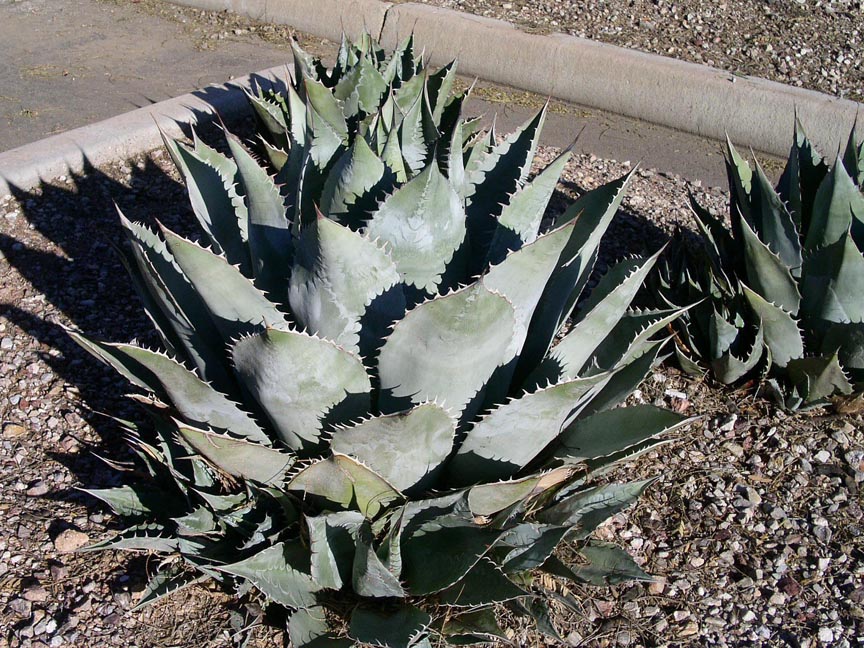
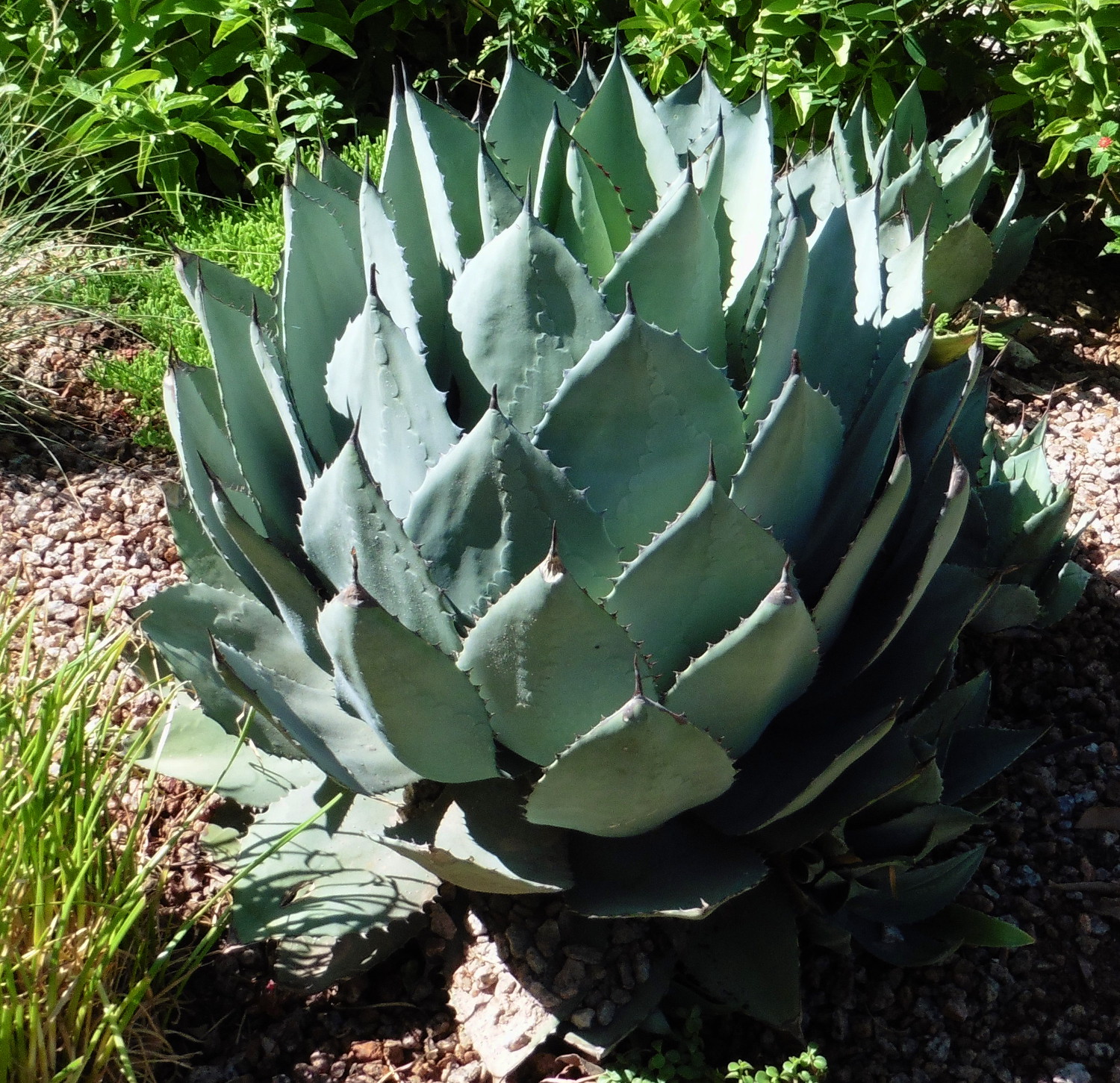
Growth Habit: Evergreen, rosetting succulent perennial agave, monocarpic, slow growing to 2- to 3-feet tall with equal spread, rarely produces basal offsets.
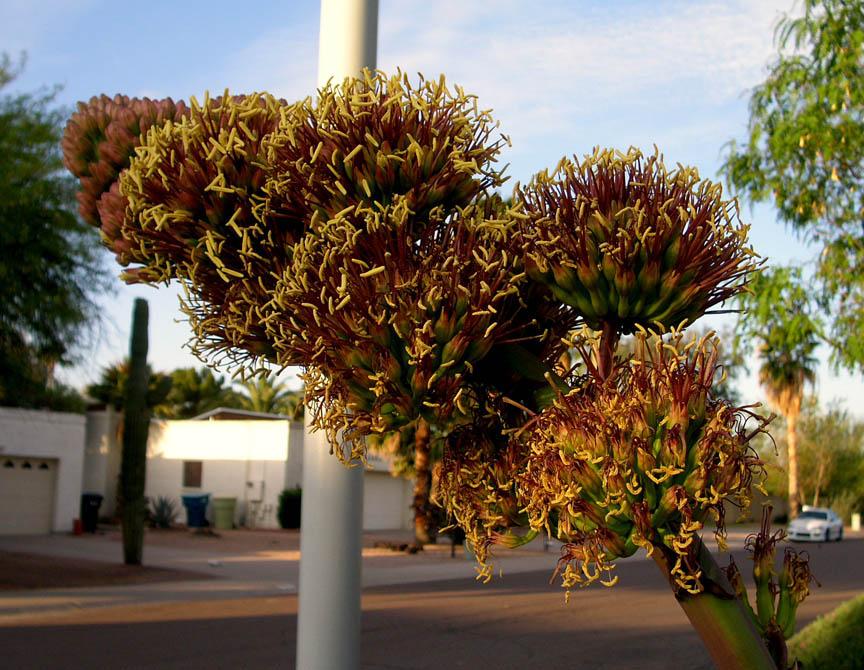
Foliage/Texture: Foliage is typically strap shaped, waxy blue-gray, relatively short and broad, 8 to 12 inches in length and nearly 6 inches in width when mature. Leaves a marginally armed with spines that are largest near the leaf tip and get progressively shorter towards the leaf base. Overall, has aa very coarse texture. Flowers & Fruits: Eventually produces a single 15- to 20-feet panicled (short branching) flower stalk, flowers have distinctly long reddish purple filaments and yellow anthers.
Seasonal Color: None
Temperature: Hardy to 15oF, otherwise very heat tolerant.
Light: Full sun
Soil: Avoid poorly drained soils, needs good drainage.
Watering: Irrigate once every 2 to 3 weeks during summer.
Pruning: It may be advisable to clip foliar tip spines if located in areas of frequent human traffic.
Propagation: Seed, generally difficult to propagate asexually because it produces so few basal offshoots.
Disease and Pests: Agave snout weevil (Scyphophorus acupunctatus), treat preventatively with registered pesticide during the spring or fall. The agave snout weevil can lay eggs between the densely compacted basal portion of the leaf rosettes of this agave. Grubs eat the agave interior leaf and stem tissues. Wounded tissues become infected with decay bacteria that ultimately can kill the plant. Agave are also prone to Phytophthora fungus under damp and poorly drained soil conditions mostly during the summer months.
Additional comments: Overall, cabbage head agave is a wonderful, smallish agave with a striking bold presence - sort of a 'roided out' version of a smallish Agave parryi. Its size makes it a great agave for small, tough spaces.