Scientific: Agave weberi
Common: Weber agave, maguey liso
Family: Asparagaceae (subfamily Agavoideae)
Origin: The original native range of Agave weberi has been damaged by human activity. It is believed to have originated in northeastern Mexico (San Luis Potosi, Tamaulipas), but is now naturalized in Texas and Florida in the United States and in the Northern Provinces in South Africa.
Pronounciation: A-GA-ve WEB-er-eye
Hardiness zones
Sunset 12-24
USDA 9-11
Landscape Use: Strong accent or focal point for large desert gardens and xeric landscape design themes.
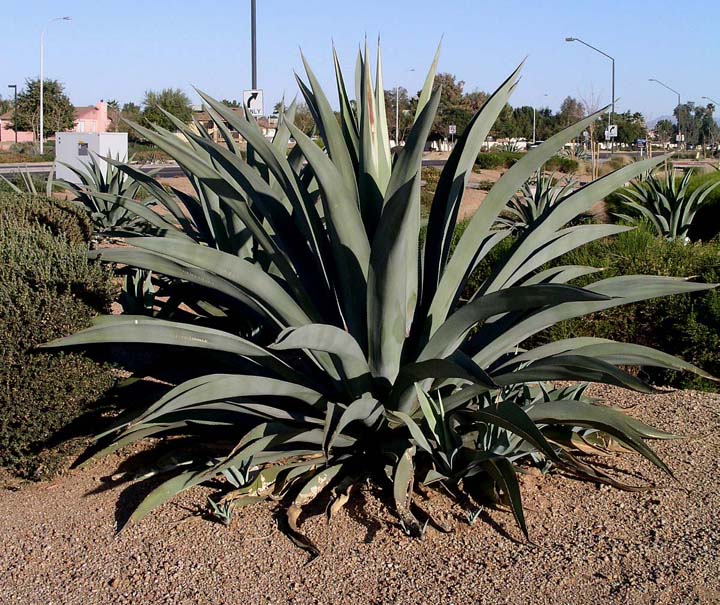
Form & Character: Imposing and large, actually huge! Fecund (so many basal offshoots), tropical.
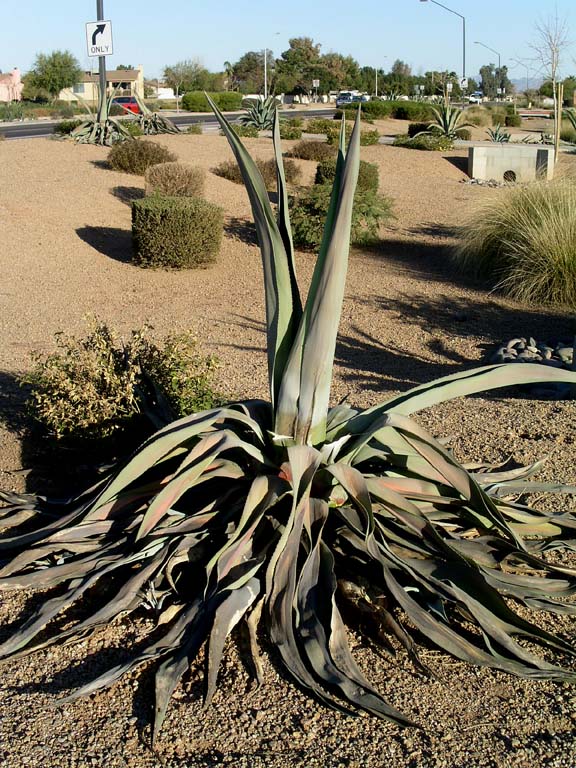
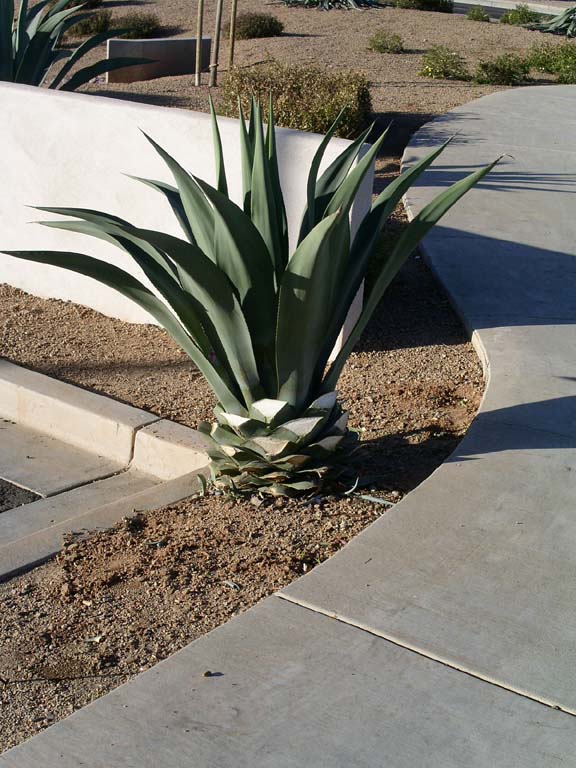
Growth Habit: Evergreen, succulent to fibrous herbaceous perennial, moderately fast growth rate to 6 to 8 feet in height, broad rosetting habit with multiple basal offshoots (called 'ramets' or 'chupones'), monocarpic (individual rosettes die after flowering).
Foliage/Texture: Large, succulent gray green leaves, sometimes curved or reflexed with a finely serrate margin. Leaves taper to a sharp point; very coarse texture.
Flowers & Fruits: Produces a striking 20-feet tall branched scape with multiple clusters of yellow flowers after which the flowering plant dies, occasionally produces bulbils instead of flowers.
Seasonal Color: None except when flowering.
Temperature: Subject to freeze
injury if temperatures fall much below 27oF.
Light: Full sun, though some protection of intense western sun is best.
Soil: Sandy, some loam, well-drained best.
Watering: Some supplemental water only occasionally during the summer.
Supplemental water increases growth rate.
Pruning: None, although some might consider tip pruning the spiny leaf apexes.
Propagation: Division of basal offshoots.
Disease and Pests: Agave snout weevil (Scyphophorus acupunctatus) will attack several agave species including the Weber agave in the low desert of Arizona. The agave weevil will cause weber agave to die and rot. The stench from the rotting cortex is overwhelming.
Additional comments: The Weber agave is a very handsome LARGE agave for large
desert gardens only. It's a good substitute for the more dangerous Agave americana.
Big plant alert: Please avoid planting Weber agave in small spaces as it will quickly become too large.