Scientific: Bambusa species
Common: bamboo
Family: Poaceae (a monocot grass)
Origin: Native to a diverse range of moist and semi-moist climates in equatorial regions around the world ranging from hot tropical lowlands to cool mountainous regions and highland cloud forests.
Pronounciation: Bam-BOO-sa SPEE-sheez
Hardiness zones
Sunset 6-9, 12-24
USDA 8-11
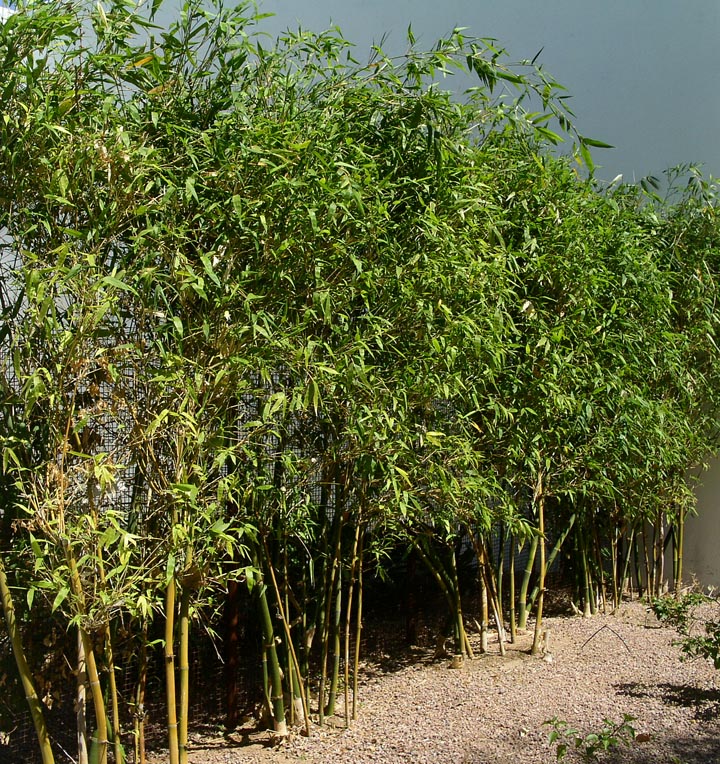
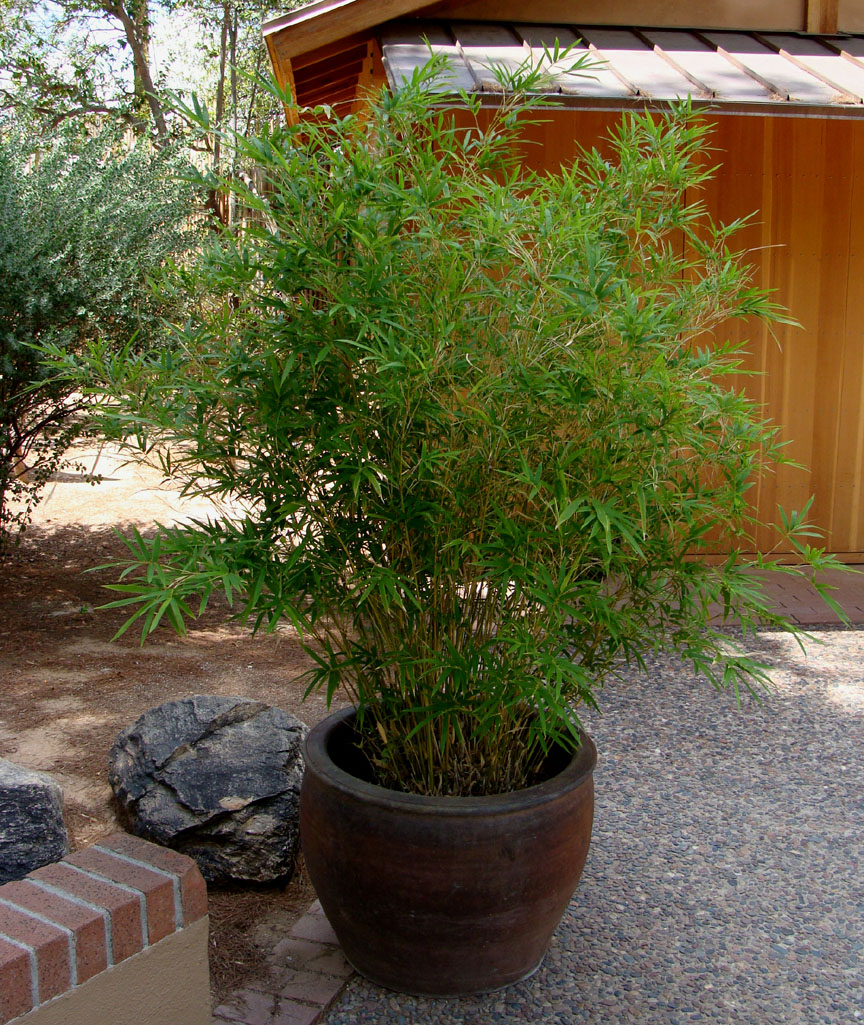
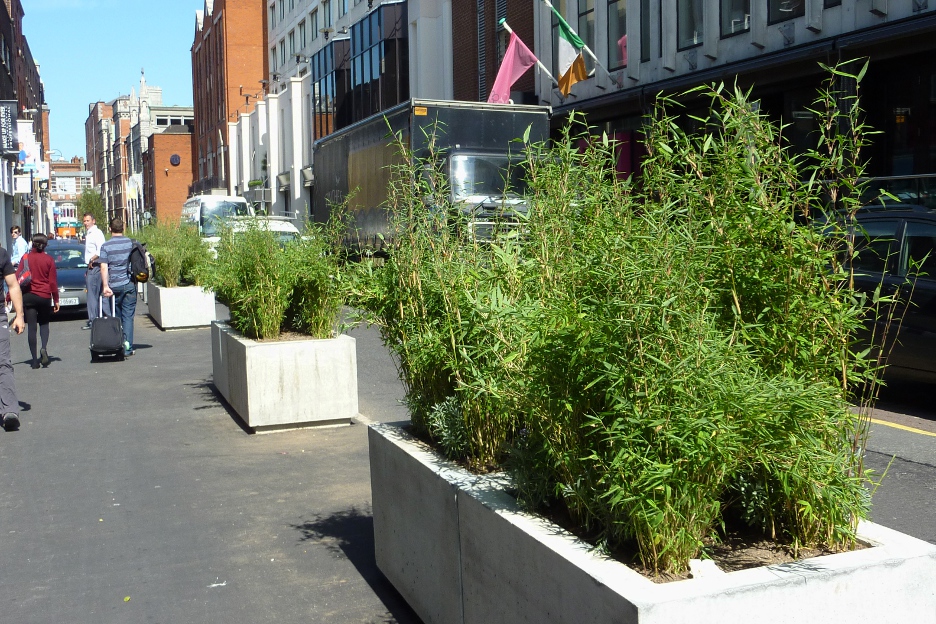
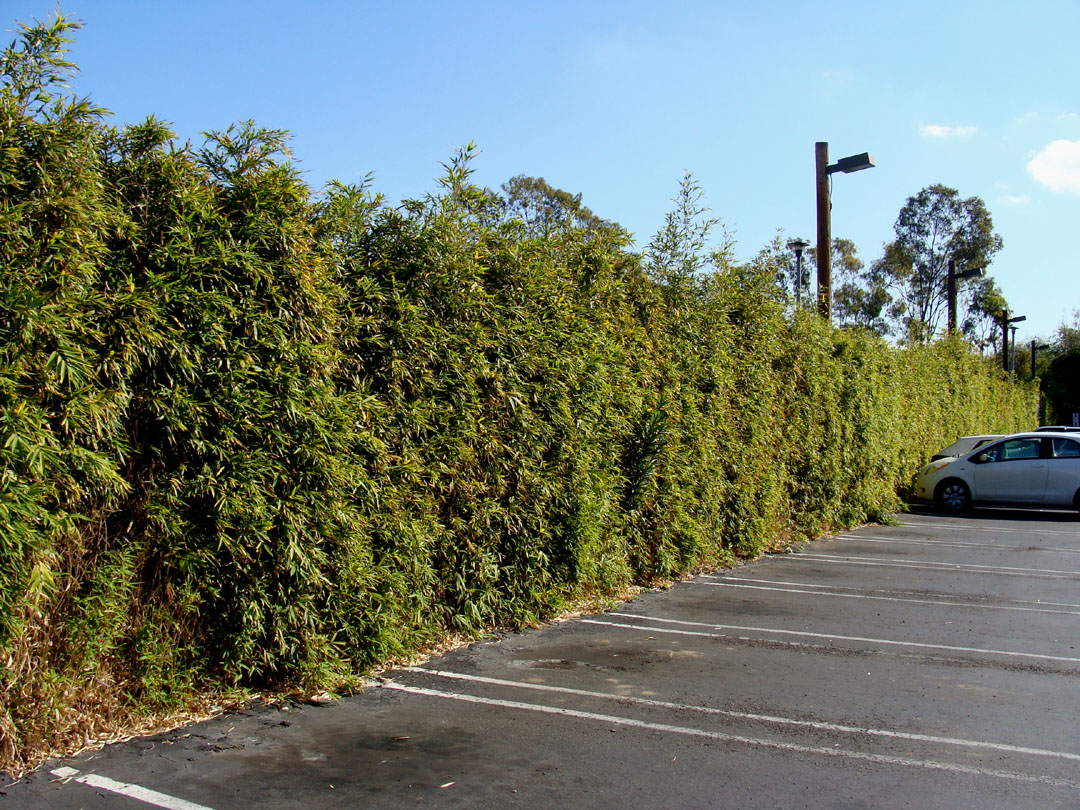
Landscape Use: Restricted planter beds, container plants, raised planter beds, mesic landscape designs, water gardens, background, wall screen, ground cover, foliar accent
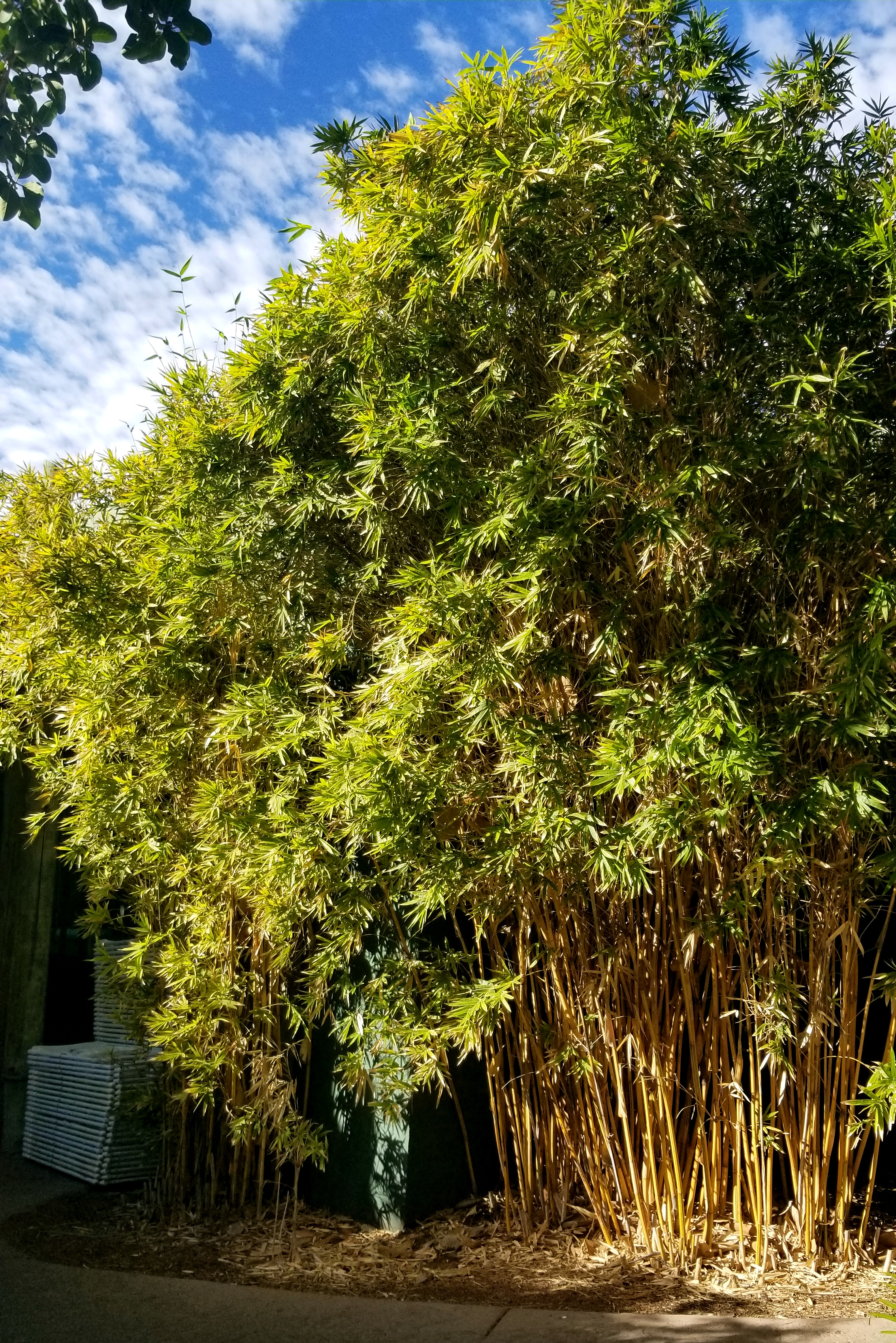
Form & Character: Upright, erect and rigid, spikey, uplifting, dense, oriental, tropical.
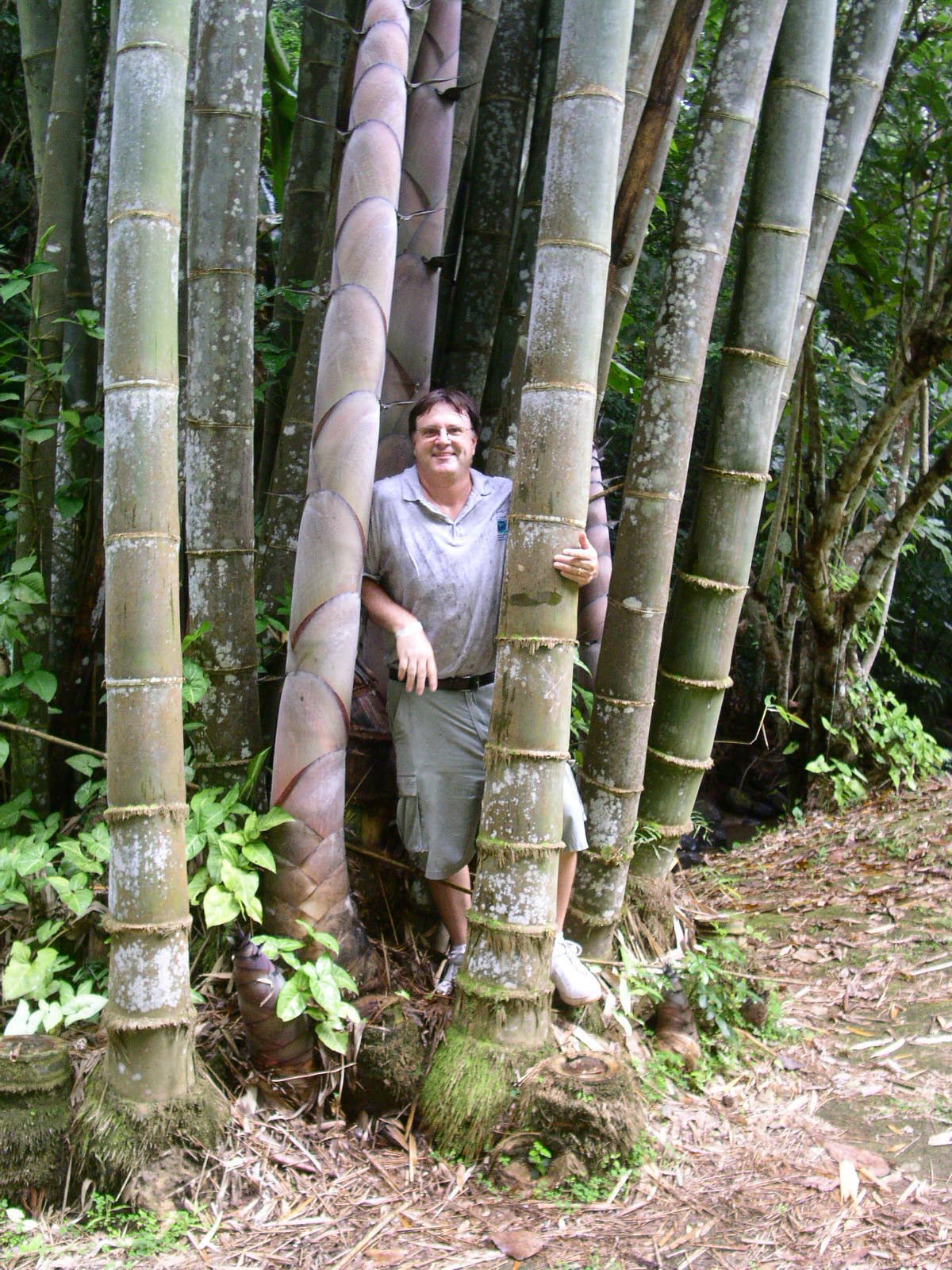
Growth Habit: Evergreen, monocot, technically a perennial clumping grass plant. Its growth is highly variable depending on species and cultivar. Bambusa species grow culms, whch are fully preformed stems that emerge from the ground and give rise to clumps or spread via underground rhizomes. Different species of bamboo have growth habits that range from being arborescent (tree-like) to shrubby to woody climbers.
Foliage/Texture: Lanceolate leaves, sessile, sheathed on green stems that sometimes bear spines, variable in shape and size but taper to a somewhat pointed tip, can be variegated or multi-colored; texture can range from fine to coarse.
Flowers & Fruits: Bamboo flowers are thought to be botanically primative with indeterminate inflorescencescalled "pseudospikelets". Both flowers and fruit are inconspicuous in Phoenix landscapes.
Seasonal Color: None
Temperature: Bamboo is desert heat sensitive (air temperatures above 105oF), especially when young. In Phoenix, plant on the north and east sides of buildings for heat and sun protection.
Light: Partial sun to shade in Phoenix. No open western exposures.
Soil: Tolerant, bamboo can be highly tolerant of saline soils.
Watering: In Phoenix, regular supplemental water is required.
Pruning: Little to no above ground puning of shoots should be done unless to rejuventate by extensive pruning (coppicing) to the ground. Otherwise, it's important to restrict rhizome spread with rigid, hard root barriers such as concrete or preferrably metal.
Propagation: Division of clumps in spring.
Disease and Pests: Spider mites on dry dusty leaves.
Additional comments: Bambusa is an incredibly diverse and complex genus of about 150 species of clumping perennial grasses from subtropical and tropical regions worldwide. It has also naturalized in more temperate regions of North and South America including portions of the lower southeastern United States. Bambusa olhamii can be grown in southwestern landscapes using drip irrigation to control spread. Be careful to contain bamboo when using as a landscape shrub as it can and will easily penetrate soft barriers such as asphalt.
For you woodworker types: Bamboo has undergone a somewhat recent resurgence in popularity for use in woodworking by the artsy, affluent and aging hippy eco-crowd.