Scientific: Beaucarnea recurvata (Synonyms: Beaucarnea recurvata var. stricta, Nolina recurvata, Dasylirion recurvatum)
Common: pony tail palm, elephant's foot palm, bottle palm
Family: Asparagaceae
Origin: Scrub and semi-desert areas in southeastern Mexico in the states of Tamaulipas, Veracruz and San Luis Potosi. Its native habitat is severely fragmented by human development.
Pronounciation: Be-a-CAR-ne-a re-cur-VA-ta
Hardiness zones
Sunset 13, 16-24
USDA 9-12
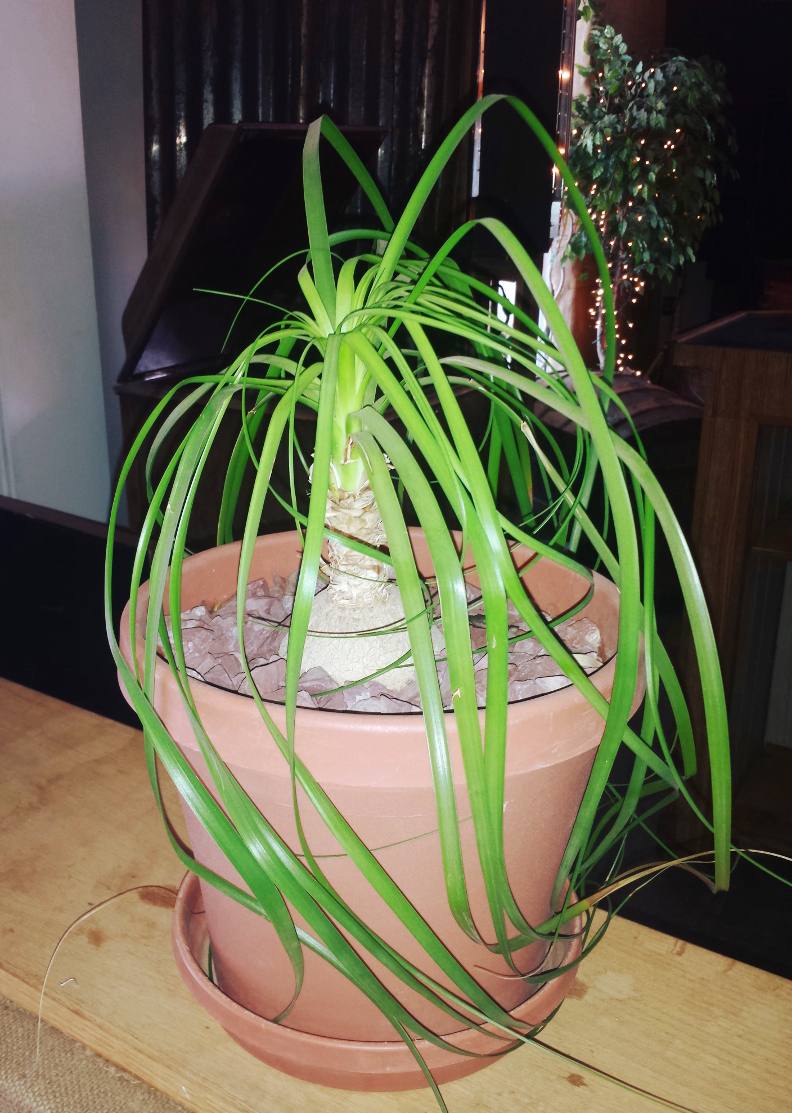
Landscape Use: Specimen, atriums, courtyards, shade gardens, container plant, house plant. It's amazing how resilient pony tail palms are to a range of environmental light levels (from indoor indirect light to full sun); however, usually after a while their use as an indoor container house plant 'turns south'.....
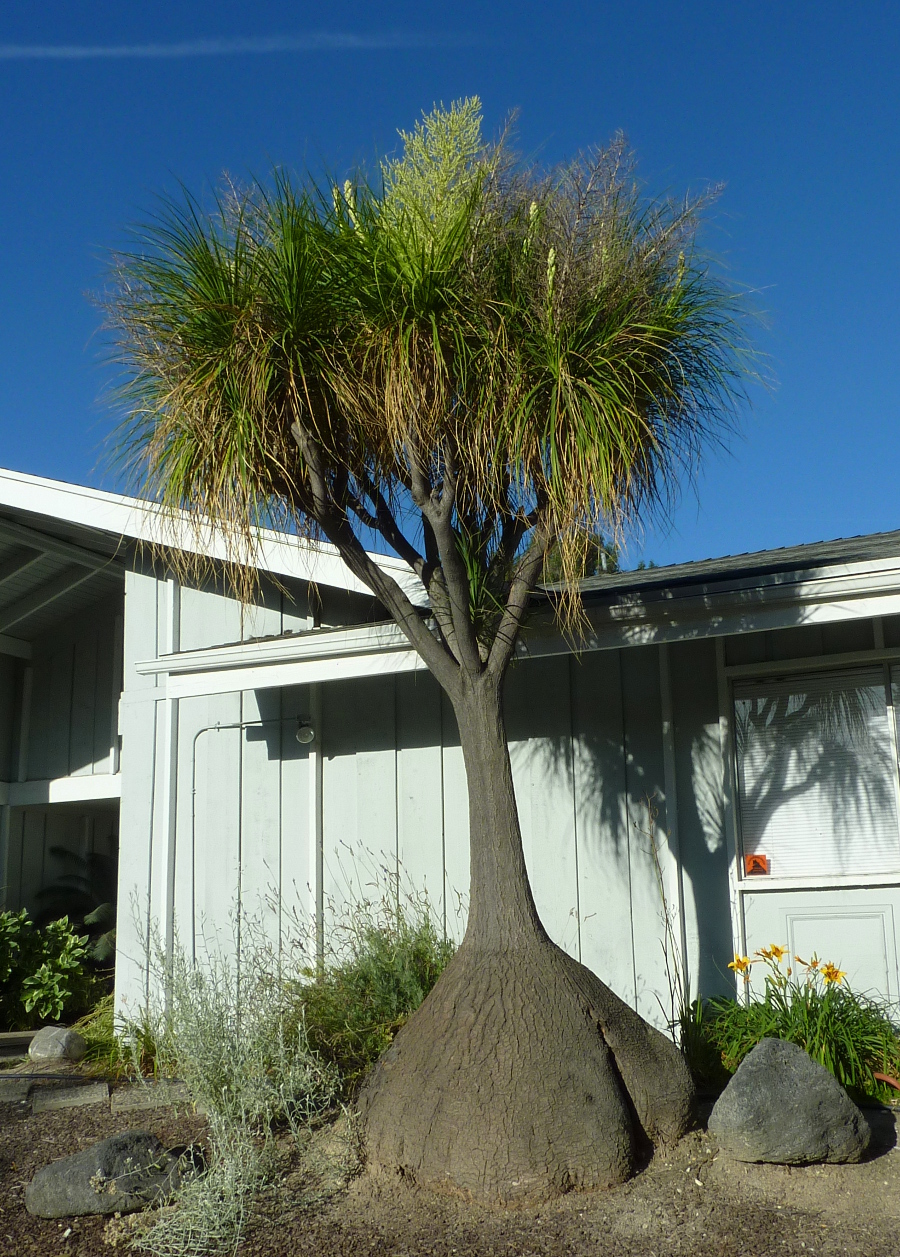
Form & Character: Arborescent, stiff and upright, weird, palm-like with a greatly expanded base and a single trunk with a rosette of long, strap-like leaves that arch and droop, tropical.
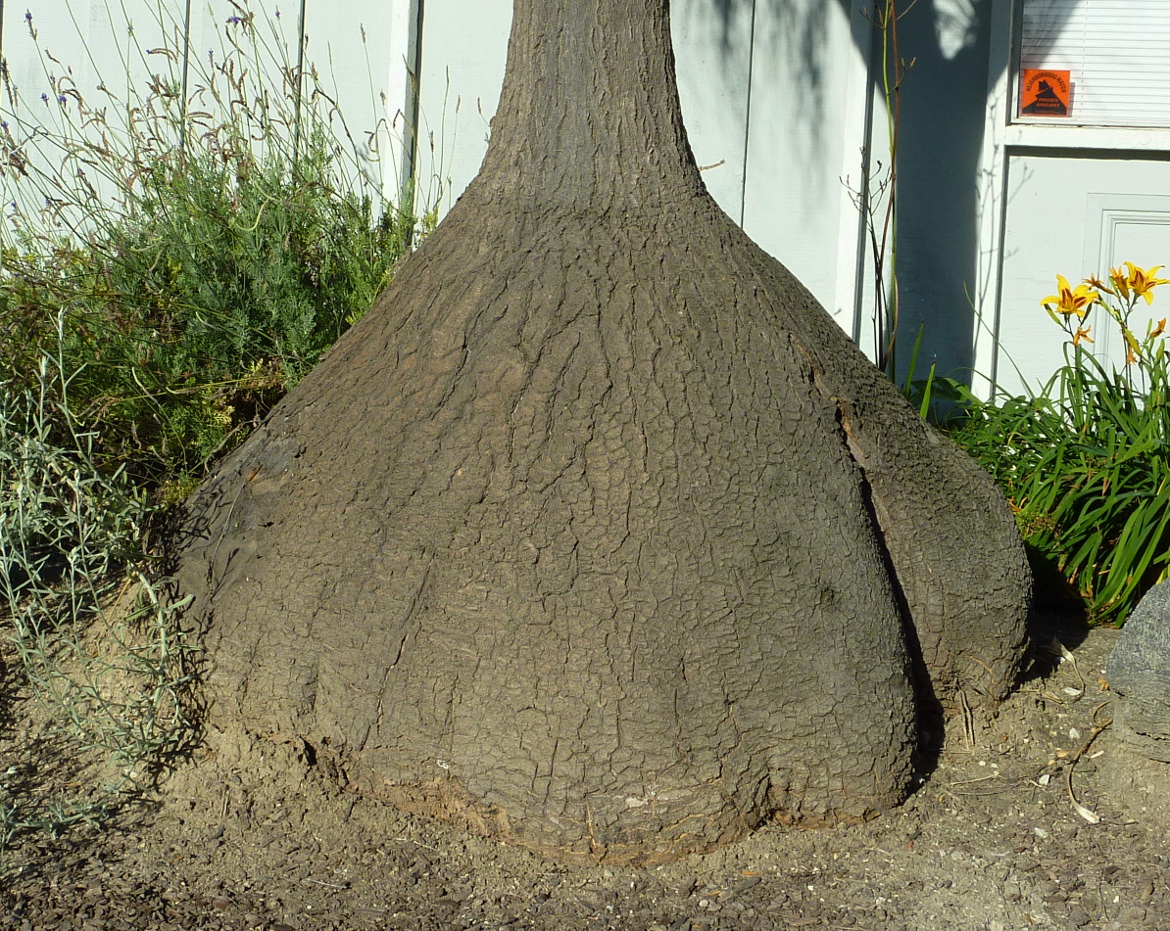
Growth Habit: Evergreen, fibrous to semi-woody, caudiciform perennial shrub to small tree, moderately upright to 10- to 15-feet tall with less than equal spread, occassionally branched. Can attain greater heights up to 30-feet tall in tropical climates becoming strongly arborescent. The trunk at its base becomes swollen with age (caudexes), and the trunk phellum is surprisingly roughened with age also (like the hide of an elephant).
Foliage/Texture: Leaves are tough, elongated, very finely serrated and somewhat recurved to 5-feet long and 1-inch wide. Leaves are aggregated toward the plant apex making for a pony-tail top effect; medium fine texture.
Flowers & Fruits: Flowers are produced only on large specimens and are rarely seen in Arizona, but are common on older specimens in southern California. They are creamy white and in large showy upright clusters that extend above the leaves. Fruit
are unseen in Arizona
Seasonal Color: Creamy white flower stalks during June and July.
Temperature: Freeze intolerant, can be damaged severely below 20oF. Also, has trouble with high summer heat when temperatures exceed 110oF. Best planted in Phoenix in protected microclimate sites, which means no western exposures.
Light: Partial sun to full shade, no western or southern sun in Phoenix. In contrast, full sun is fine in coastal southern California and in southern Florida.
Soil: Pony tail palms MUST have good soil drainage and are salt sensitive.
Watering: In Phoenix, regular deep summer irrigation is required. Be careful to not overwater at other times of the year.
Pruning: Little to none required except only the removal of senescent (dead) leaves.
Propagation: Offsets (suckers) can be separated and started as new
plants in spring. For sexual propagation, seeds must be soaked overnight and planted in moisten, sandy media.
Disease and Pests: None
Additional comments: Ponytail palm is generally a landscape oddity and is used as a container houseplant in colder climates. It is often sold as a potted plant for the interesting appearance of its swollen base, which is in fact an adaptation for storing water during times of drought. A foliar variegated cultivar does exist, but I do not recommend it for landscape use in Phoenix.
Minor taxonomic factoid: Ponytail palms are closely related to Yucca.