Scientific: Brahea edulis
Common: Guadalupe fan palm
Family: Arecaceae (Palmae)
Origin: Guadalupe Island off the west Mexico coast
Pronounciation: Bra-HEE-a ED-ul-us
Hardiness zones
Sunset 12-17, 19-24
USDA 9-11 (arid and semi arid region best)
Landscape Use: Accent palm, residential and commercial plantings, oasis and xeric design themes in desert regions. Difficult to grow in humid subtropical or tropical climates such as in Florida.
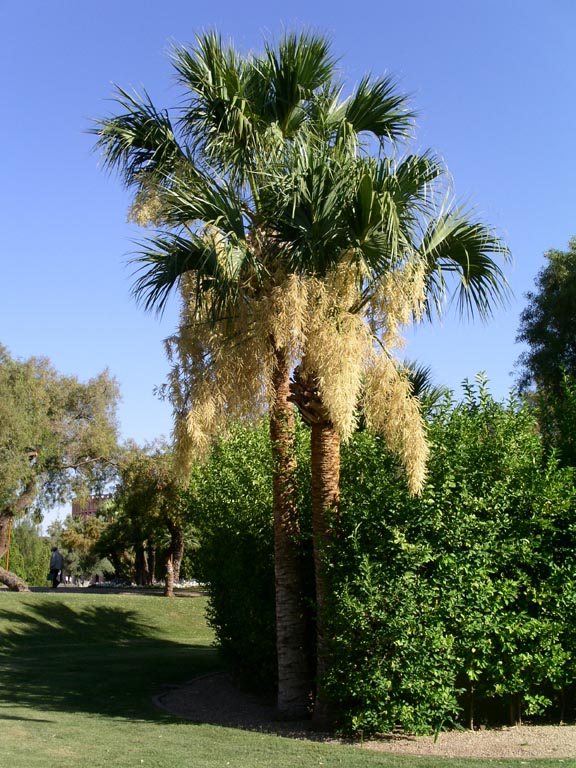
Form & Character: This is a single-trunk fan palm with elephant hide like, semi-self shedding trunk. Similar to a small Washingtonia filifera in stature, reserved, dignified.
Growth Habit: Evergreen, perennial monocot, slow growing especially when young, but eventually will reach 45 feet in height.
Foliage/Texture: All Brahea palms have costapalmate (a longitudinal rib in the center) fronds. Frond blades are green with variable shaggy filaments, petioles smooth; coarse texture.
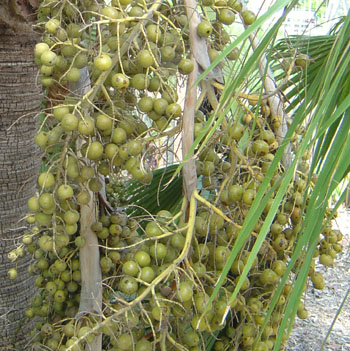
Flowers & Fruits: Long, arching plumes of cream-colored flowers on plumes easily twice exceed width of foliar canopy. Fruit are conspicuous round and golden when ripe, 1 to 1.5 inch in diameter, edible. The fruits surprisingly taste similar to dates and are generally eaten fresh or used to make preserves.
Seasonal Color: Cream flower plumes in May and June.
Temperature: Cold hardy to 18oF. Less cold hardy than Brahea armata.
Light: Full sun
Soil: Needs good soil drainage and might sometimes need supplemental magnesium fertilizer in areas with excessively alkaline soil.
Watering: In desert locations, irrigate infrequently, but regularly and deeply during summer.
Pruning: None, except to remove old or dead fronds.
Propagation: Seed
Disease and Pests: None, though in its native island habitat feral goats feed upon all new seedlings.
Additional comments: Guadalupe fan palm is rather popular in California and other Mediterranean climate zones as a slow growing palm for ornamental and food gardens. It is faster growing and ultimately larger than Brahea armata and is more stout and shorter than its slender and tall cousin, Brahea brandegeei. It is not commonly seen in Phoenix and of the three Brahea taxa that do occur in Phoenix landscapes Guadalupe fan palm is my least favorite - I just don't find it all that interesting.
Minor factoids: The specific epithet, edulis comes from the Latin for 'edible' referring to the fruit.