Scientific: Caesalpinia pulcherrima (Synonym: Poinciana pulcherrima)
Common: red bird-of-paradise, Barbados pride, dwarf Poinciana, ayoowiri
Family: Leguminosae (Fabaceae)
Origin: West Indies, Mexico
Pronounciation: Say-sal-PIN-ee-a pul-chi-REE-ma
Hardiness zones
Sunset 12-16, 18-23
USDA 9-11
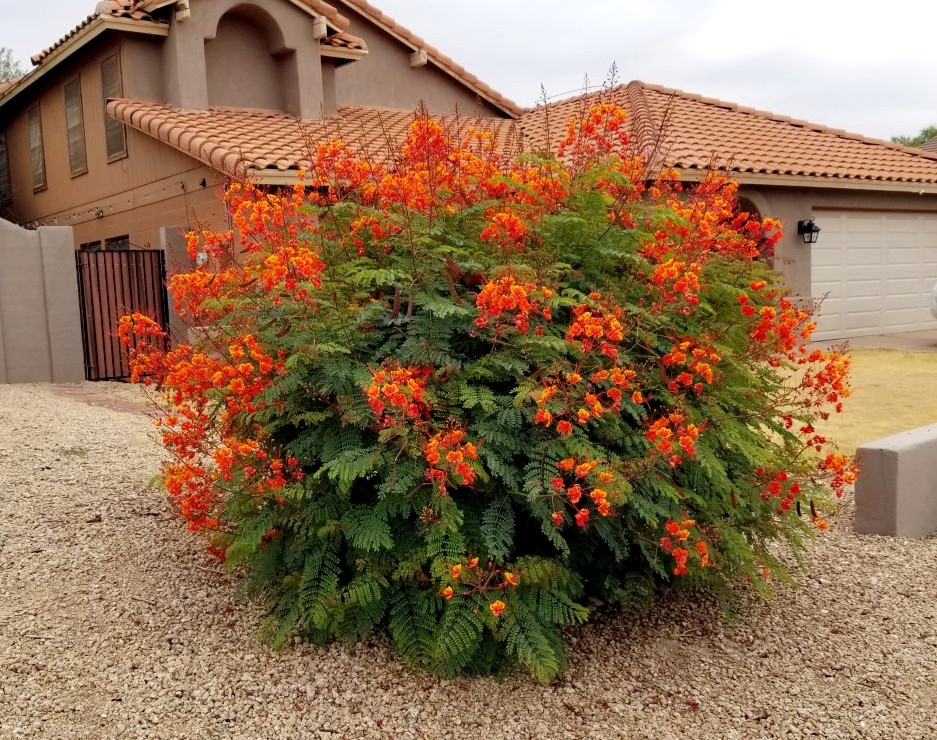
Landscape Use: This is a large seasonal accent shrub for big splashes of bright summer color, quick screen, background.
Form & Character: Upright to sometimes sprawling, open, festive, warm, attracting, tropical to Mediterranean style.
Growth Habit: Partially deciduous, soft-wooded, broadleaf perennial shrub (evergreen in mild winters), vigorous to 10-feet tall or more with equal to greater spread, especially if well irrigated.
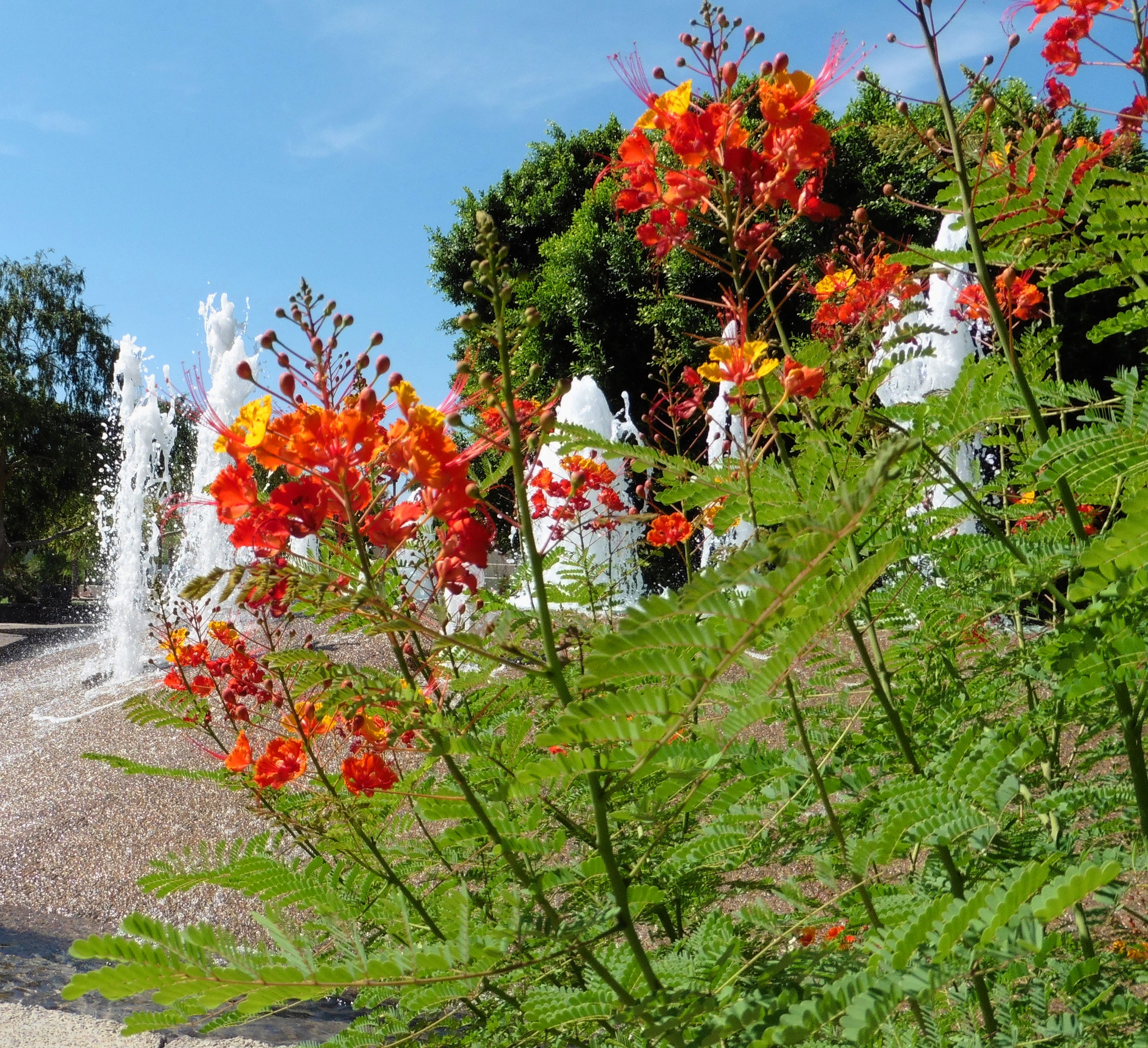
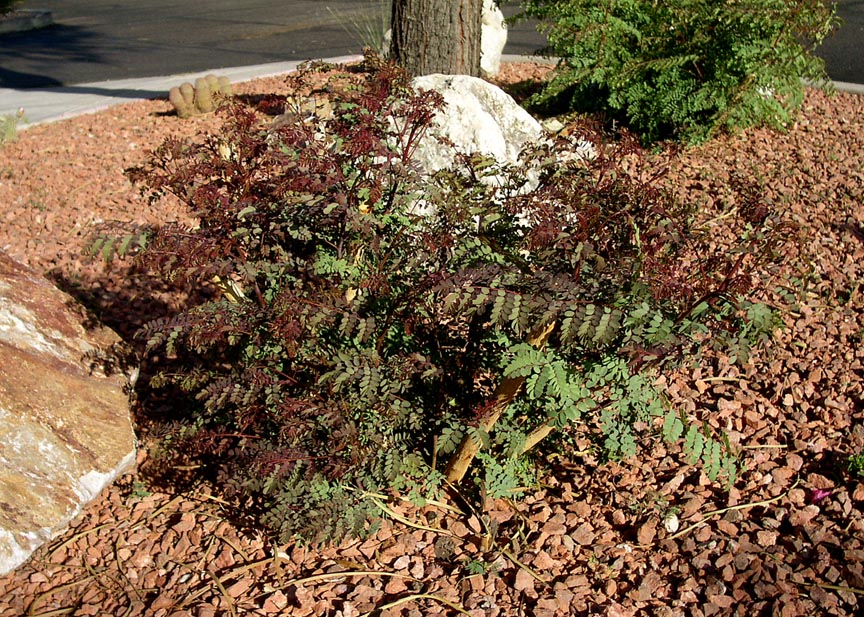
Foliage/Texture: Leaves twice-pinnately compound, leaflets to 3/4 inch and less, new stems and foliage are reddish to purple, gray-green when mature, younger stems have soft and flexible spines; medium fine texture.
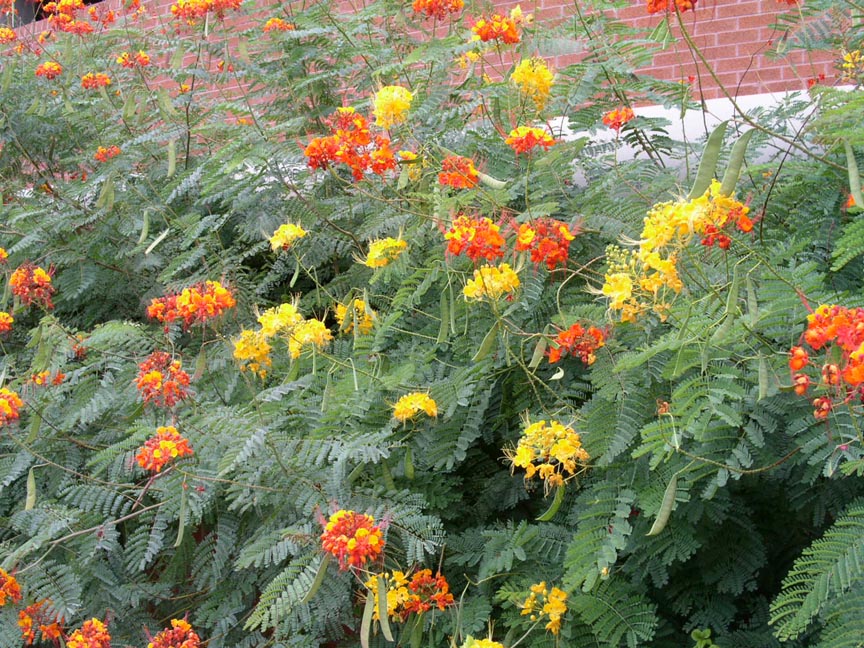
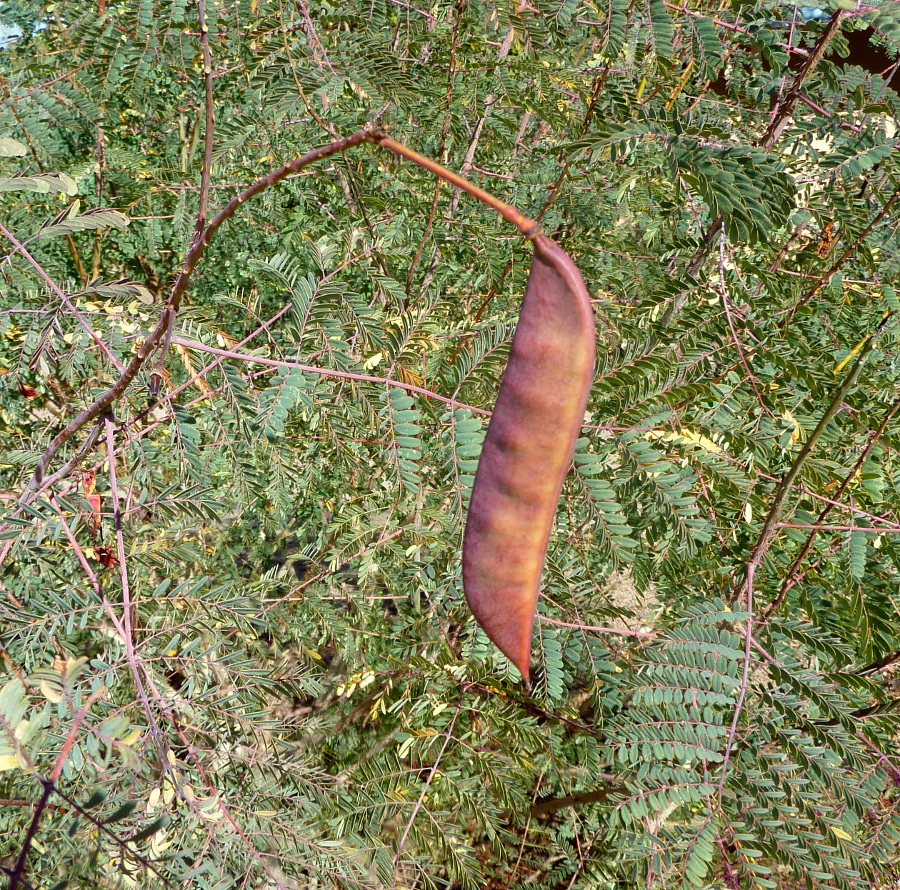
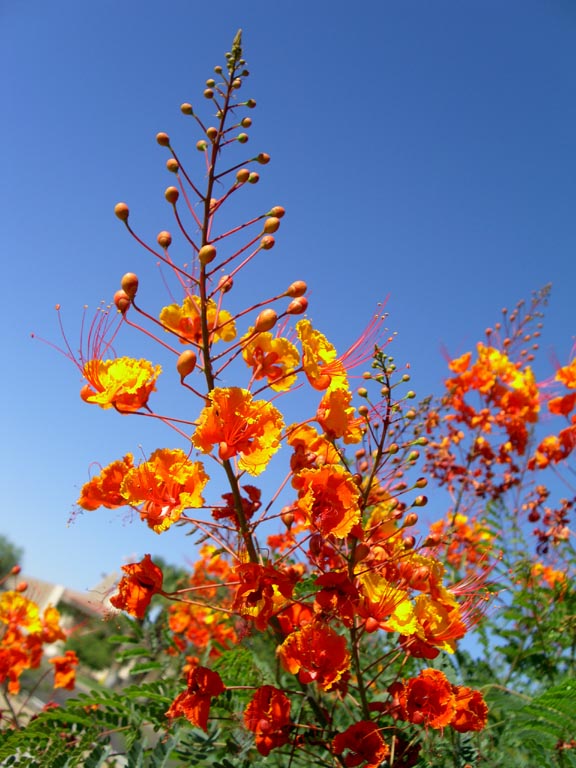
Flowers & Fruits: Flowers a brilliant mix of yellow, orange to red, clustered with long stamens, fruits elongated and flattened pods, reddish green when immature changing to dull brown when mature, persistent.
Seasonal Color: Festive warm flower colors in hot summer. Flowering most intense during June before the summer monsoon.
Temperature: Red bird-of-paradise loves the Phoenix summer heat! However, during winter it typically goes mostly dormant (50% leaf loss with remaining leaves strongly reddened) or can sometimes freeze to the ground during exceptionally cold winters if left unprotected.
Light: Full sun, no shade.
Soil: Tolerant
Watering: Needs regular to infrequent irrigations during the summer to look maintain vigor. No supplemental water required during the winter.
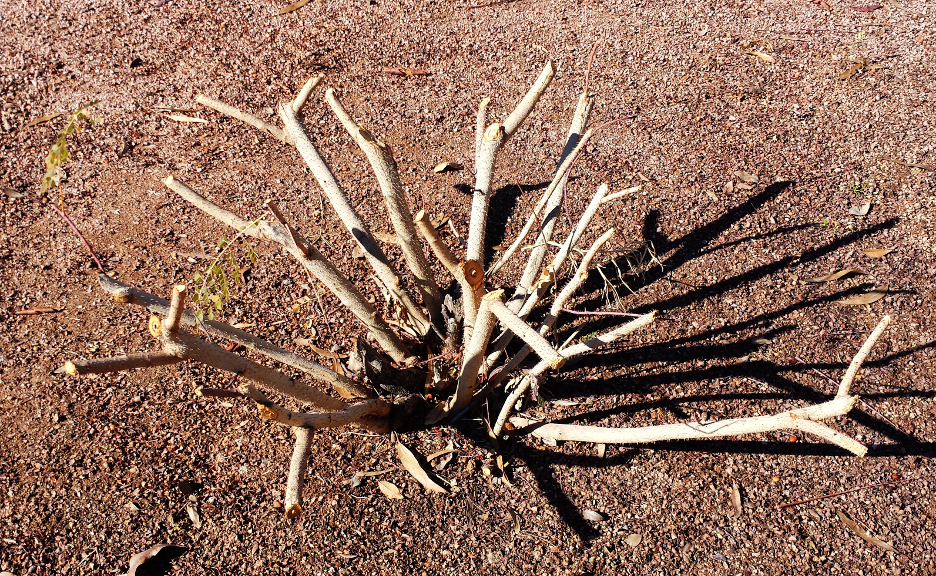
Pruning: Prune red bird-of-paradise severely during winter to control height, even stooling to ground level (it will recover nicely in the spring). Also, responds to some heading back in August with additional floral displays in September/October.
Propagation: Vegetative softwood cuttings or seed. Sow seed fresh or acid scarify if older. On rare occassions red bird of paradise will reseed in the Phoenix landscapes.
Disease and Pests: None
What used to be: During the last half of the 20th century, clouds of white flies would move out of cotton fields surrounding the Phoenix metro area during late summer when the cotton was harvested and attack red bird-of-paradise (they appeared to love it like I like dark chocolate truffles ice cream). Today however wth urban sprawl covering former agricultural lands surroundng Phoenix, this annual pest outbreak no longer happens.
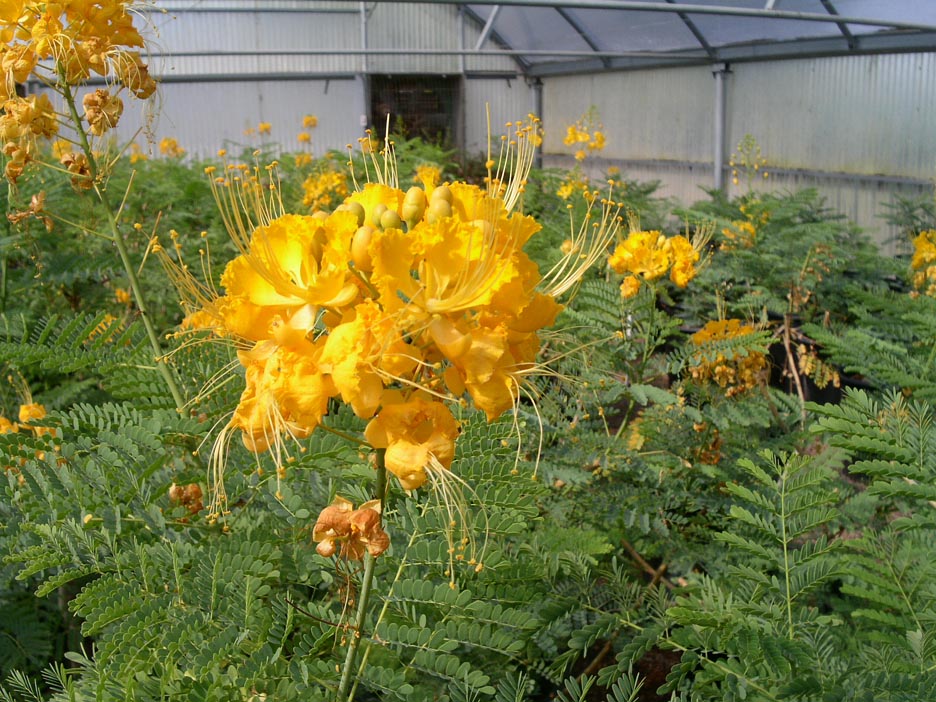
Additional comments: Red bird-of-paradise is a wonderful, large accent shrub that flourishes during in early summer when the Phoenix weather is hottest and other vegetation fades. It attracts hummingbirds and occasionally reseeds or spreads by root suckers in local urban landscape settings (not invasive though). There is an yellow-flowering cultivar from Desert Tree Farm Nursery in Phoenix, Arizona called 'Phoenix Bird'. It has a somewhat slower growth rate and no red pigmentation in the leaves or stems. Other closely related shrub species seen in Phoenix landscapes include Erythrostemon gilliesii (desert bird-of-paradise) which has yellow flowers with protruding red stamens and grows to less than 10-feet tall and Erythrostemon mexicanus (Mexican bird-of-paradise) which has lemon yellow flowers and grows in an arborescent fashion to 15- to 20-feet tall.
Historical perspectives: The genus Caesalpinina is named after the Italian botanist Andreas Caesalpini (1519-1603). Red bird-of-paradise was first used as an ornamental in Europe and later across the mild regions of the United States including recently landscapes in the central Arizona desert. In 1705, botanical explorer Maria Sibylla first described how West Indian slave women of Dutch masters would attempt to end their pregnancies by ingesting the red bird of paradise seeds from the fruit.