Scientific: Calliandra californica
Common: red fairy duster, Baja fairy duster
Family: Fabaceae (Leguminosae)
Origin: Baja California
Pronounciation: Kal-lee-AN-dra kal-i-FOR-ni-ca
Hardiness zones:
Sunset 10-24
USDA 9-11 (arid regions best)
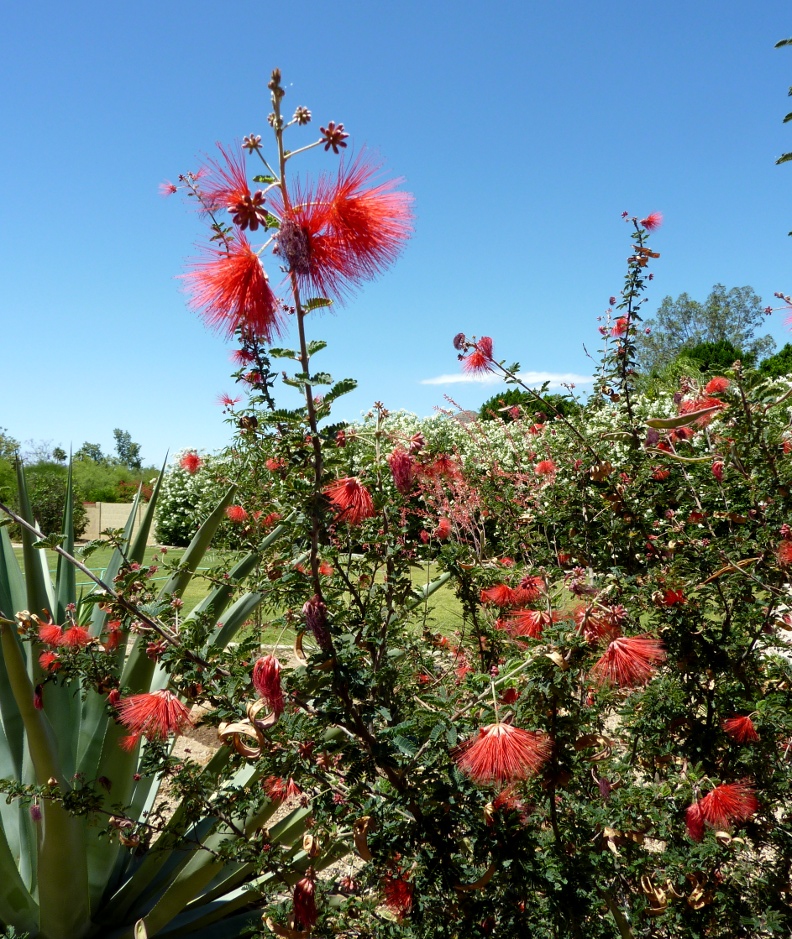
Landscape Use: Xeric accent shrub, strong attractant of hummingbirds which are VERY territorial about this plant, also strongly attracts bees.
Form & Character: Upright inverted vase to rounded form, mostly open and stiff to graceful, INFORMAL (don't shear), Calliandra californica is typically more luxuriant and vigorously upright than Calliandra eriophylla though hybridization and the resultant genetic mixing of these two landscape plant taxa within the Phoenix urban environment has muddled this.
Growth Habit: Evergreen, woody, perennial shrub, generally variably upright from its base with a cane-like braching habit. Ranges in height from 3- to 8-feet tall depending on water availability with a generally less than equal spread.
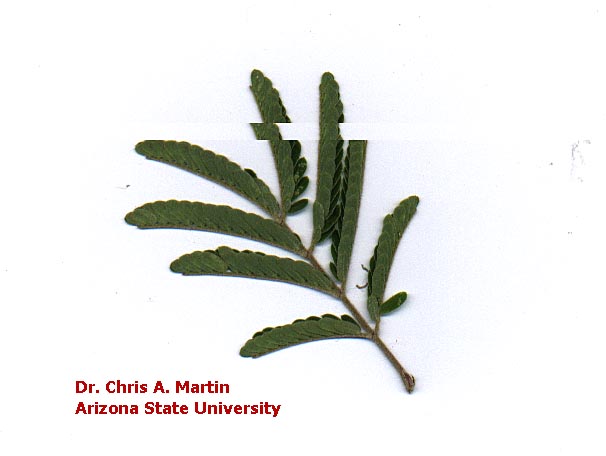
Foliage/Texture: Small, pinnately-compound leaves, young leaves somewhat pubescent, leaves close during night; medium fine texture.
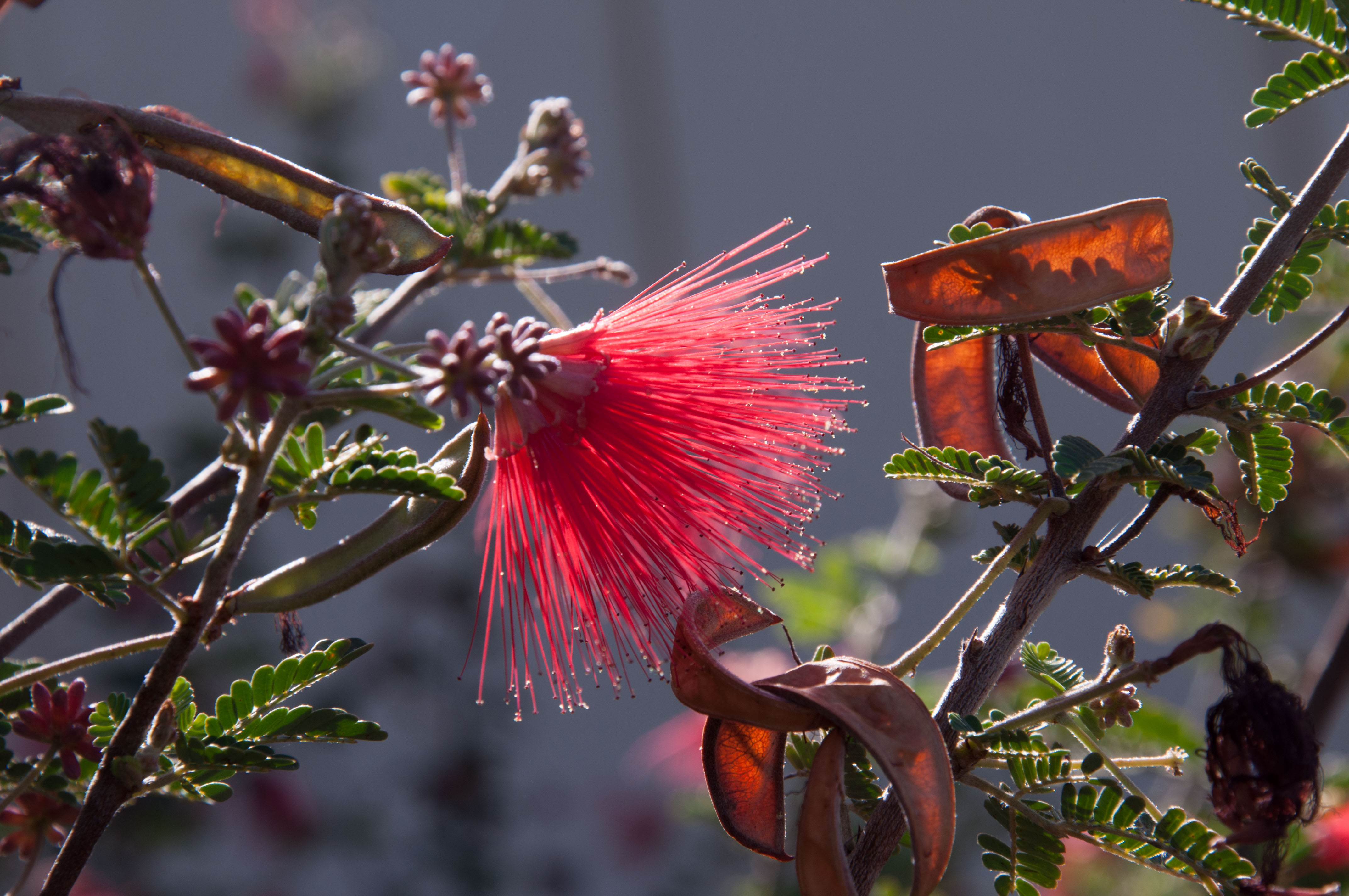
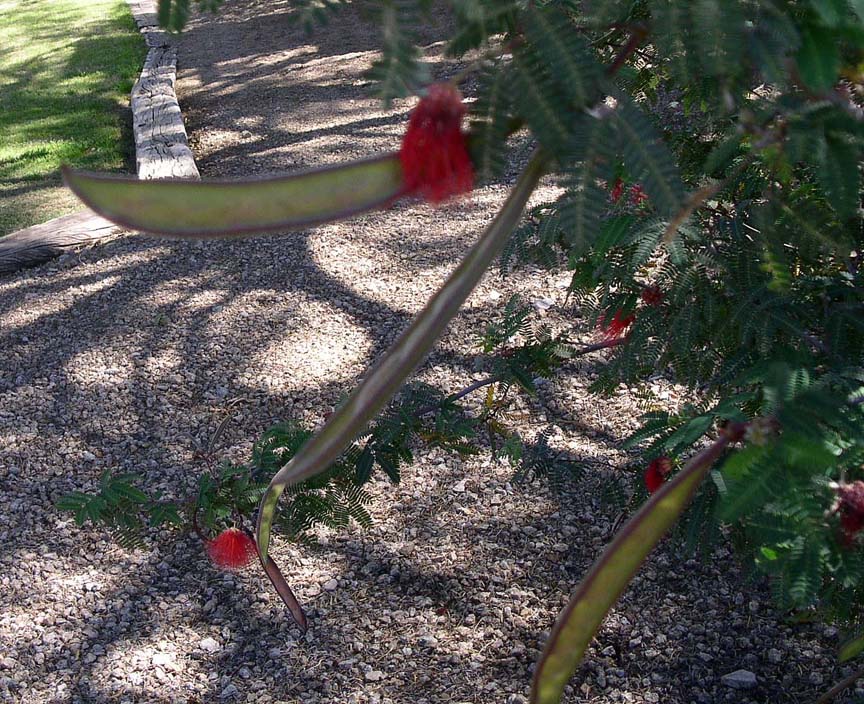
Flowers & Fruits: Numerous brilliant red pin cushion flowers (image captured in my backyard by famous Bulgarian artist and photographer, Hari Antanasov) in terminal and axillary clusters followed by erect to upright pubescent pods to 3-inches long.
Seasonal Color: Sometimes spectacular displays of red flowers during several times of the year except the heat of summer prior to the monsoon and briefly during the coldest part of winter. Profuse flowering typically occurs during spring and fall.
Temperature: Red fairy duster is absolutely at home in the high heat of the lower Sonoran Desert; and it's cold tolerant down to 22oF.
Light: Full sun (no shade) is best.
Soil: Red fairy duster is tolerant of all lower desert Arizona soils, though well-drained, drier soils are best. Foliar chlorosis or leaf yellowing can develop if soils are chronically wet.
Watering: Apply infrequent and deep supplemental watering during only during extended dry periods for best appearance. Regular waterings will greatly increase its vigor and size resulting in an increased pruning requirement.
My water recommendation: Do not excessively irrigate this 'free-spirited' shrub because doing so will promote rank vegetative growth, reduce overall floral displays, and encourage bad horticultural behavior, aka shearing.
Both red (Calliandra californica) and pink (Calliandra eriophylla) fairy duster shrubs are prone to lose leaves (drought deciduous
habit) during extended periods of dry soil conditions - don't freak out, this is okay and will self correct when it rains.
Pruning: Selectively remove upright branches at different heights within the shrub's crown during summer to promote a full canopy of foliage. Red fairy duster is a wonderful shrub that seems to always be on the verge of growing "Out of Control". Extensively rejuvenate only as a last resort. Don't ever shear or hedge this beautiful desert shrub.
Propagation: Acid scarification of seeds is needed in order to seed propagate. Asexual propagtion by stem cuttings (use a perlite-based rooting substrate) does work but can be difficult.
Disease and Pests: None
Additional comments: Red fairy duster is a tremendous addition to
any xeric landscape and integrates well with the Sonoran Desert style architecture. Calliandra californica and Calliandra eriophylla will readily hybridize. This makes urban seed collection interesting because progeny (seed produced offspring) are just as likely to have a mixed up array of pink and/or red flower colors and a range of growth habits from prostrate to stiffly upright. Naturalization (reseeding) of
Calliandra species in the Phoenix urban environment is common and is stimulated around points of irrigation or in areas mulched with gravel (enhanced seed scarification).
'Sarita' is a cultivar of Calliandra californica with a profoundly low, prostrate habit that was found by horticulturist Sarah Celestian, a former graduate student of mine, while working at Desert Tree Farm in Phoenix, Arizona.