Scientific: Canna x generalis
Common: canna, canna lily, Indian shot
Family: Cannaceae
Origin: This is a complex collection of hybrids native to subtropics and tropics of
New World from Florida to South America and India.
Taxonomic note: Canna indica was hybridized and backcrossed with other Canna species, including the North American native, Canna flaccida (golden canna). These hybrids have been known as Canna x generalis, or Canna x orchiodes, depending on flower characteristics. But they have been hybridized too, and the phenotypic distinctions are now largely lost or forgotten. Today, experts include all the canna hybrids under the scientific name, Canna x generalis.
Pronounciation: CAN-na gen-er-AL-is
Hardiness zones
Sunset All zones
USDA All zones
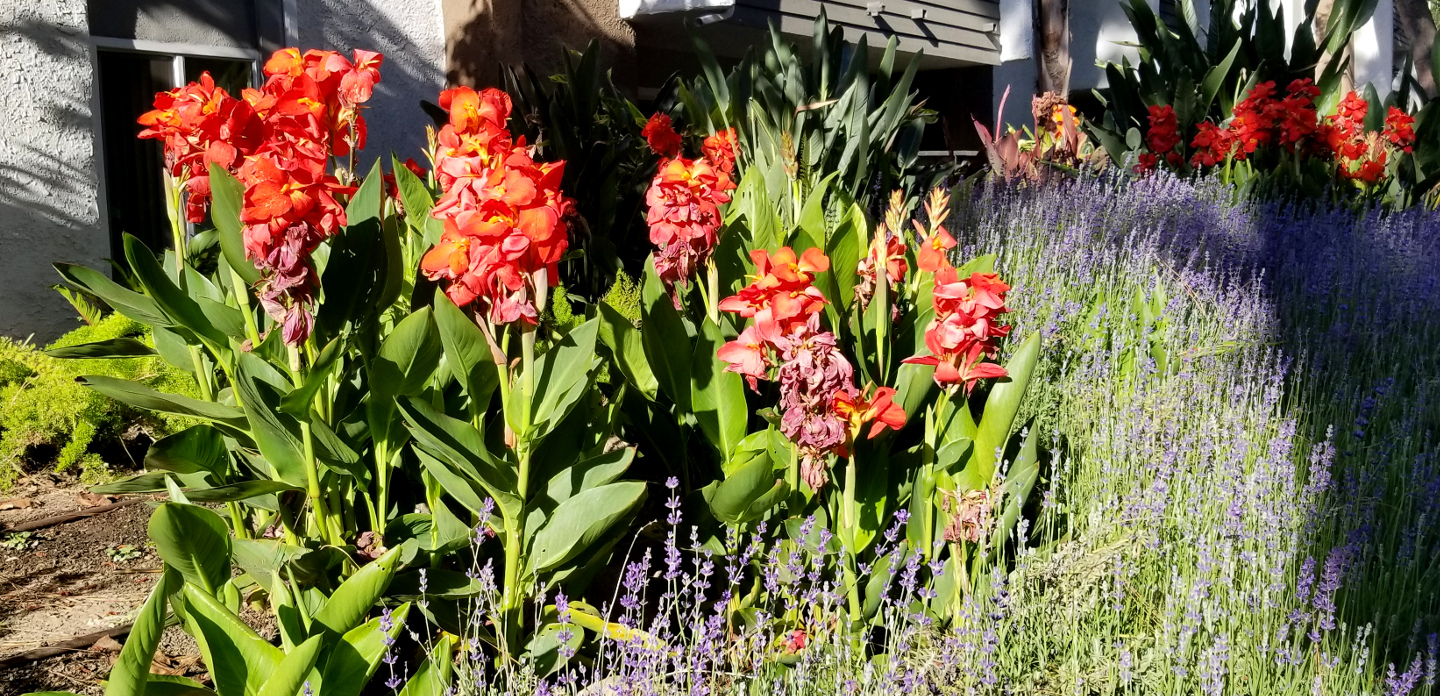
Landscape Use: Spring and early summer flowering accent, tropical flower gardens, grouped as a border, pond or poolside plant.
Form & Character: Basal foliage is strongly upright and bold.
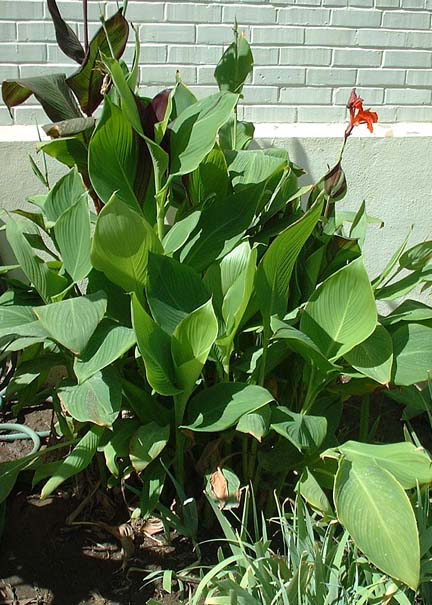
Growth Habit: Evergreen (except in cold climates), herbaceous perennial, vigorous upright growth to 5- to 10-feet tall, clumping by the copious production of underground rhizomes. Leaves emerge from rhizome buds.
Foliage/Texture: Large, rich medium green ovate lanceolate leaves, 4- to 12-inches across and 1 to 2 feet in length, prominently pinnately veined, often tinged with bronze or red; coarse textured.
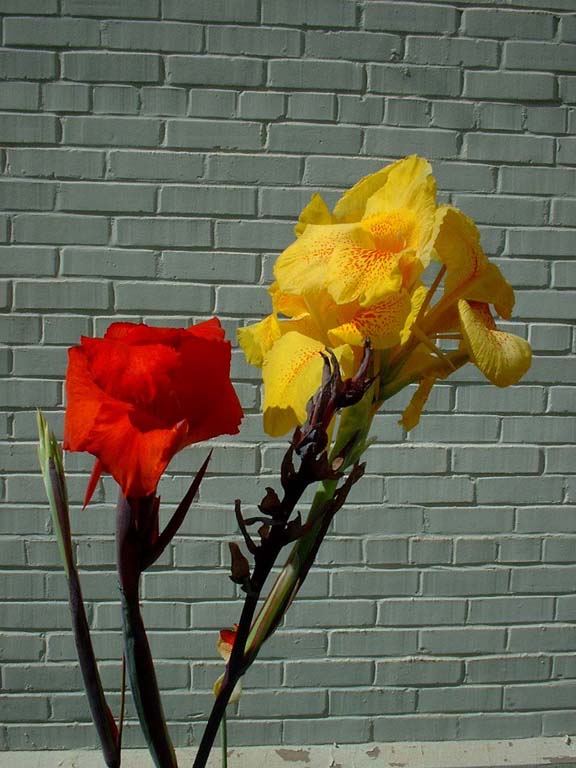
Flowers & Fruits: Flowers formed in terminal spikes of many colors, mostly red or yellow, not tubular at the base, fruit a 3-valved round cap, green.
Seasonal Color: Canna lily can flower all year long in mild climates, but mostly in spring/early summer and fall.
Temperature: Canna lily will freeze to the ground in cold winter areas (Canna lily in Phoenix only suffers occassional winter chilling injury). At higher elevation Arizona landscapes, lift rhizomes and store over winter if soil tends to freeze. Otherwise, in mild winter locations such as Phoenix and Tucson cut canna stalks to the ground in the late fall/early winter.
Light: Full sun, except absolutely NO western exposure in Southwest desert gardens.
Soil: Tolerant of most soils types except those that are highly alkaline, prefers an organic amended, well-drained soil.
Watering: Regular supplemental water is required.
Pruning: Remove spent flower stalks, prune to ground in fall.
Propagation: Simple division of rhizomes.
Disease and Pests: None
Additional comments: Canna lily has many cultivars, some dwarf, some with bi-colored flowers. Dwarf cultivars make excellent edging plants. Canna lily is generally easy to culture. In Phoenix, it's a good, coarse-textured plant for mesic garden themes or around water features and protected patios.