Scientific: Catharanthus roseus (Synonym: Vinca roseus)
Common: Madagascar periwinkle, rose periwinkle, old-maid periwinkle, vinca
Family: Apocynaceae
Origin: Madagascar to India, naturalized pantropically
Invasive Alert: In the United States, Madagascar periwinkle has naturalized in Florida, coastal southern California and in localized areas of the southeast.
Pronounciation: Ca-tha-RAN-thus ROW-se-us
Hardiness zones
Sunset All (short lived perennial in Phoenix that is mostly used as a
summer annual)
USDA All
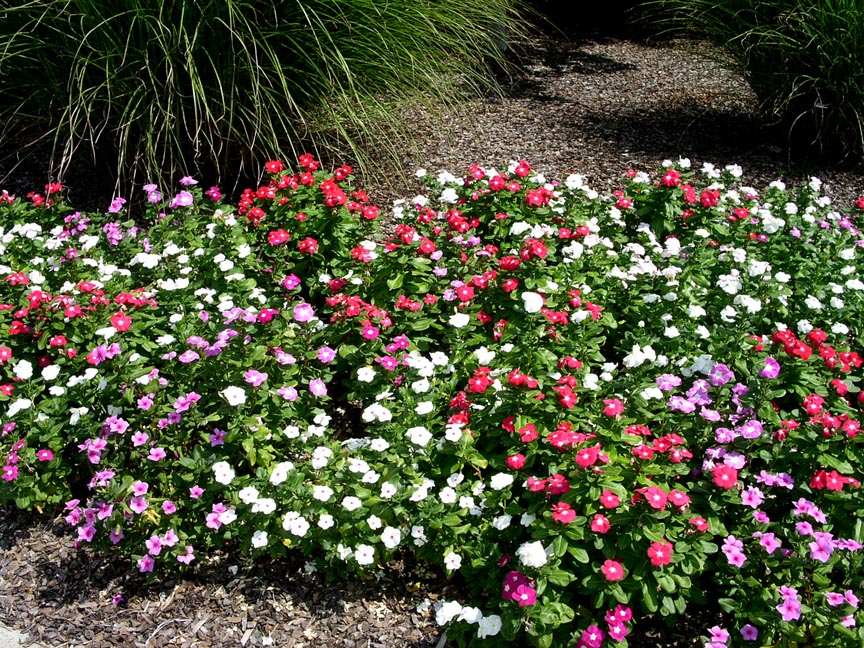
Landscape Use: Used primarily for its many floral colors in summer and fall garden bprders, entryways, patio containers, hanging baskets.
Form & Character: Upright to rounded, small, colorful and cheerful, clean and somewhat tender in appearance.
Growth Habit: Evergreen, herbaceous, short-lived perennial usually grown as a warm season annual in Phoenix, habit dependent on varietal series, muchly branched ranging in height from 4- to 24-inches tall.
Foliage/texture: Medium green leaves are oblong to lanceolate to 1- to 2-inches long, glabrous, nearly sessile, midvein prominent; medium texture.
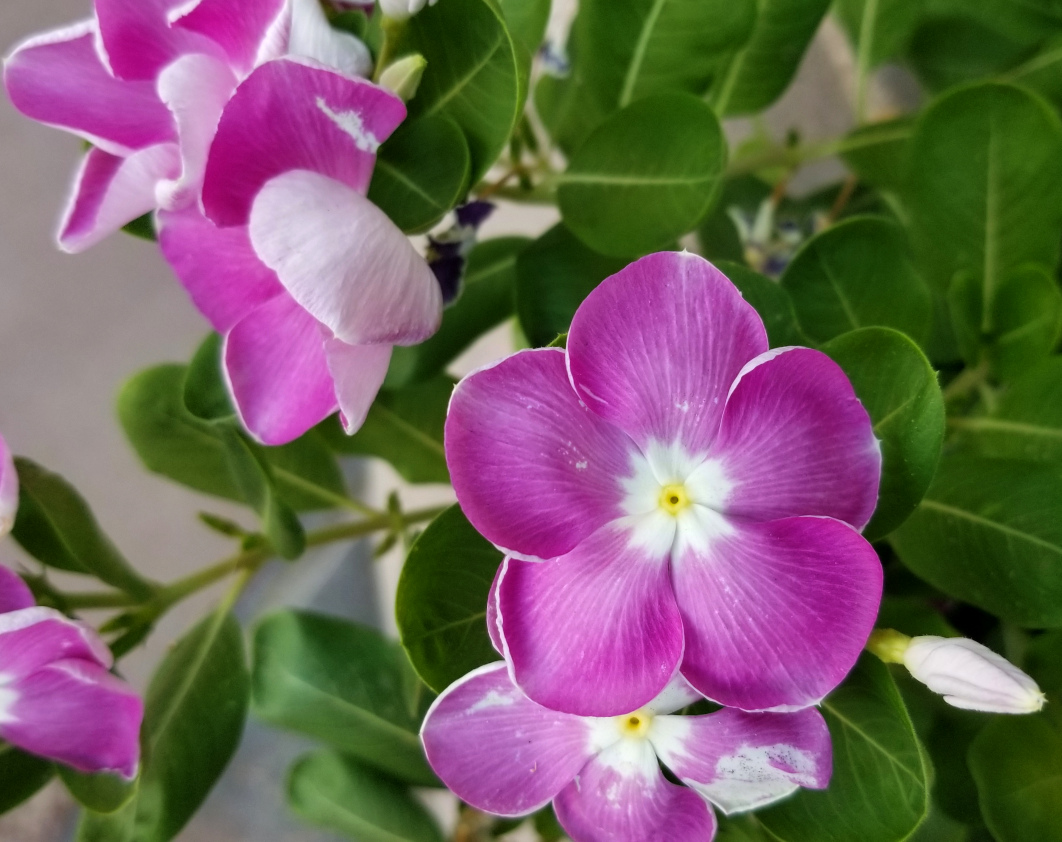
Flowers & fruits: Flowers, single or double, range from white, pink, red to mauve or reddish purple, sometimes bicolored, 1.5-inches across, flower tubes about 1-inch long; fruit insignificant.
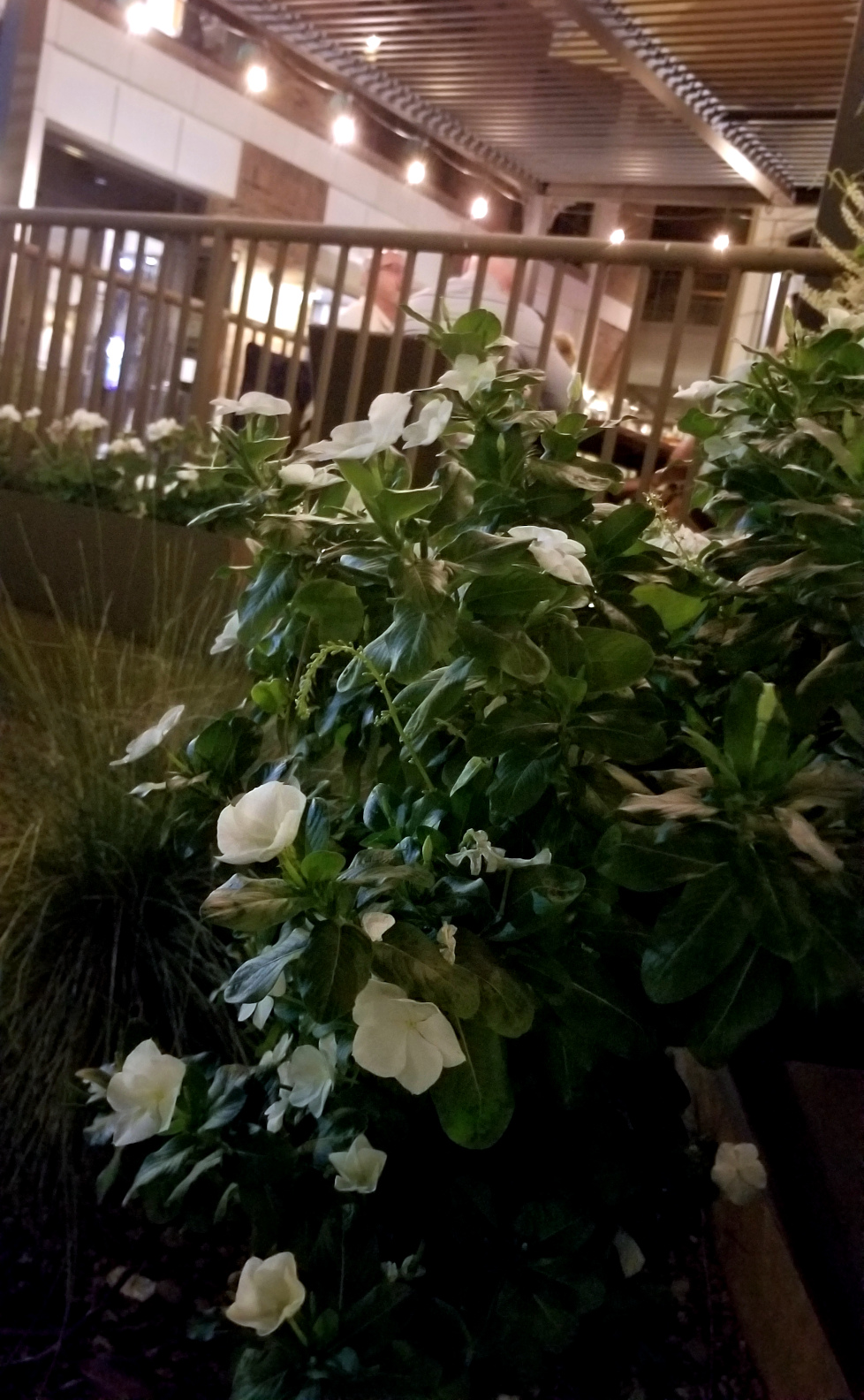
Seasonal color: Flowers in late spring through warm season into fall. White flowering forms are best for night landscapes (night lighting).
Temperature: Madagascar periwinkle prefers hot weather, although it will bloom through Thanksgiving in milder climates and year around in coastal southern California. During winter cold, periwinkle growth slows significantly and foliage will yellow.
Light: Full to partial sun, limit direct western exposures.
Soil: Well-drained, pathogen clean, with some rich, organic matter or compost, prone to chlorosis in sandy soils.
Watering: Frequent, regular supplemental water is required in desert landscapes during summer for best appearance.
Pruning: Shearing larger plants will encourage a compact dense canopy. Otherwise, only minimal pruning techniques are necessary --- such as an occassional Catharanthus limpy treatment.
Propagation: Seed, self-sows readily if flowers are fertile.
Disease and pests: Root knot nematodes, Rhizoctonia root rot, white flies, sudden wilt caused by Spiroplasma citri. The vector transmitting this disease is a leaf hopper. Catharanthus roseus is an alternate disease host. Citrus is the primary disease host.
Additional comments: Madagascar periwinkle has been highly bred horticulturally. New cultivars, new flower colors are released each year. It is the most consistent summer color for high heat areas such as Phoenix. Avoid planting in soils with nematodes or
Rhizoctonia fungus.
Medicinal notes: Madagascar periwinkle has medicinal properties and is poisonous when eaten by cattle. Vinblastine sulfate is an alkaloid extracted from Catharanthus, which has been very successful in the treatment of cancers such as childhood Leukemia and Hodgkin disease. Leurocristine, another isolated alkaloid, is used in almost all
combination chemotherapy regimens for cancer.