Scientific: Convolvulus cneorum
Common: bush morning glory, silver bush, white morning glory
Family: Convolvulaceae
Origin: Southern Europe's western and central Mediterranean regions
Pronounciation: Con-VOL-vu-lus sa-NOR-um
Hardiness zones
Sunset 7-9, 12-24
USDA 8 marginal, 9-11
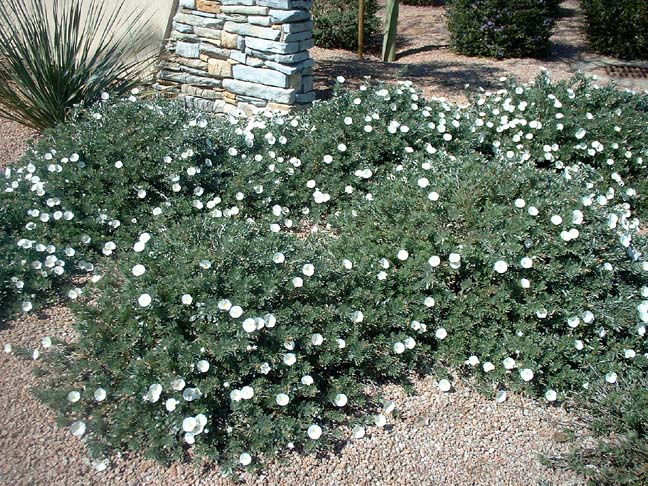
Landscape Use: Large scale xeriscape ground cover in mass, accent plant, rock gardens, xeric and oasis design motifs.
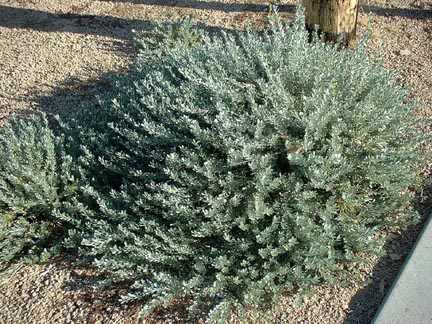
Form & Character: Symmetrical, compact and rounded (like someone cut the stem off of a mushroom cap and placed it on the ground), gray, diminuative, unassuming, except when flowering.
Growth Habit: Evergreen, woody, broadleaf perennial subshrub, slow to moderate growth to 2-feet tall with a 4-foot spread.
Foliage/Texture: Lanceolate-shaped leaves densely pubescent to tomentose, silver grayish, to 3-inches long; medium texture.
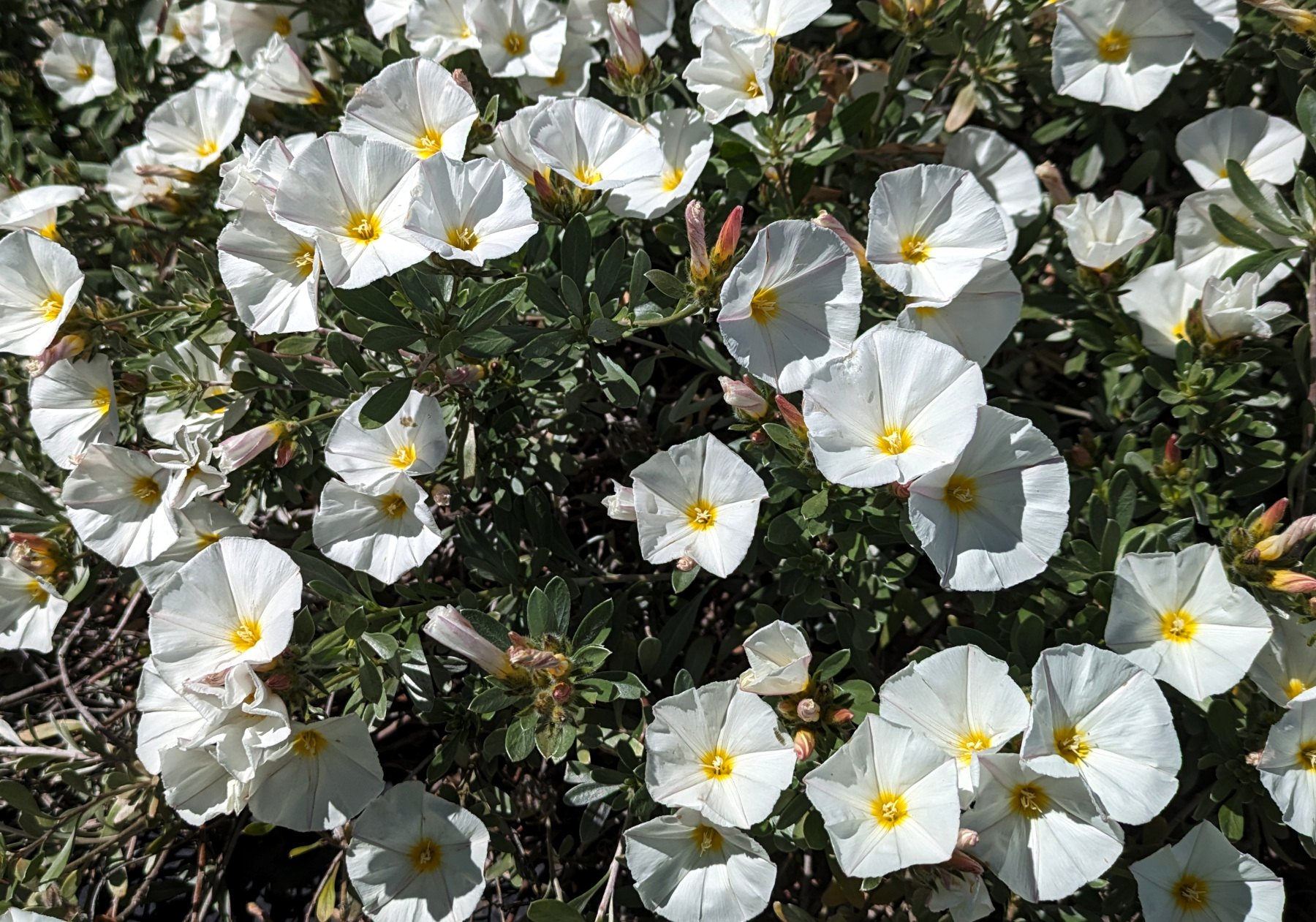
Flowers & Fruits: Pinkish flower buds followed by brilliant white paper-thin morning glory flowers w/ yellow throats, profuse, followed by pink post flowering sepals, attract bees; fruit inconspicuous.
Seasonal Color: Pink followed by brilliant white masses of flowers during spring (usually during middle and later March), otherwise silver gray foliage rest of year.
Temperature: Hardy to 10 to 15oF.
Light: Full Sun
Soil: Fast-draining soil is an ABSOLUTE MUST with this subshrub. Bush morning glory grows best in sandy or gravelly soils that are slightly alkaline.
Watering: Does not tolerate wet, over-watered soil conditions. In Phoenix, there is usually no need to apply supplemental water during the winter months, but supplemental water is needed at least every two weeks during the summer.
Pruning: Little to none. Vigorous plants can be infrequently and lightly sheared in late April after flowering, otherwise there is no need to prune.
Propagation: Seed, or softwood cuttings, rooted in peat and perlite with 1,000 ppm IBA in April or September.
Disease and Pests: Highly prone to attack by fungal root rot pathogens if soil drainage is poor and soils are chronically moist to wet due to overwatering, especially during the summer .
Additional comments: If soil drainage is good, then bush morning glory will grow as well in Phoenix as on the sandy beach dunes of the central California coast. Of note, it is fire retardant if healthy (important for Southern California chaparral dwellers). Bush morning glory provides a consistent intense spring bloom each year. Keep in mind its eventual spread, as the biggest landscaping problem is planting this nice sub-shrub in locations that are too small and narrow to accommodate its eventual spread.
Landscape designer's footnote: Bush morning glory was a hugely popular shrub to plant in Phoenix landscapes during the 1990s and early 2000s. Today, its use as a landscape design element has waned.