Scientific: Dimorphotheca sinuata (Synonyms: Calendula tragus, Dimorphotheca aurantiaca, Dimorphotheca dentata, Dimorphotheca integrifolia)
Common: African daisy, cape marigold, glandular cape marigold, Namaqualand daisy
Family: Asteraceae
Origin: Namibia and South Africa
Pronounciation: Di-mor-pho-THEC-a sin-u-A-ta
Hardiness zones
Sunset All zones
USDA All zones
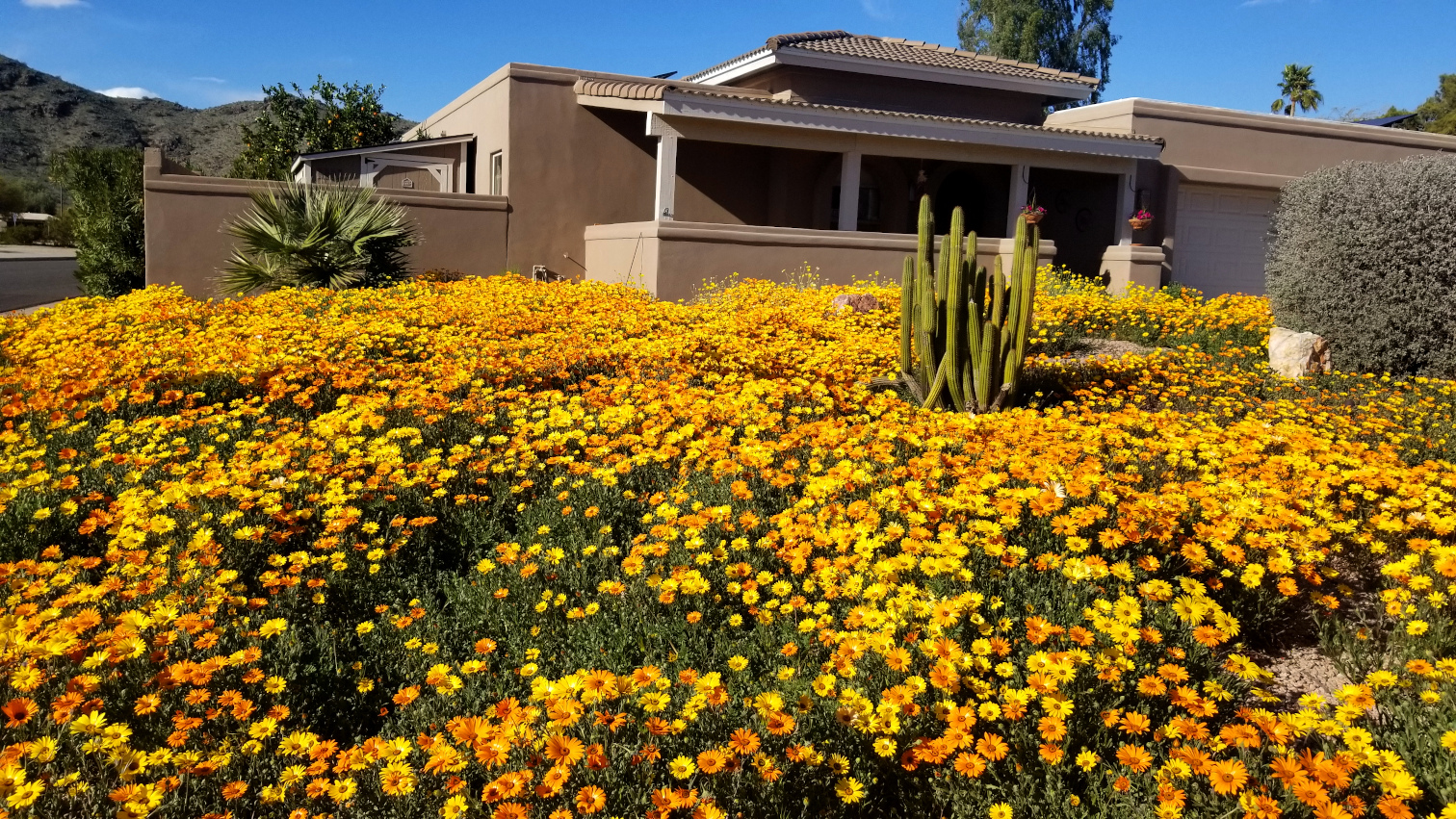
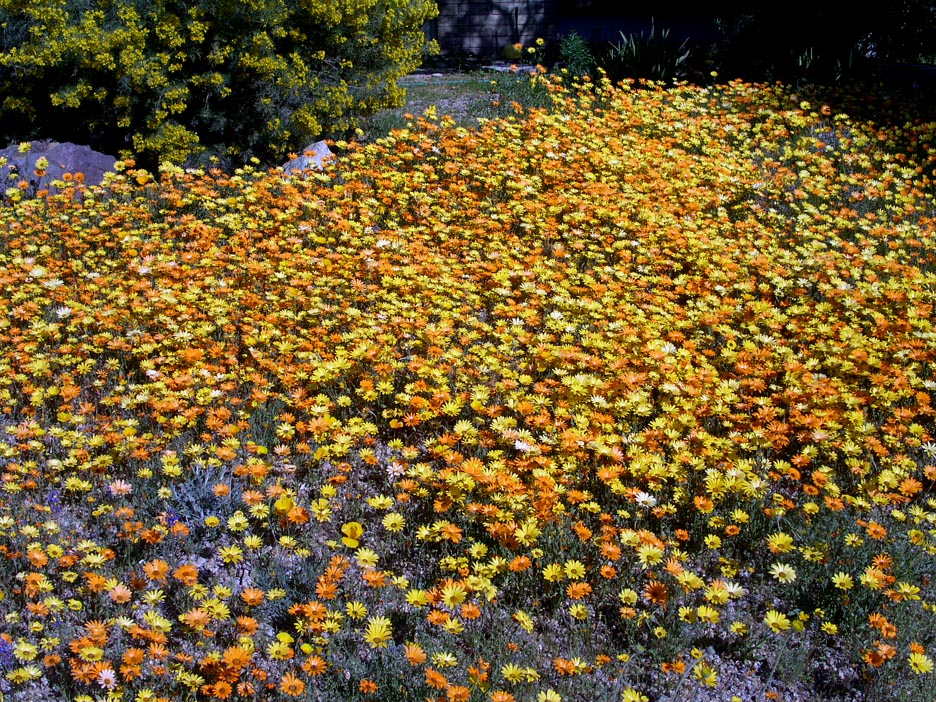
Landscape Use: Winter annual in Phoenix, front yardscape winter color, wild flower gardens, desert landscape borders, desert restoration, annual ground cover over a large area for best effect
Form & Character: Upright, uninhibited, free and festive, loud and boisterous.
Growth Habit: Evergreen, herbaceous annual, much branched 4- to 12-inches tall with equal spread.
Foliage/Texture: Dentate medium green to gray green foliage, narrow to 2-inches long green stems, somewhat sparsely pubescent; medium fine texture.
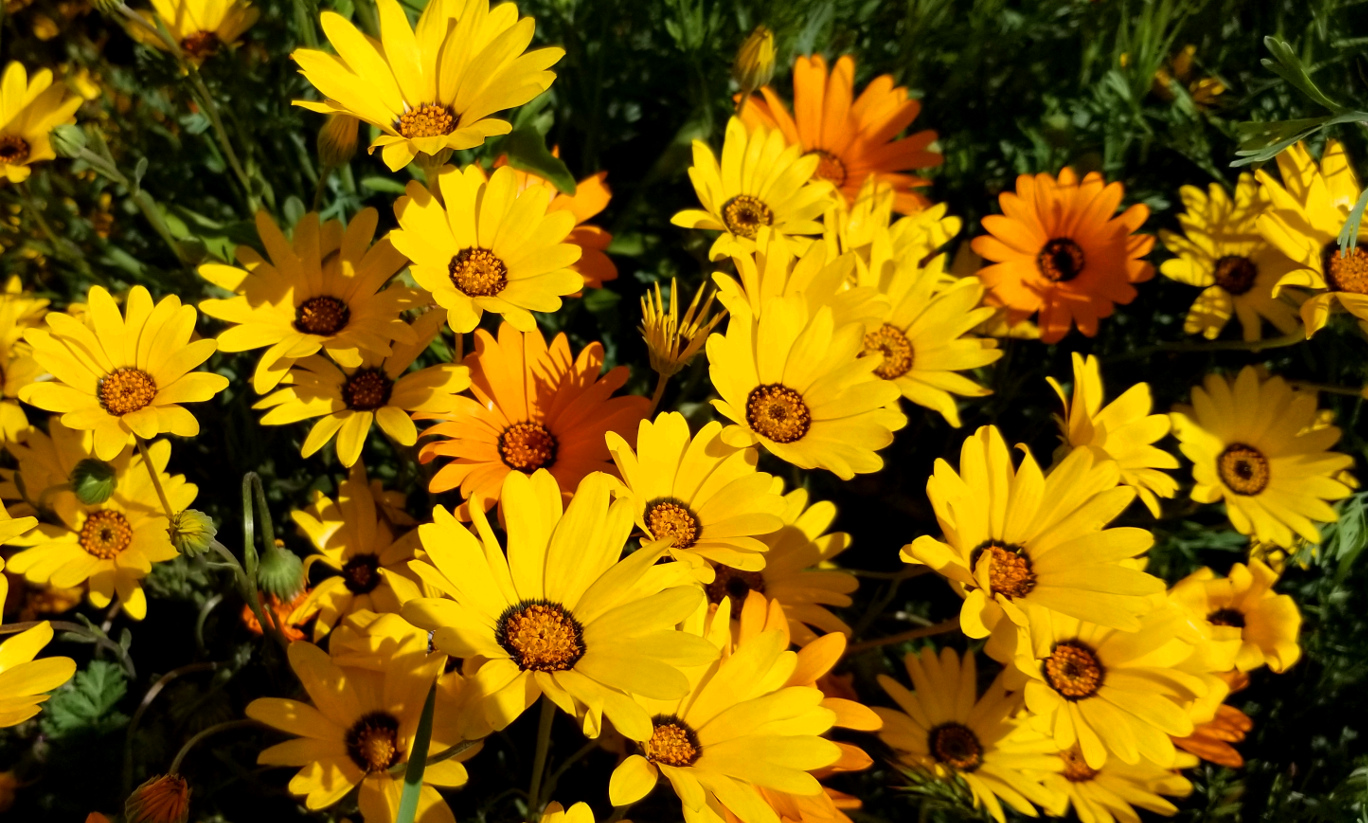
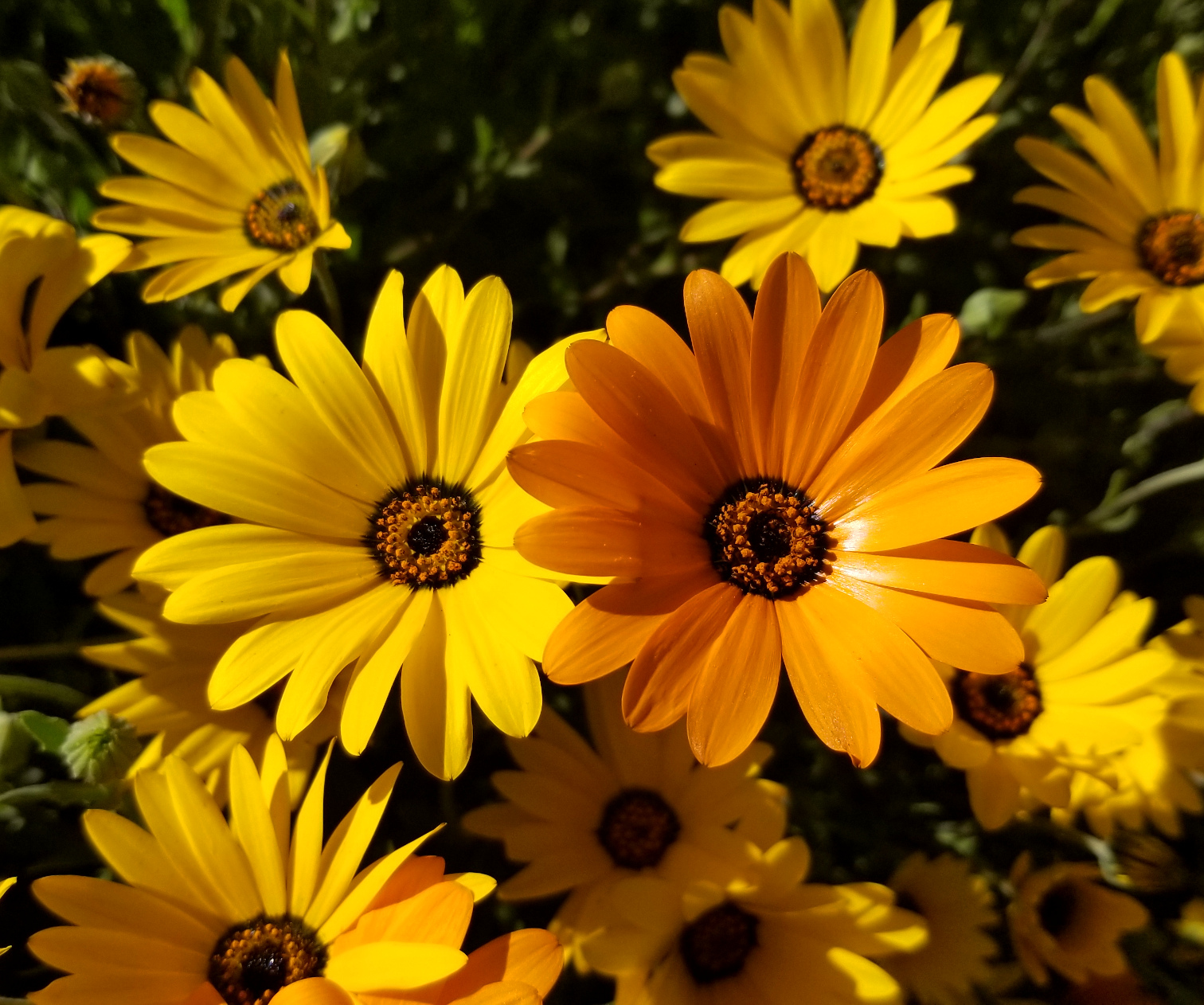
Flowers & Fruits: Perfect ray and disc flowers that grow on an extended green, hairy peduncles, multi-colored from white, yellow and orange (normal colors), salmon pink to purple. Fruits are dimorphic achenes. Central fruits are flattened and winged and appear to vary somewhat in color. In contrast, marginal fruits are club-shaped and vary in color and surface ornamentation. The fruit pappus is absent. Seeds will readily reseed.
Seasonal Color: Flowers profusely during late winter and early spring, February to April.
Temperature: Temperatures parameterizes the seasonal use of African daisy in Phoenix in profound ways. On balance, it thrives in cooler weather with temperatures consistently below 80oF and is a complete landscape wimp, fading quickly if temperatures exceed 90oF.
Light: Full sun
Soil: Tolerant, but grows best in well-drained soil.
Watering: Takes some aridity. In fact, less water promotes short and stiffly erect plants that hold their flowers high, whereas copious water and high fertility promotes a less attractive leggy, floppy and sprawling cover - much like Pistol Pete would wear his socks. Be sure to let the soil dry at the height of flowering and into early summer to insure maximum reseeding. It's also imperative to keep reseeded soils dry through the summer to preserve seed in a dormant state for germination the following fall.
Pruning: None
Propagation: Seed
Disease and Pests: None
Additional comments: Sow African daisy seed during late summer to early fall
in Phoenix for that wonderful carpet of landscape color the following February and March. After flowering, African daisy will reseed (if you are patient and let the plants go to seed) and colonize large areas for spectacular,
dependable displays year after year with only a small amount of winter rainfall.
African daisy can naturalize in the winter rainfall areas of the southwestern United States,
especially coastal California. The cultivar 'Salmon
Queen' has large flowers with pastel shades of salmon and apricot.
Taxonomic tidbits: The genus name
Dimorpotheca is derived from the Greek words dis (twice), morphe (shape) and theka (a fruit), referring to the different kinds of seeds produced by its ray and the disc flowers. Dimorphotheca sinuata was described and the named by Augustin Pyramus de Candolle in 1838.