Scientific: Ficus microcarpa (Synonyms: Ficus nitida, Ficus microcarpa nitida, Ficus retusa)
Common: Indian laurel fig, Chinese banyan, Ginsen ficus, curtain fig
Family: Moraceae
Origin: India, Malaysia
A bit of taxonomic confusion: Indian laurel fig is taxonomically confusing in the horticulture industry because its scientific name has changed so many times in the last 50 years (I remember first learning Indian laurel fig as Ficus retusa back in the 1970s as an undergrad hort student at Cal Poly San Luis Obispo).
Pronounciation: FII-cus my-crow-CAR-pa
Hardiness zones
Sunset 9, 13, 16-24
USDA 9-11
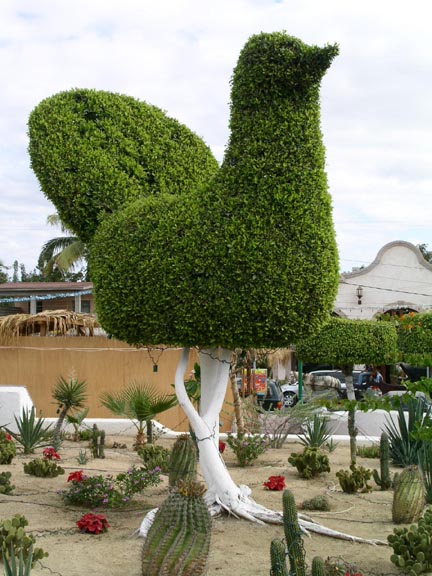
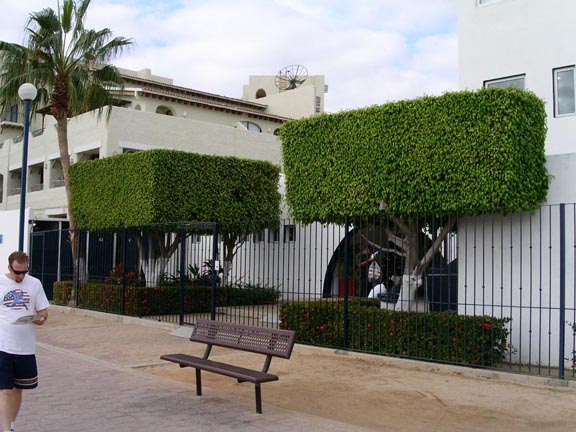
Landscape Use: Dense shade tree, street tree only in sites with wide medians, large courtyards and interior malls, ginormous formal screening hedge for upscale resorts, residential estates and palaces, large containers, a prop for dummies, and of course there's the famous 'Cabo Chicken' (topiary). Also used as a bonsai plant.
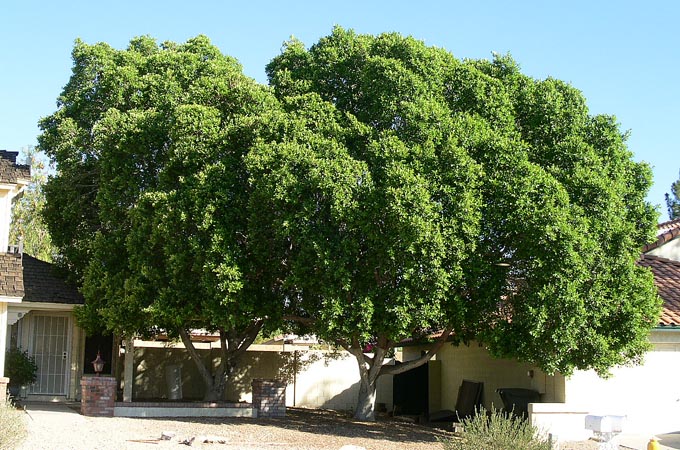
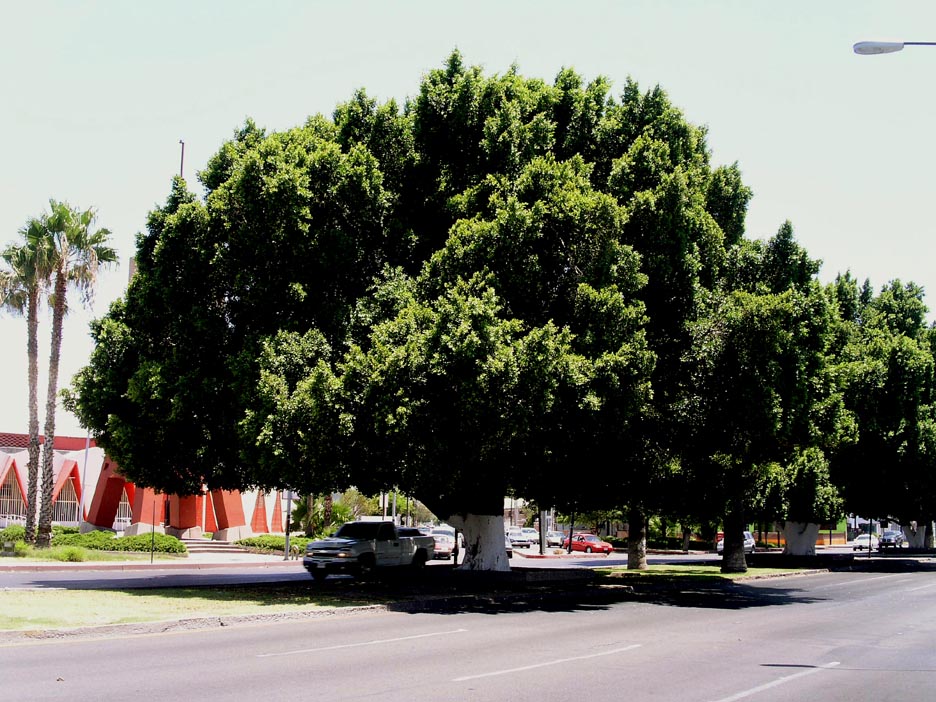
Form & Character: Potentially massive tree (see these Indian laurel figs in the middle of Highway 15 in downtown Hermosillo, Sonora, Mexico) with a dense rounded canopy, spreading with age, heavy looking, clean, powerful, formal.
Growth Habit: Evergreen, soft-wooded, broadleaf perennial tree, moderate growth rate to 50- to 80-feet tall width generally greater than height especially for mature trees.
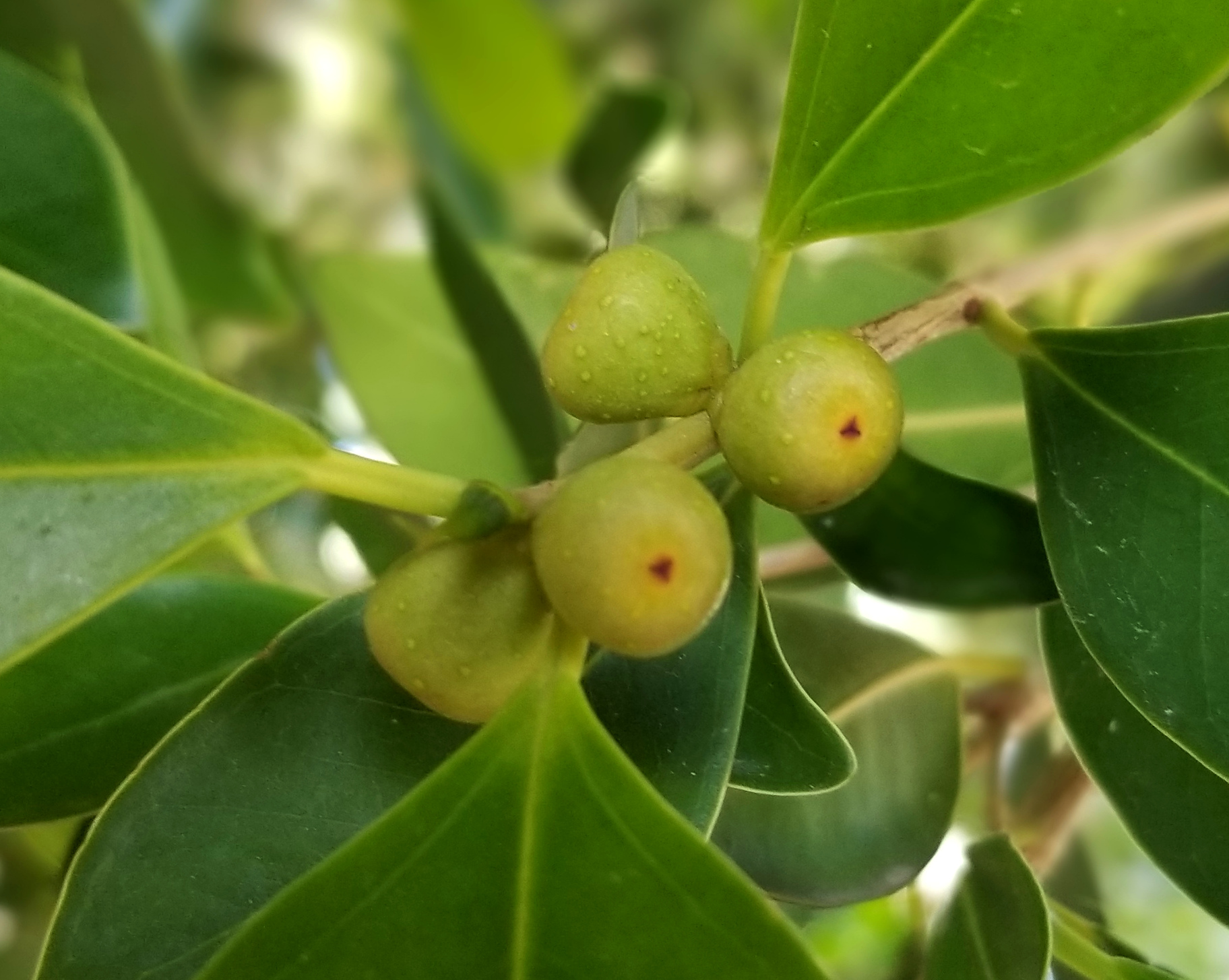
Foliage/Texture: Lustrous, glabrous oval leaves tapering to acuminate tip, leaves very persistent, trunk and branches have thin, smooth, grayish white bark with lenticels on small branches, latex producer; medium texture.
Flowers & Fruits: Both small, axillary, inconspicuous; fruit is a small, yellowish-green rounded nut.
Seasonal color: None, just a big mass of GREEN!
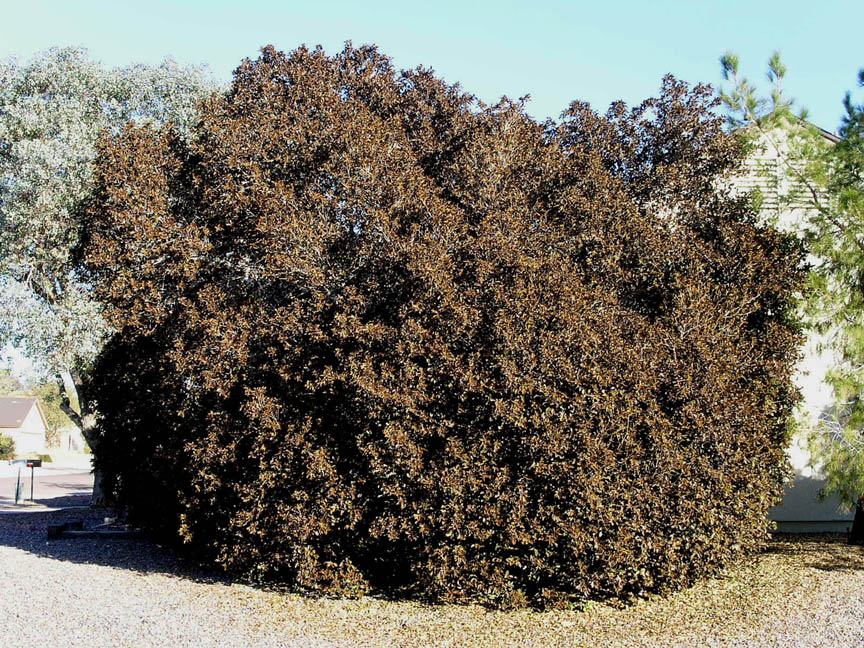
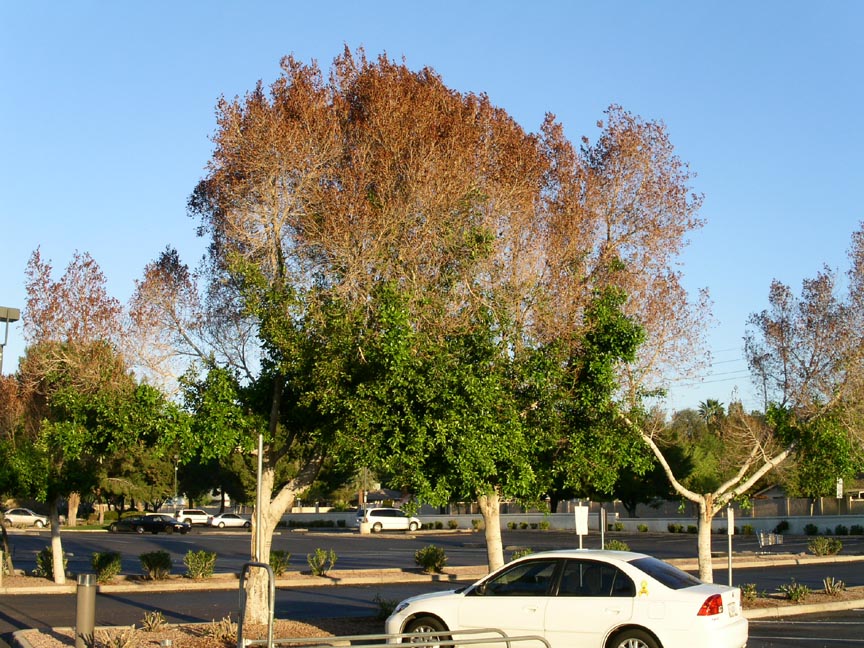
Temperature: Generally hardy outdoors in the temperature range of 24oF and to 117oF. Foliage and young branches can be injured during cold winters in Phoenix. Indian laurel fig across Phoenix experienced freeze damage in January 2007. And here is the same tree 11 months after the freeze of January 2007 in November 2007. Extreme Phoenix summer temperatures (above 117oF) and intense sunlight will also damage exposed foliage on the upper canopy of trees, such as happened during the high heat of the Labor day weekend in 2020. Either way trees injured by extreme Phoenix cold or heat usually recover quickly (except for the sudden Phoenix 'deep freeze' events of January 2007 and 2013).
Light: Full sun to full shade, avoid reflective western exposures because the tree's trunk is prone to sun scald injury.
Soil: Tolerant
Watering: Regular
Pruning: Crown raise (elevate the canopy base) gradually as Indian laurel fig trees mature. Trees propagated from stem cuttings will need to be rigorously staked and pruned as they grow to train as a tree standard or in the case of management by the 'Horticultural clods of Phoenix' (aka 'hort clods') they are '(mis)trained' to have that classic 'shoebox on sticks' appearance.
Propagation: Easily propagated by vegetative cutting or air layering.
Disease and pests: Thrips, otherwise none.
Additional comments: Encourage deep rooting around paved areas by deep watering practices because Indian laurel fig can grow an extensive matrix of surface roots. It also can be maintained as a slow growing interior container plant for some time.
There are several selections of Indian laurel fig including:
A special warning: Beware and be prepared! Indian laurel fig is a favorite roosting and otherwise social hangout spot for many species of birds. Park your car under the shaded canopy of Indian laurel fig trees at your own risk.