Scientific: Fouquieria splendens
Common: ocotillo
Family: Fouquieriaceae
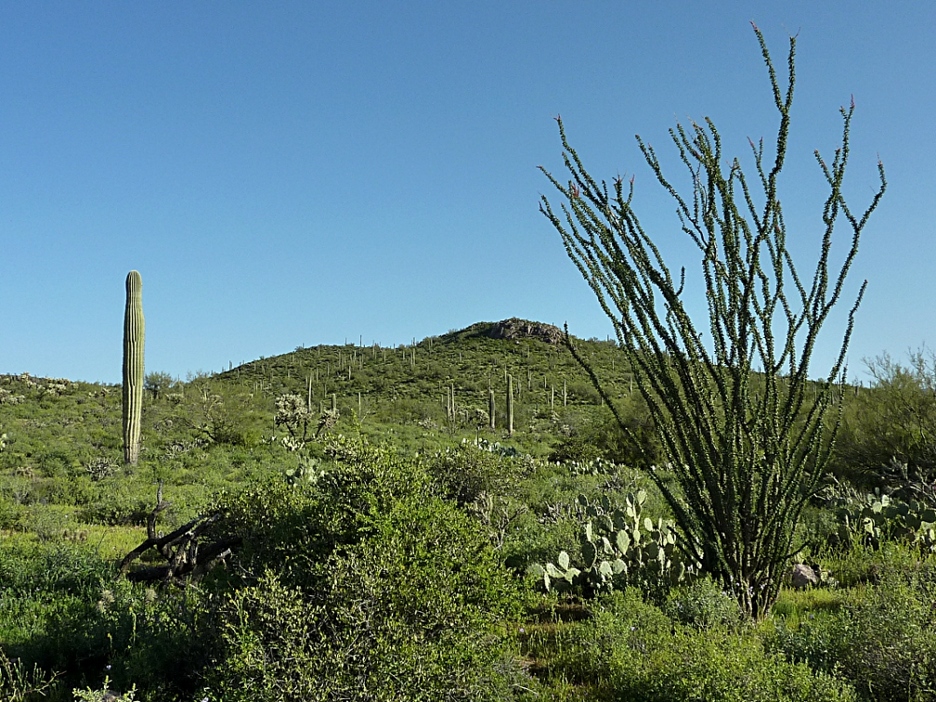
Origin: Rocky soils and upslopes and uplands of the Sonoran and Chihuahuan
Deserts from southeastern California to southwest Texas and northern Mexico
Pronounciation: Foe-u-qui-ER-ee-a SPLEN-dens
Hardiness zones:
Sunset 10-13, 18-20
USDA 8-10 (arid zones only)
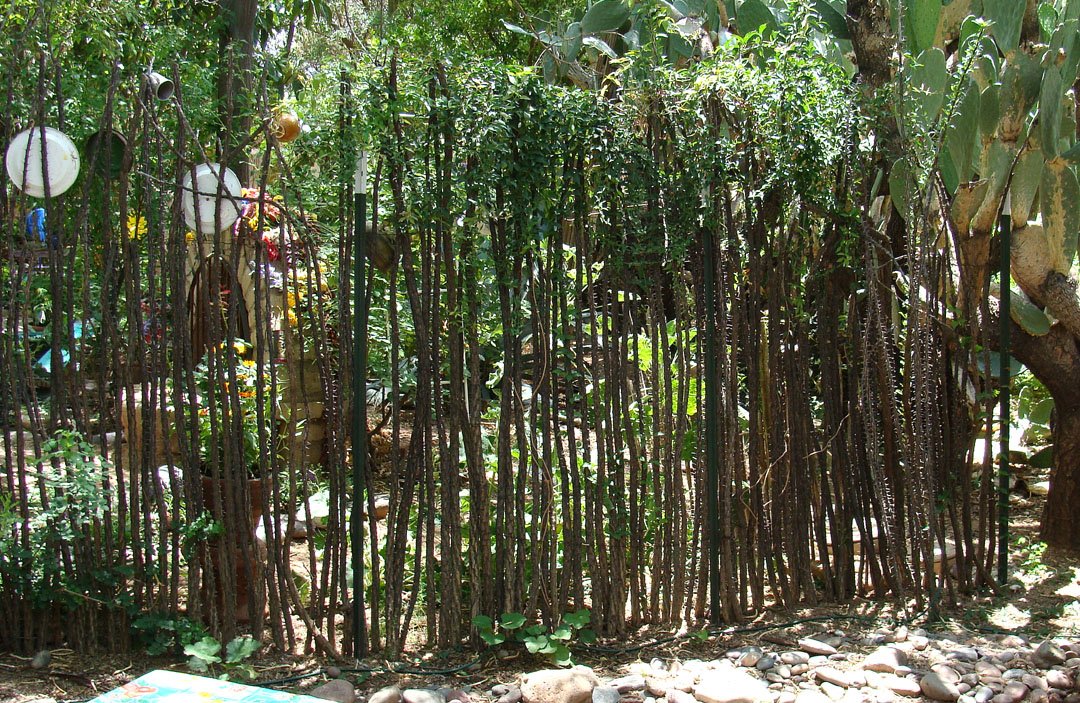
Landscape Use: Accent, focal point, barrier, silhouette, desert plantings, living fence posts, uncompromising.
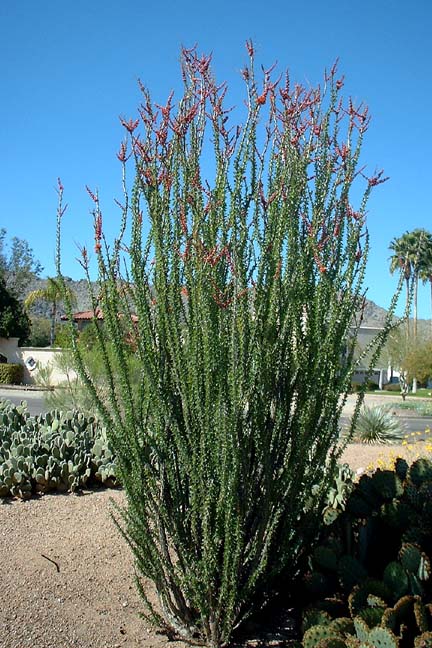
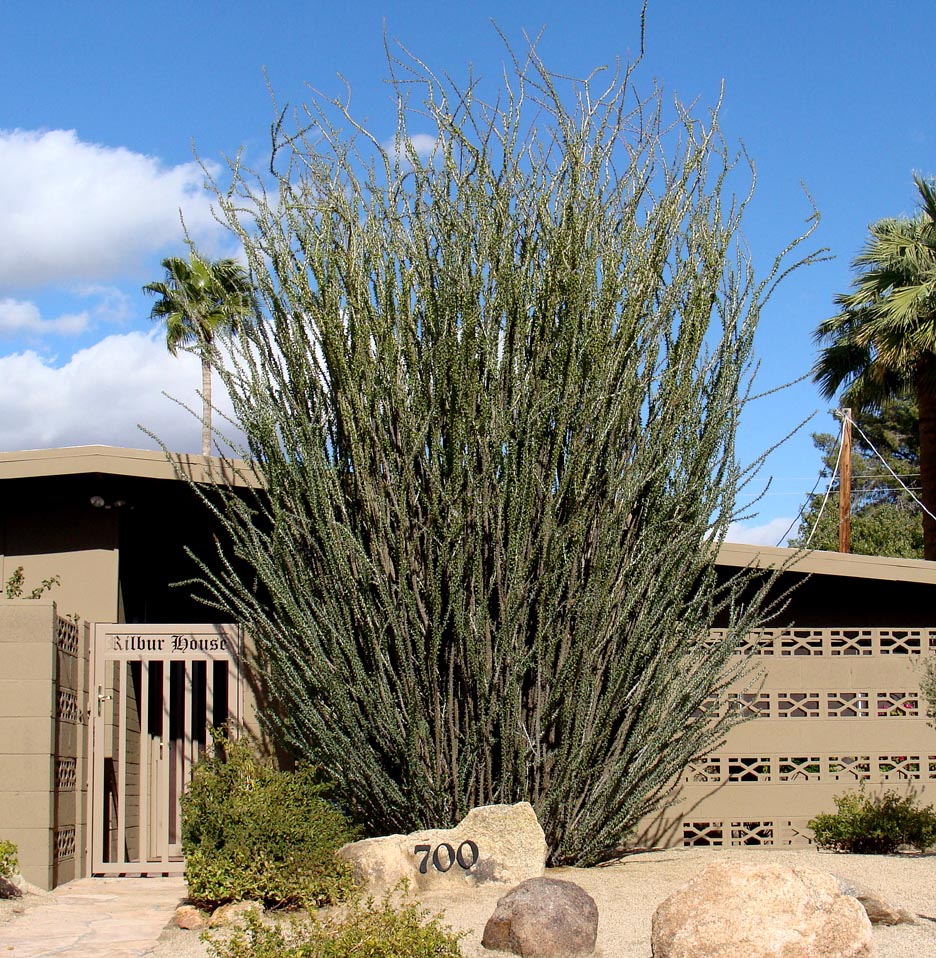
Form & Character: Stiff and upright, beautiful, wild, imposing, excellent xeriscape upright native desert shrub.
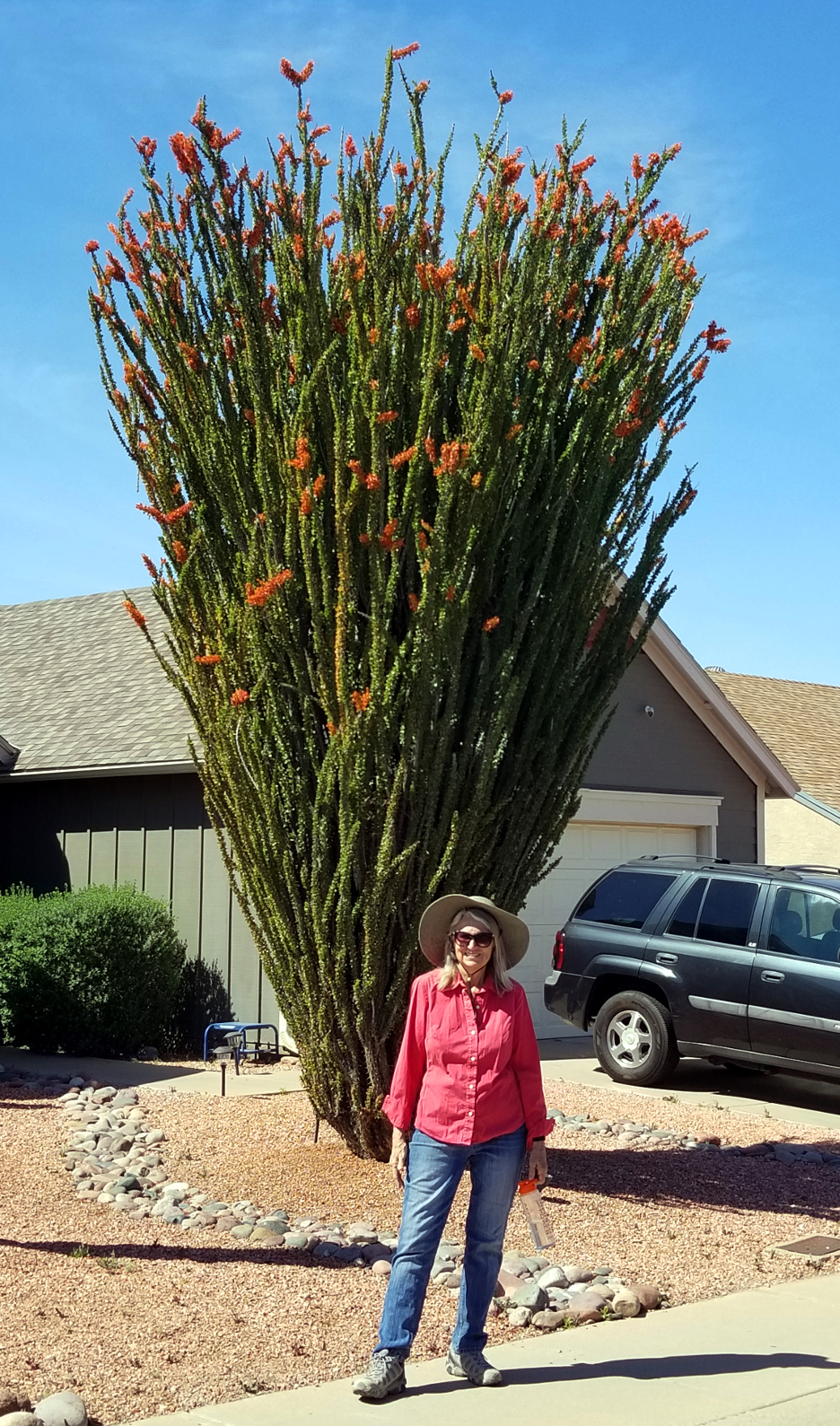
Growth Habit: Mostly deciduous, sarcocaulescent (stem succulent) perennial, moderately vigorous to 15-feet tall (20-feet tall with supplemental water), mostly branches at base with individual stems extending upwards.
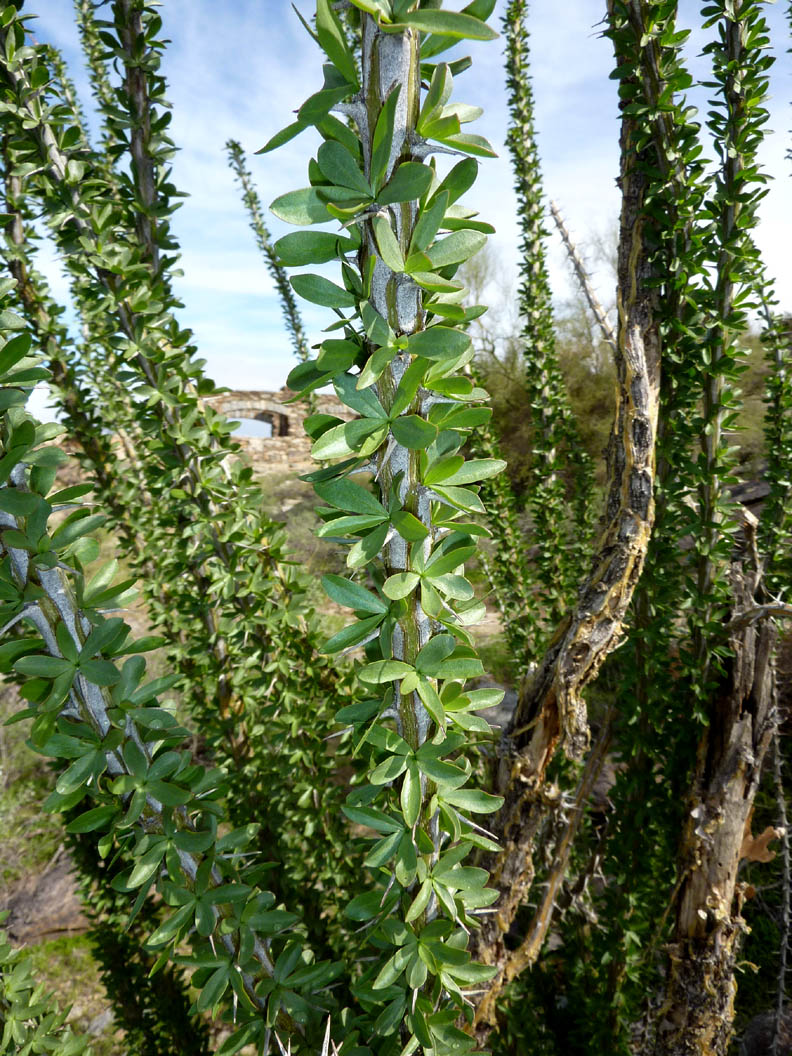
Foliage/Texture: Generally leafless except foliated briefly after winter and summer monsoon rains. Leaves small, green, and sessile along the axillary meristems of stems, quickly senesce a few weeks after desert rain events and thereafter shed leaving green and gray striped stems with prominent spines. In irrigated urban landscapes, foliage is a bit more persistent; coarse texture.
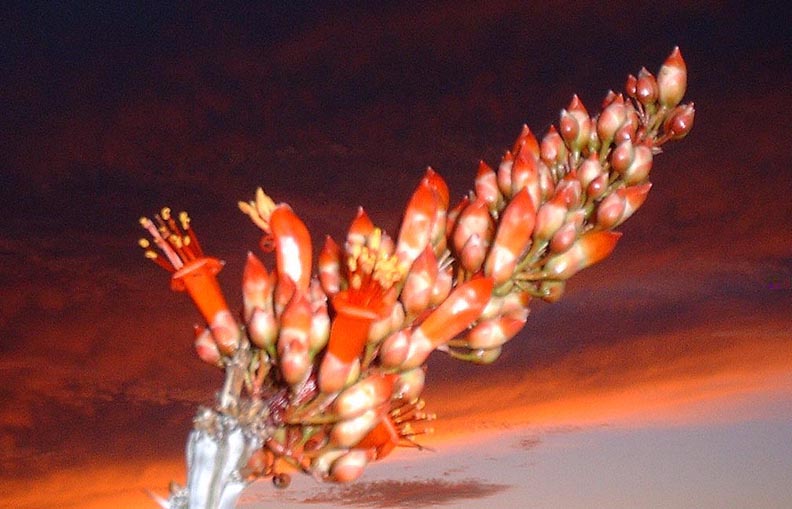
Flowers & Fruits: Two 12-inch terminal flower spikes per each stem bearing numerous vermilion-colored flowers; fruits insignificant.
Seasonal Color: Flowers are seen from late February through March and on occasions during September in reponse to heavy monsoon rains.
Temperature: Ocotillo is well adapted to the Phoenix area.
Light: Full sun
Soil: Fast drained soila are best, often found on rocky sloping soils slopes in native habitats.
Watering: Very drought tolerant. Supplemental landscape irrigation will greatly increase growth and vigor.
Pruning: Usually none required, removal of stems to ground.
Propagation: Dug and transplanted easily, cutting using large stem sections, seed.
Disease and Pests: Root rot if soil drainage is poor.
Additional comments: Hummingbirds and carpenter bees are
pollinators in west and east, respectively (both in Phoenix).
Flower intensity and duration related to pollinator. A fresh bark
tincture is rich in at least 12 iridoid glucosides that can be used
to reduce swelling of hemorrhoids, cervical varicosities and benign
prostate enlargement.
In addition to Fouquieria splendens, there are two other prominent species that are native to our North American deserts. Fouquieria
macdougalii (Mexican ocotillo tree) is from Sonora and north Sinaloa, Mexico and is similar but much smaller to 6 feet in height and more cold sensitive than ocotillo. The other is the boojum tree.