Scientific: Gazania (this horticultural crop is a complex mix of hybrids between Gazania rigens,
Gazania leucolaena, Gazania uniflora and Gazania rigens leucolaena)
Common: gazania, treasure flower
Family: Asteraceae
Origin: South Africa
Pronounciation: Ga-ZA-ne-a SPEE-sheez
Hardiness zones
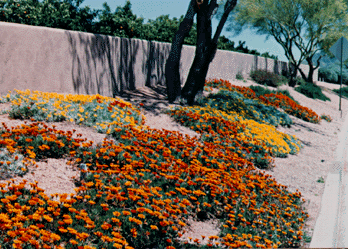
Landscape Use: Annual or perennial ground cover, bank cover
(trailing variants only), edging, raised planters, containers, winter to spring color.
Sunset All as annual, 8-24 as perennial
USDA All
Form & Character: Prostrate and matting, festive, bright and cheerful when in bloom.
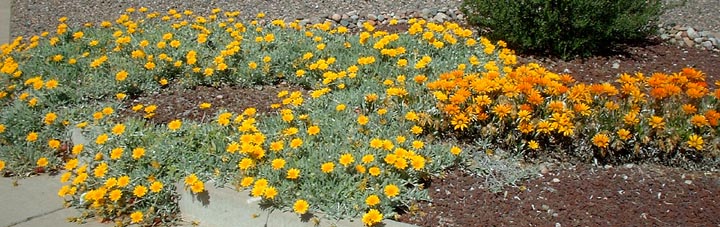
Growth Habit: Evergreen, mostly herbaceous perennial, biologically active during October to April in Phoenix, quiescent (but not dormant) during the remainder of the year (when the Phoenix weather is 'muy caliente!'). Variants can be put into two groups based on growth habit, either clumping or trailing. Clumping gazanias form small, rounded mats to one foot wide. In contrast, trailing gazaninas can spread to 6 to 8 feet wide. All variants grow less than 12 inches tall.
Foliage/Texture: Gazania leaves are sessile (no petiole), linear to lanceolate in shape to 5 inches in length, some varieties have leaves that are nearly pinntified. The adaxial surfaces of gazania leaves range from being glabrous and dark green to densely tomentose and gray. The abaxial leaf surfaces are typically tomentose white; medium texture.
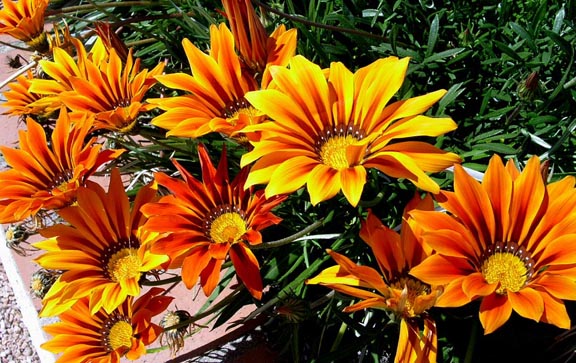
Flowers & Fruits: Gazania produces radiant single or double ray flowers that are usually about 3 inches in diameter on peduncle up to 6 inches long. Flower colors are many and range from white, yellow, orange, pink, red, burgundy to purple. Gazania fruit is a villous (hairy) achene.
Seasonal Color: Bright flowers mostly during late winter and spring.
Temperature: Cold hardy to 25oF. Gazania grows well in mild to warm Mediterranean climate conditions, but struggles when temperatures exceed 110oF.
Light: Full sun
Soil: Tolerant of alkalinity, but MUST be well drained.
Watering: In Phoenix, gazanias treated as perennials in the landscape require supplemental water throughout the summer because of the intense heat.
Pruning: Confine spread if trailing too far, otherwise no pruning is needed.
Propagation: Easily propagated by seed, division, or cutting.
Disease and Pests: Aphids, thrips, snails and spider mites can be a major problem if left unchecked. Clumping variants are more susceptible to root rot if soil is poorly drained.
Additional comments: Gazania provides a wonderful spring floral display, but mostly looks poor and suffers heat stress during the summer because of the high heat of the Arizona deserts. Because of this, its my opinion that gazania is best used as a cool season annual in Phoenix. Gazania rarely reseeds in desert urban landscapes. There's an absolute myriad of cultivars! Many new ones each year.
A horticultural perspective: Gazania is actually (as Mediterranean plants go) a true California landscape plant that has been transported into Arizona landscape gardens by 'transplanted' flower buffs.