Scientific: Hedera canariensis (Synonyms: Hedera algeriensis, Hedera canariensis var. algeriensis)
Common: Algerian ivy
Family: Araliaceae
Origin: Canary Islands off northwest coast of Africa
Pronounciation: HED-er-a ca-nar-ee-EN-sis
Hardiness zones:
Sunset 13 (with protection from summer afternoon sun), 15-24
USDA 9-11
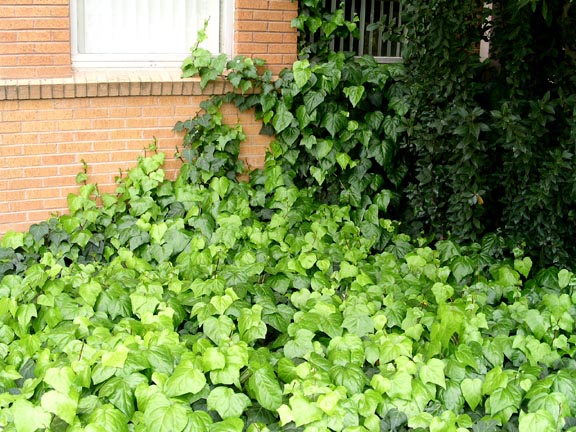
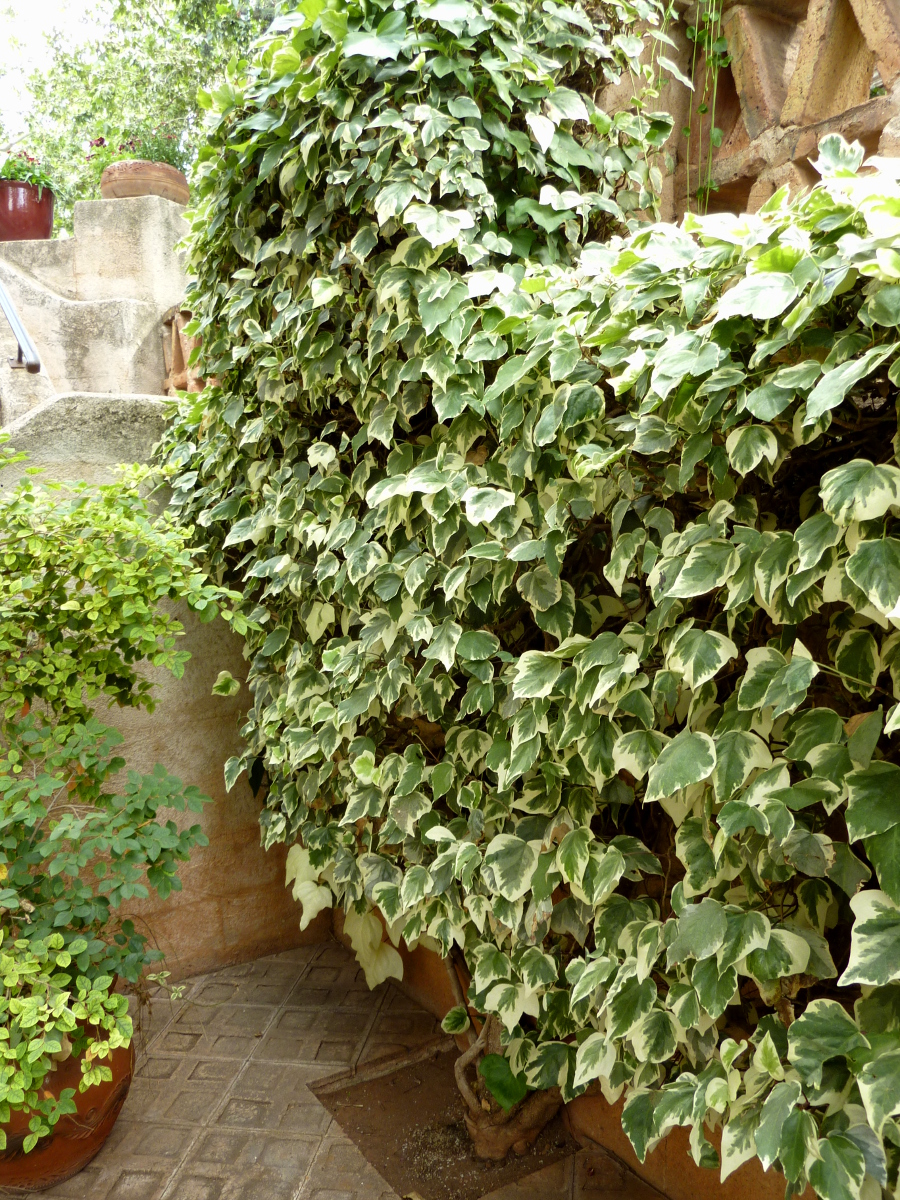
Landscape Use: Large scale shade ground cover, cute bonsai, variegated cultivars can be used in small, shaded landscape spaces as a foliar accent plant.
Form & Character: Evergreen, eventually woody, broadleaf perennial vine that is most biologically active during winter. Has a juvenile and adult 'form'. The common juvenile 'form' (with larger juvenile leaves) is only vegetative and vigorously trails and produces adventitious stem roots; whereas, the more rare adult 'form' is upright, shrubby and reproductive.
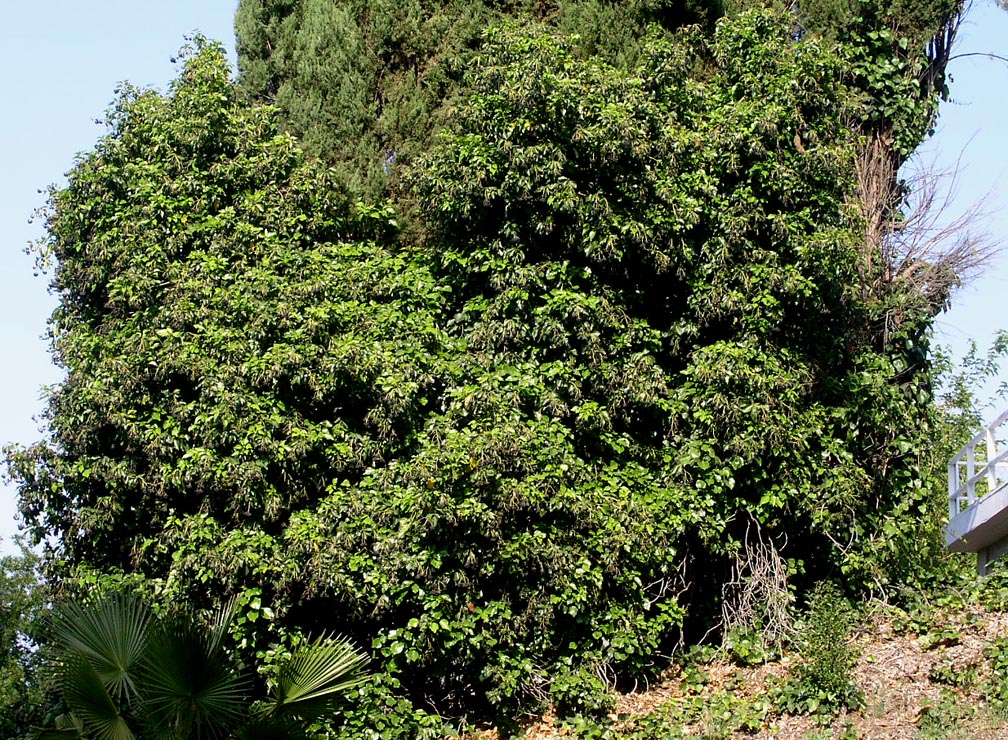
Growth Habit: The common vegetative juvenile form vigorously trailing to 200 feet or more or in Phoenix until it is exposed to full sunlight.
Foliage/Texture: Juvenile foliage is 3 lobed, 4- to 6-inches wide at base w/ palmate venation, bright light green, maturing to a deep dark green with a prominent palmate veins pattern. Vegetative juvenile stems can produce copious adventitious stem roots (aerial roots) that will attach and support the vine onto most anything and can be destructive especially to wood painted strutures. The adult foliage is somewhat smaller and less lobed. Adult foliage is usually produced by the plant once it has climbed high onto a support structure such as a wall or palm tree. In all, this is a coarse textured vining plant.
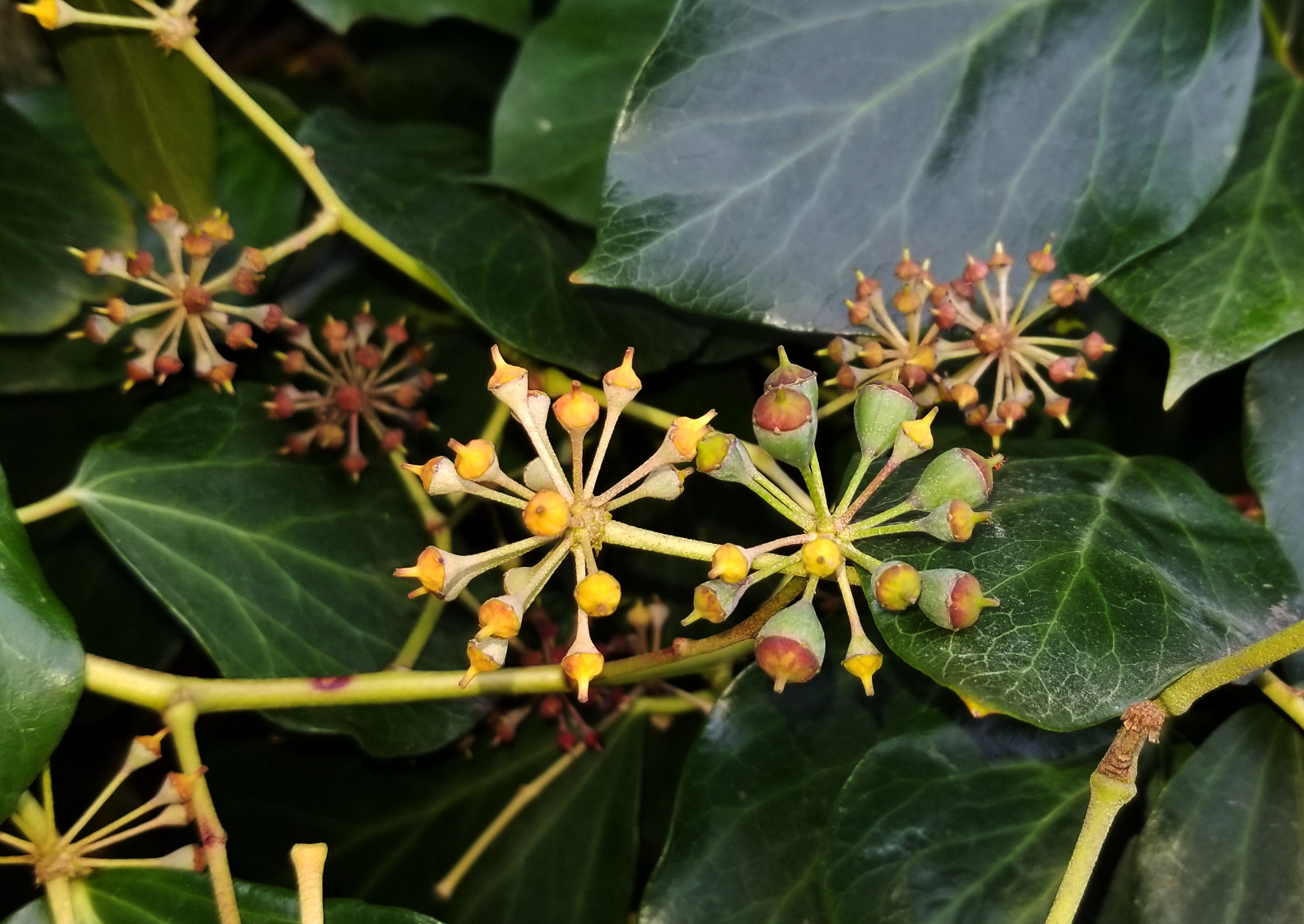
Flowers & Fruits: Juvenile foliage none, adult form has small greenish white flowers in clusters during spring followed by small drupe fruits that are green when immature, ripening to black.
Seasonal Color: None really, though I appreciate the subtle light green coloration during late winter and early spring when new growth commences.
Temperature: Cold and heat sensitive, hardiness range is from 30oF to 110oF
Light: Ranges from partial to full shade in Arizona and California deserts to full sun along the coast and coastal valleys of southern California. Easily sun scorched (toasted like white bread) during summer in full sun in inland valley and desert locations away from maritime influence.
Soil: Tolerant
Watering: Only slightly drought tolerant, best w/ regular irrigation.
Pruning: Aggressively prune hard to control spread as necessary.
Propagation: Easily roots from stem cuttings of juvenile form only. otherwise, seed from adult fruits.
Disease and Pests: None in Arizona, though bacteria leaf spotting is a major problem on leaves of Algerian ivy especially during increasingly rare cold early and mid winter rainy periods in southern California.
Additional comments: Algerian ivy is a vigorous vine that is best reserved for use in very large landscape spaces. It is a tough plant for those rare large, shaded landscape spaces in central Arizona. Once firmly established, Algerian ivy can be be EXTREMELY difficult to eradicate without intensive chemical intervention. Variegated cultivars need partial shade and are less vigorous.
Historical perspective: Algerian ivy was the quintessential landscape ground cover of southern California during the 1930s to 1960s. When I was a young boy in southern California, my Dad would sent me and my brother outside to the front yard on a regular basis to prune back (with hand-held hedge shears from Sears & Roebuck) the Algerian ivy from encroaching onto our house's driveway.....and that is how I learned from an early age to loath this agressive vine. Today, Algerian ivy is a landscape dinosaur.
Toxicological legend: Cases of skin dermatitis (similar to poison oak) have been reported in California upon frequent contact with Algerian ivy. However, as mentioned above, I battled Algerian ivy for years in Woodland Hills, California and was never smitten by an itchy rash (now poison oak, that's another story...yikes!!!).