Scientific: Prosopis glandulosa (Synonym: Neltuma glandulosa)
Common: honey mesquite
Family: Fabaceae (Leguminosae)
Origin: Broadly distributed from the San Joaquin Valley of central California, Arizona, southwest corner of Utah and southern Nevada, southern New Mexico, Texas, south Oklhoma and even into Louisiana and then extending south into the Yucatan pennisula of Mexico.
Taxonomic confusion: The genus Prosopis is under going a seismic taxonomic reorganization.
Pronounciation: Pro-SO-pis glan-du-LOO-sa
Hardiness zones:
Sunset 12-13
USDA 7-11
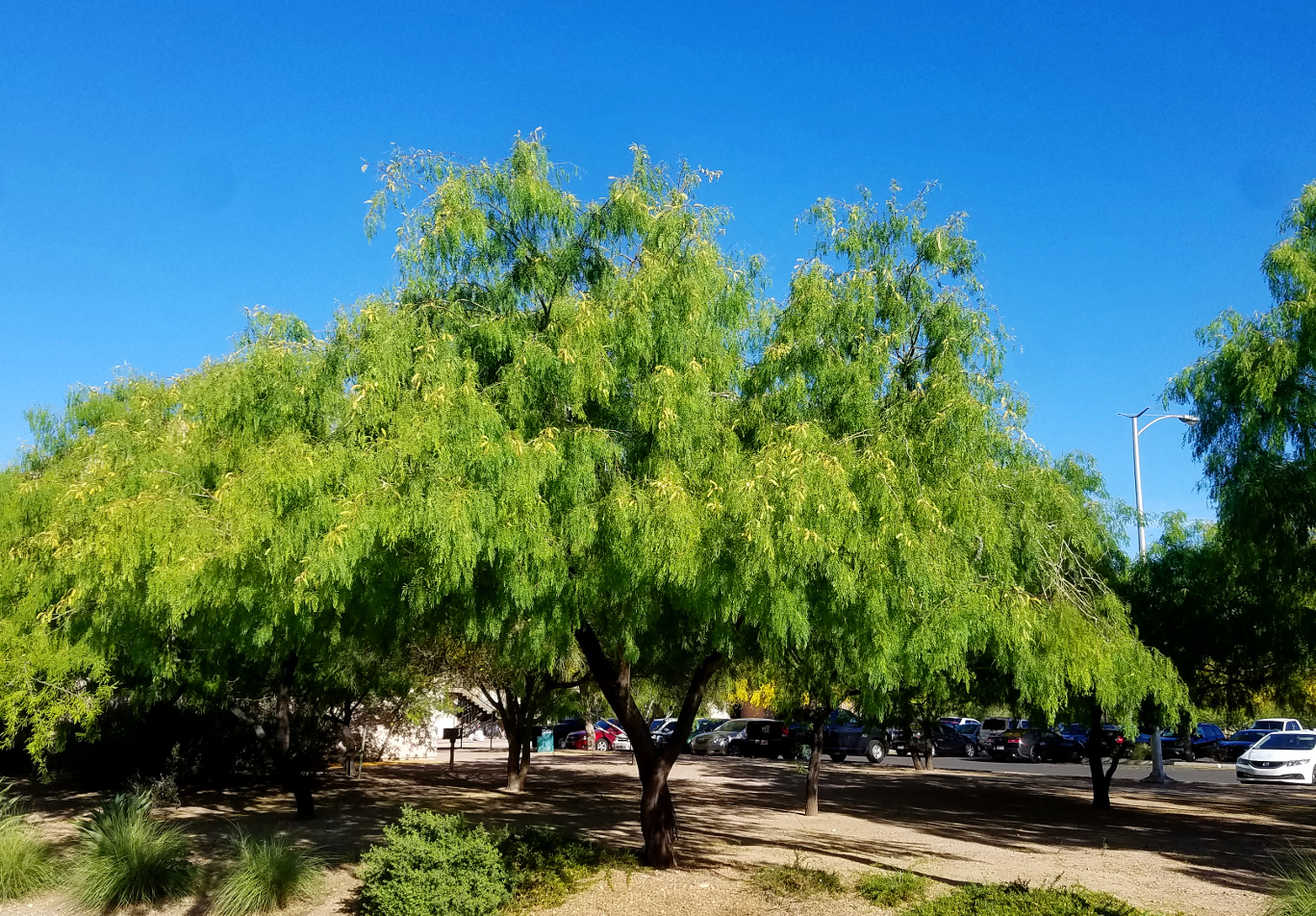
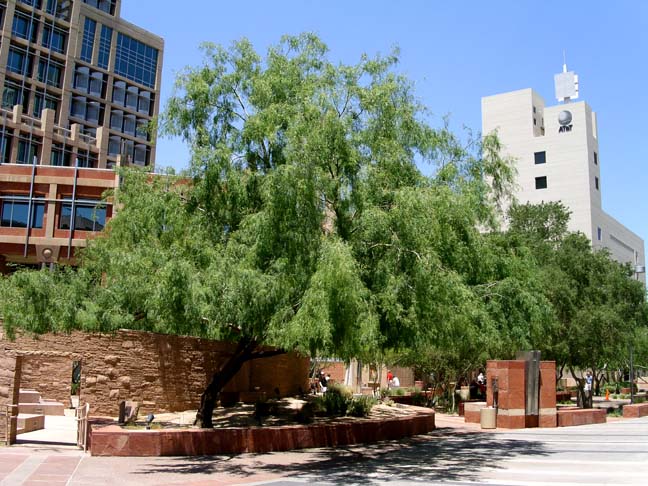
Landscape Use: Sprawling and ranging xeric tree, summer shade tree for dry landscape sites, restoration projects, dry riparian areas, not a lawn or street tree.
Form & Character: Broadly assymetrical with a twisting and contorted branch topology, picturesque with age, evokes a southwest adobe lifestyle.
Growth Habit: Deciduous, woody perennial tree, irregular and spreading to 30-feet tall with a somtimes much greater spread.
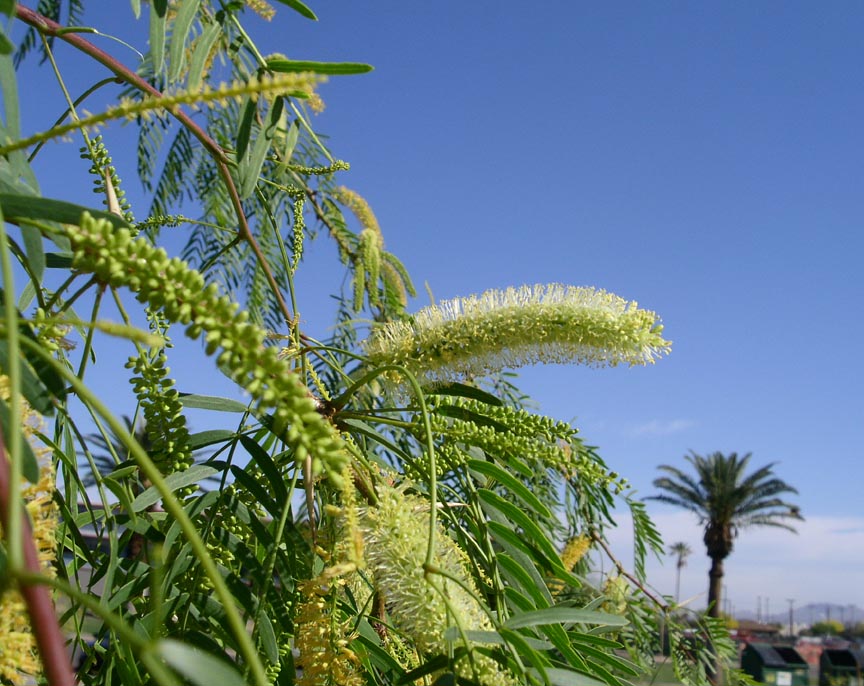
Foliage/Texture: Elongated, complex bipinnate compound leaves to 8-inches long with a more feathery appearance compared with other Prosopis species. Leaves have sometimes two, but more typically four pinna (rarely six pinna). Each pinna has 8 to 20 pairs of leaflets. Leaflets range from 1- to 2-inches long. Leaves might or might not have a pair of dangerous and pronounced stipular spines up to 3-inches long; medium texture.
Flowers & Fruits: Flowers are greenish yellow catkins in April; fruit are an indehiscent, brownish pod that ripens and falls off the tree in August, edible.
Seasonal color: None
Temperature: Highly tolerant of desert heat. Injured by temperatures below 20oF.
Light: Full sun
Soil: tolerant
Watering: None to occasional summer irrigations to encourage vigor only if needed. DO NOT irrigate regularly as this will cause the tree to grow structurally weak wood.
Pruning: Prune rigorously when young to train to a standard form with a single trunk and strong schaffold branch system. Otherwise, when mature prune to elevate canopy base and remove occasional suckers and water sprouts.
Propagation: To propagate by seed scarify hard seed coats of freshly harvested seed by soaking for 30 minutes in sulfuric acid (95% concentration) followed by a 30 minute rinse under running tepid water. Germination will occur within 6 to 36 hours at 75o to 85oF.
Disease and Pests: None
Additional comments: The recent rash of landscape architects specifying honey mesquites in Phoenix landscapes may be a backlash to the overplanting of hybrid South American mesquite trees across the city during the 1990s and 2000s. Honey mesquite fruit pods are surprise, surprise...very sweet and are used by native America peoples and native plant sustainability buffs to make flour for breads and pastries. 'Fort Stockton' is a named cultivar collected from west Texas.
There are several recognized naturally occurring varieties of honey mesquite. They are:
Personal reflection: If I were to ever build a rammed earth house in the Sonoran Desert, then I would feel totally compelled to plant several honey mesquite trees around it as shade trees.