Scientific: Lantana (in
the Phoenix area this is mostly either Lantana montevidensis or hybrid
cultivars of Lantana montevidensis and Lantana camara)
Common: lantana, trailing lantana
Family: Verbenaceae
Origin: Tropical America, but able to naturalize in moist, warmer regions worldwide.
Invasive alert: Lantana camara has naturalized in moist, warm parts of the continential United States including the lower southeastern United States and Florida to south Texas, coastal southern California and Hawaii where it is often considered a noxious weed.
Pronounciation: Lan-TAN-na
Hardiness zones:
Sunset 8-10 and 12-13 (often cold damage), 14-24, all other zones as a summer annual
USDA 1-8 (as a summer annual), 9-11 (as a herbaceous to semi-woody perennial)
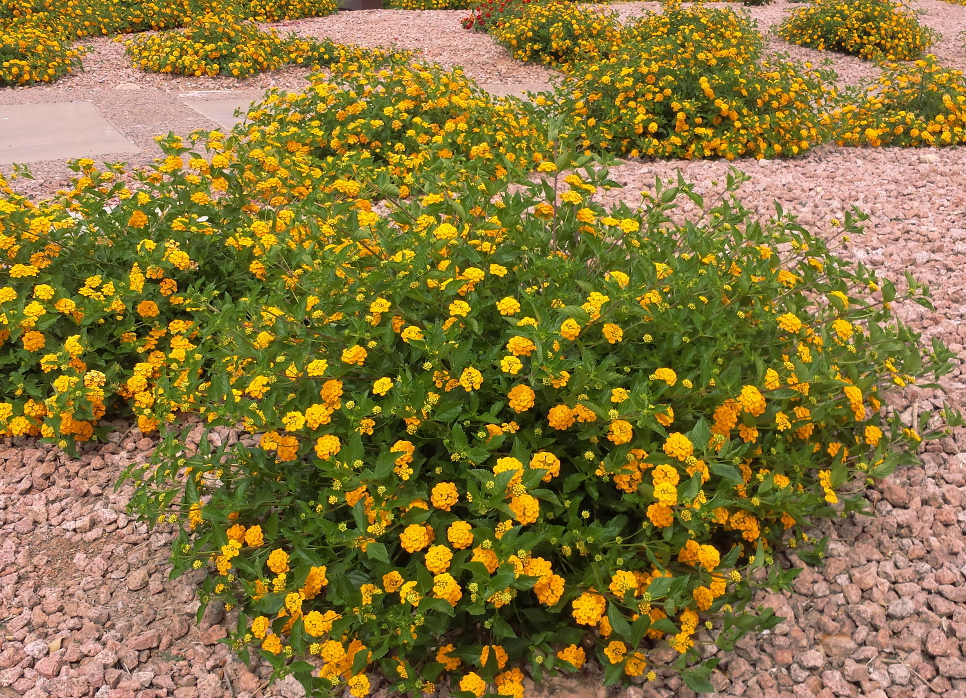
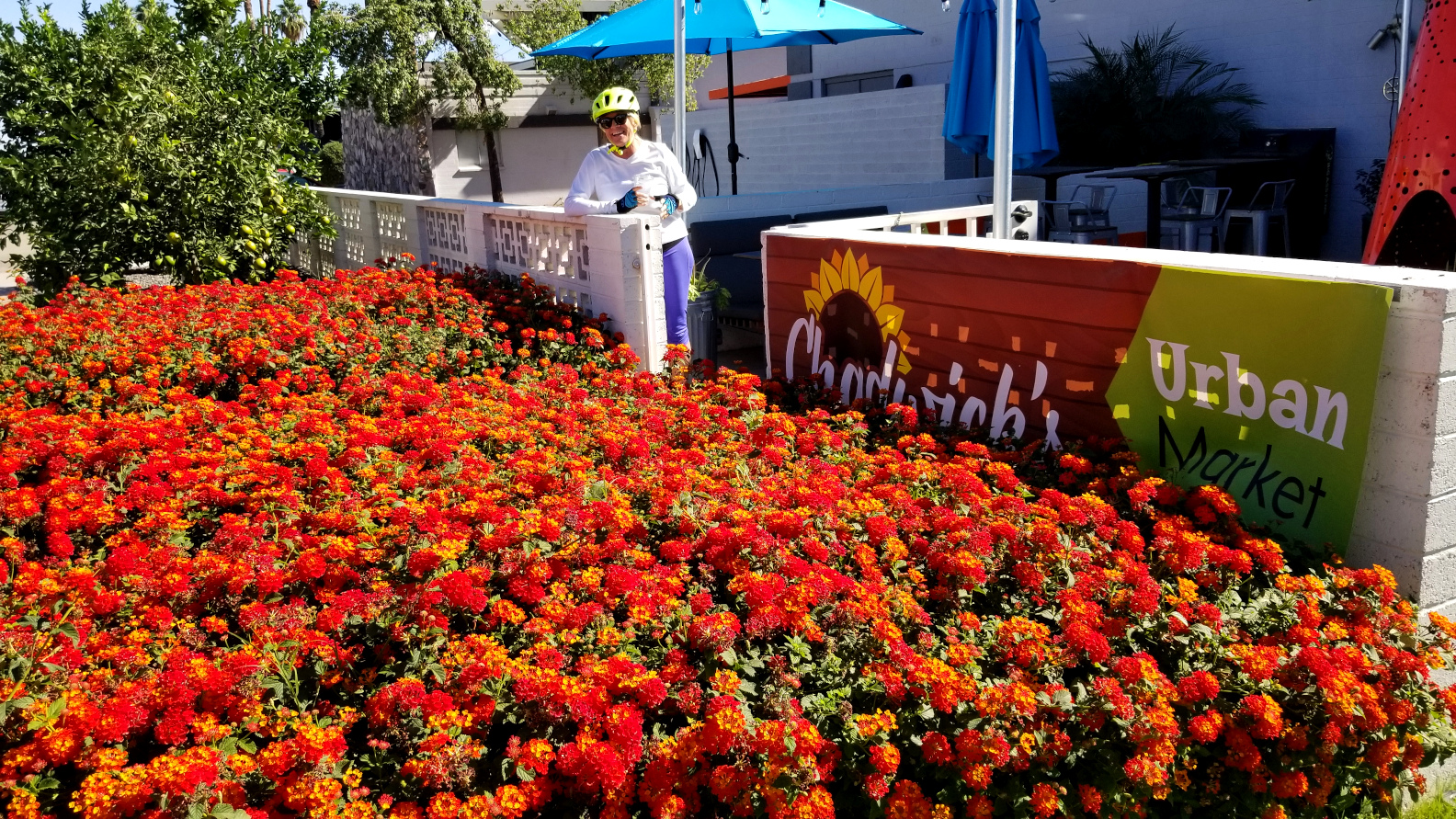
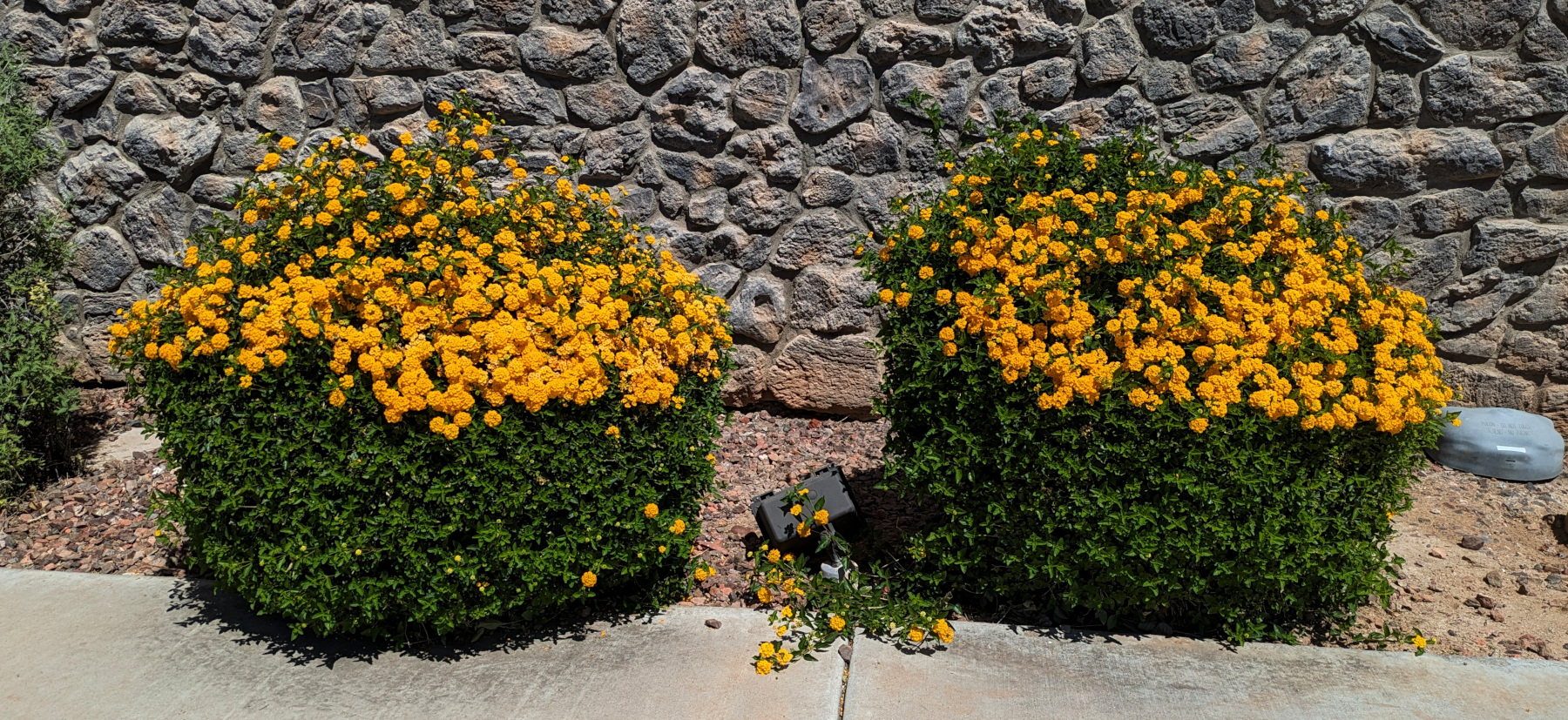
Landscape Use: The form and shape of lantana hybrids can vary widely, which expands its use potential in the landscape. Lantana with its versatile and dependable color display, has a variety of landscape uses such as a summer annual or perennial accent shrub, large scale landscape ground cover, informal hedge, raised planters, hanging baskets and containers. Lantana is the quintessential 'oasis' landscape design sub-shrub for near year around color accent in the Phoenix area.
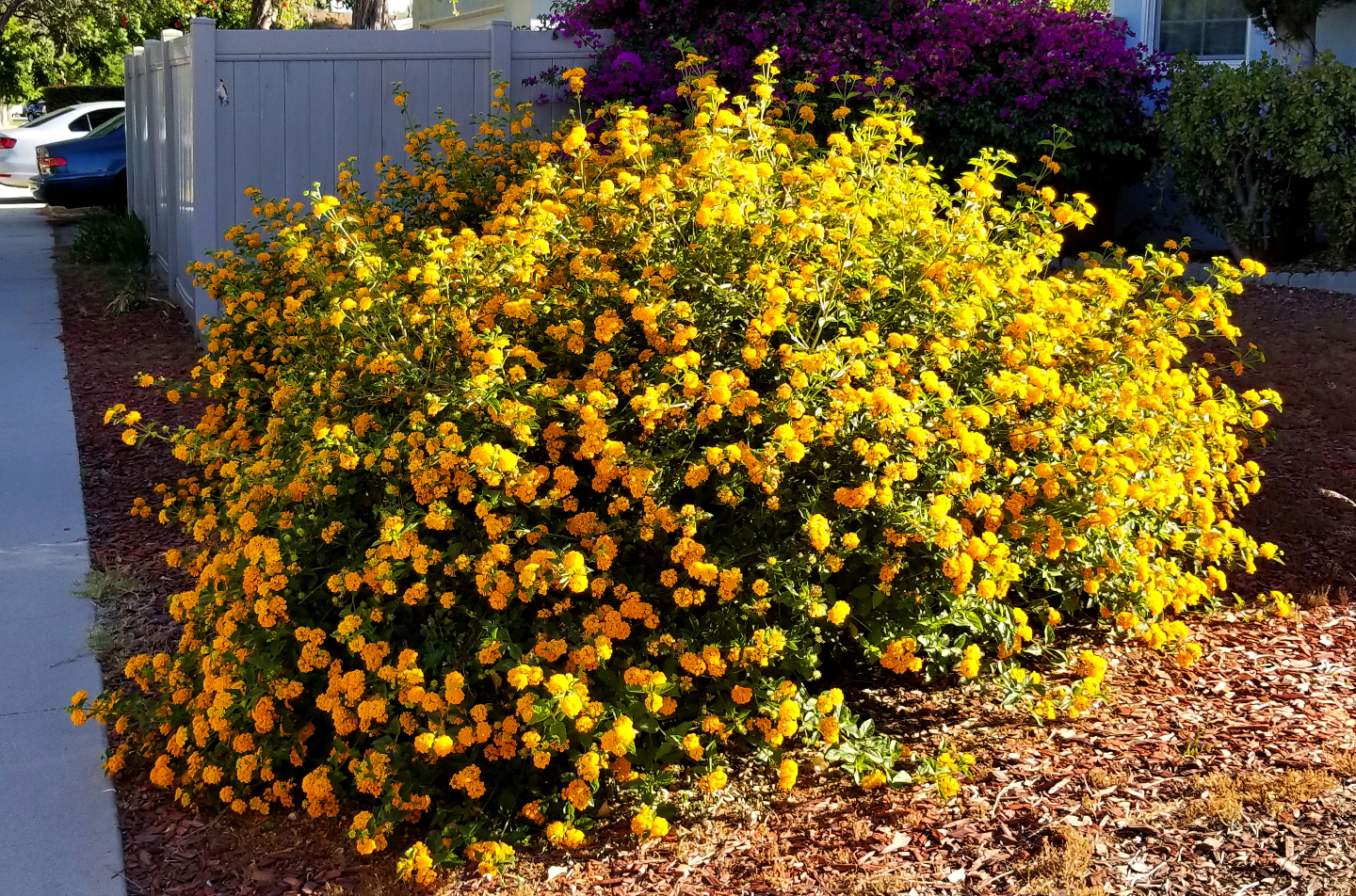
Form & Character: Evergreen shrub of variable form depending on cultivated variety ranging from upright and rounded to flattened and spreading, free flowering, cheerful, bright, tropical.
Growth Habit: Mostly a herbaceous, tender, evergreen perennial sub-shrub. The growth habit of hybrid cultivars depends on cultivar type, ranging in habit from an upright shrub up to 6-feet tall to a prostrate and spreading ground cover shrub less that 18-inches tall.
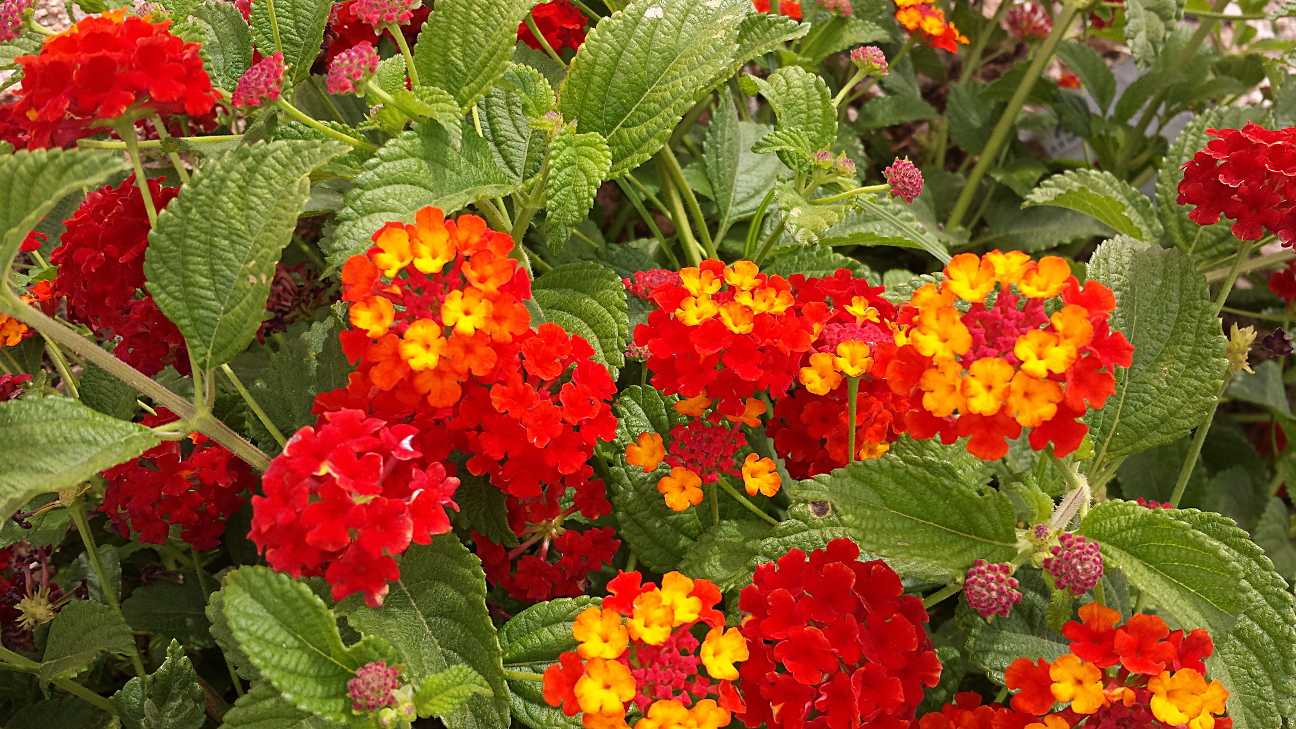
Foliage/Texture: Small, ovate scabrous (scratchy like sandpaper) leaves with serrate margins on generally wirey and brittle stem; medium texture.
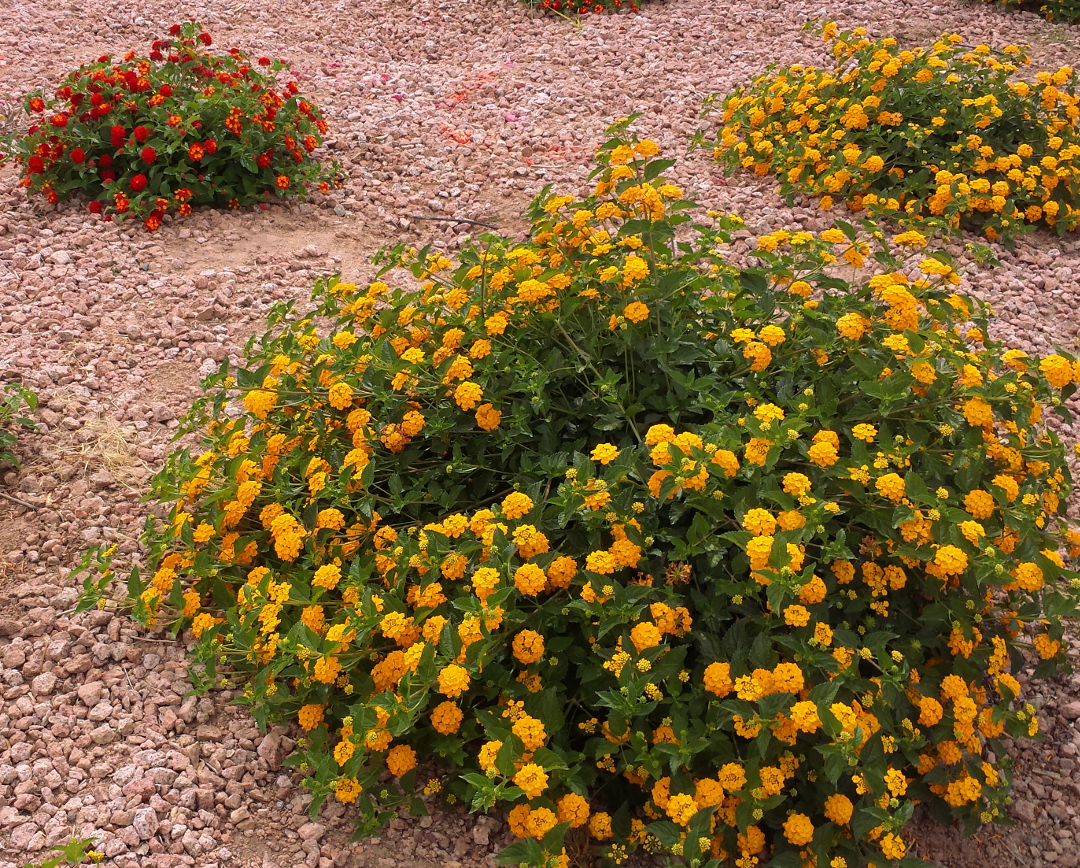
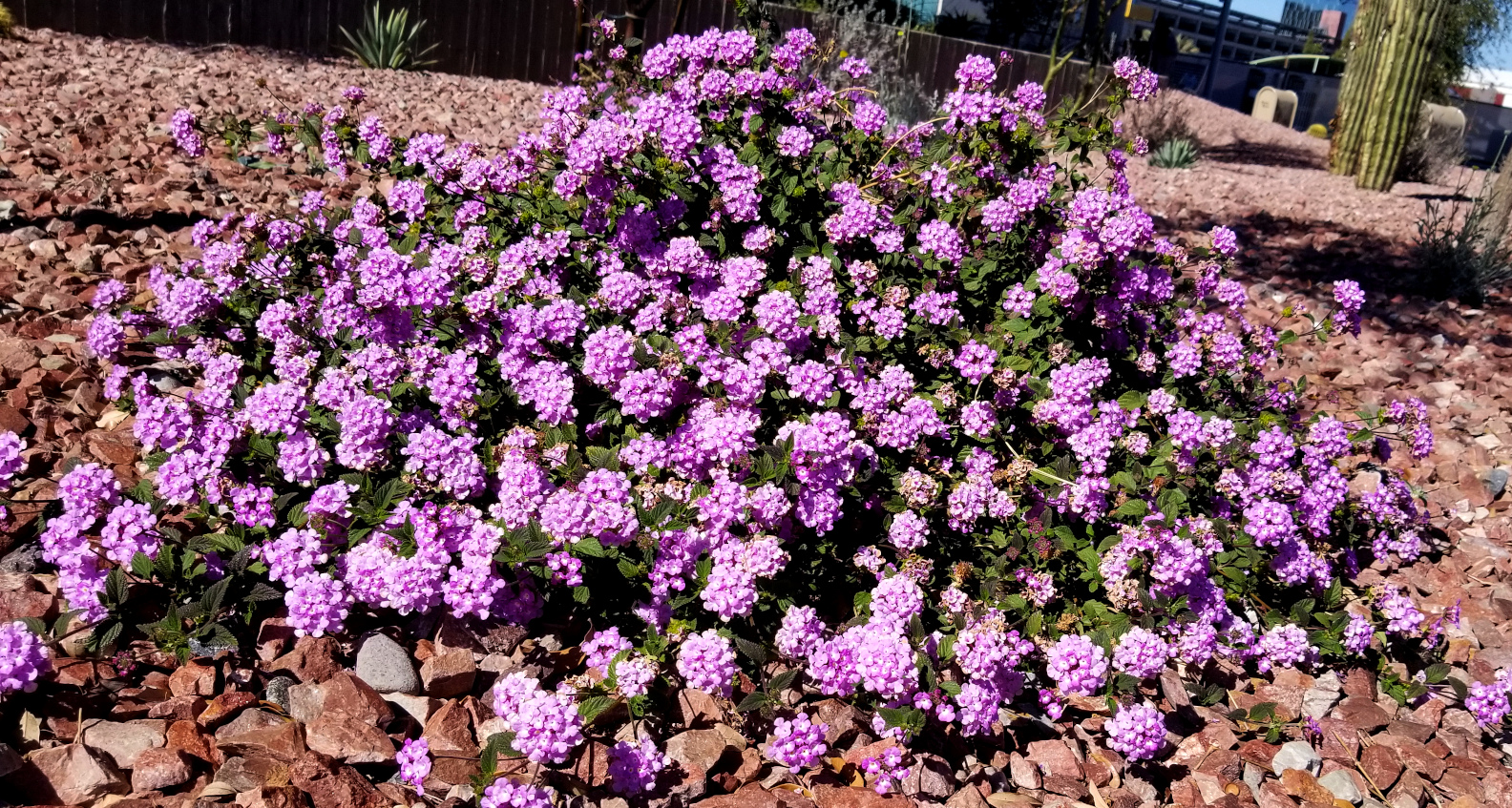
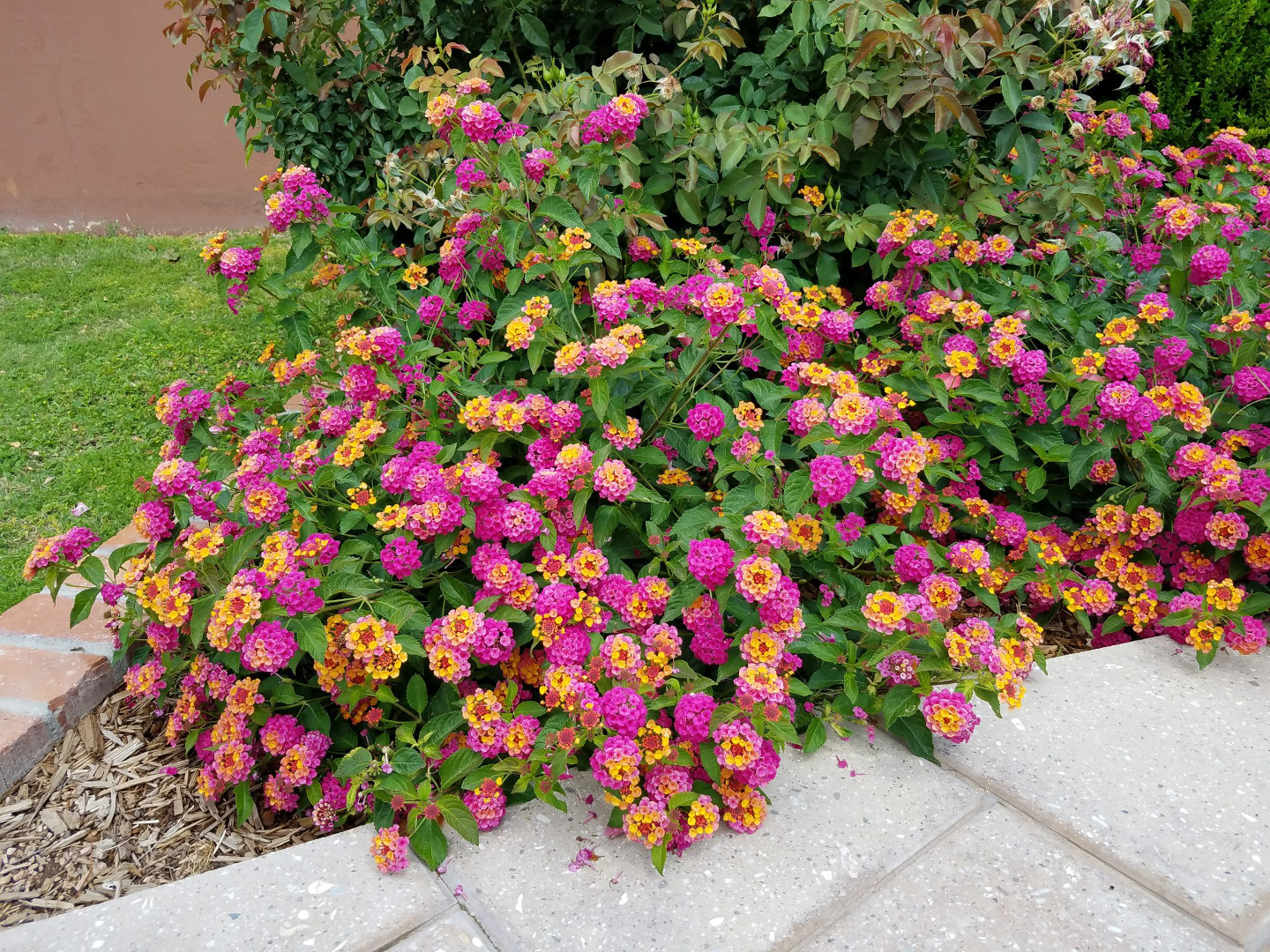
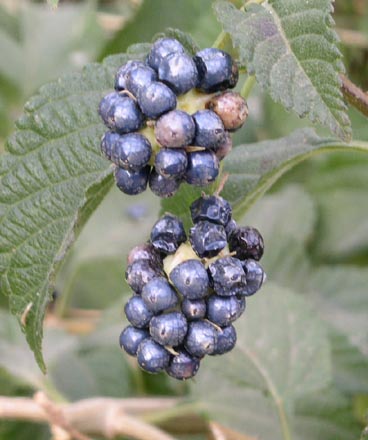
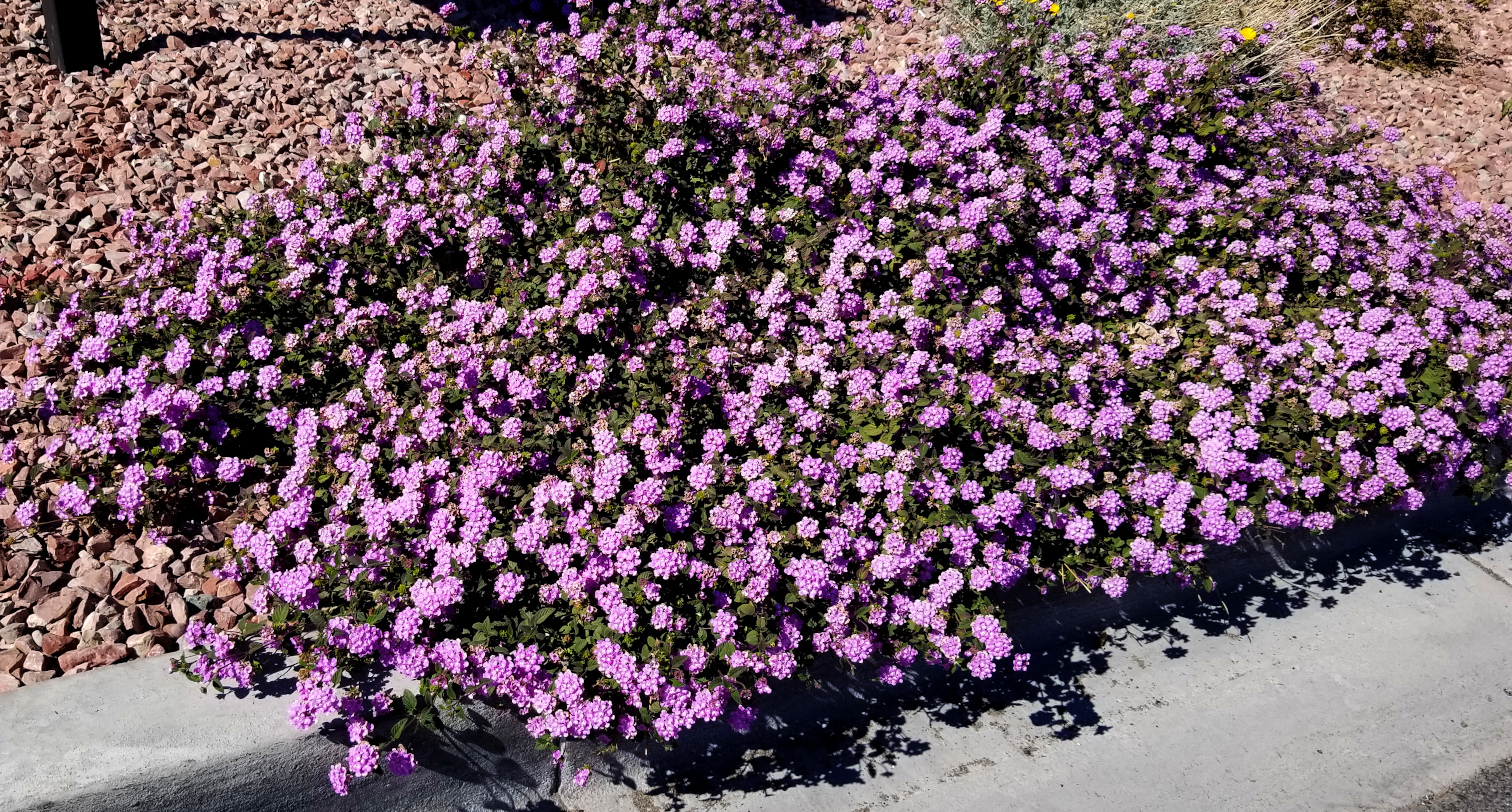
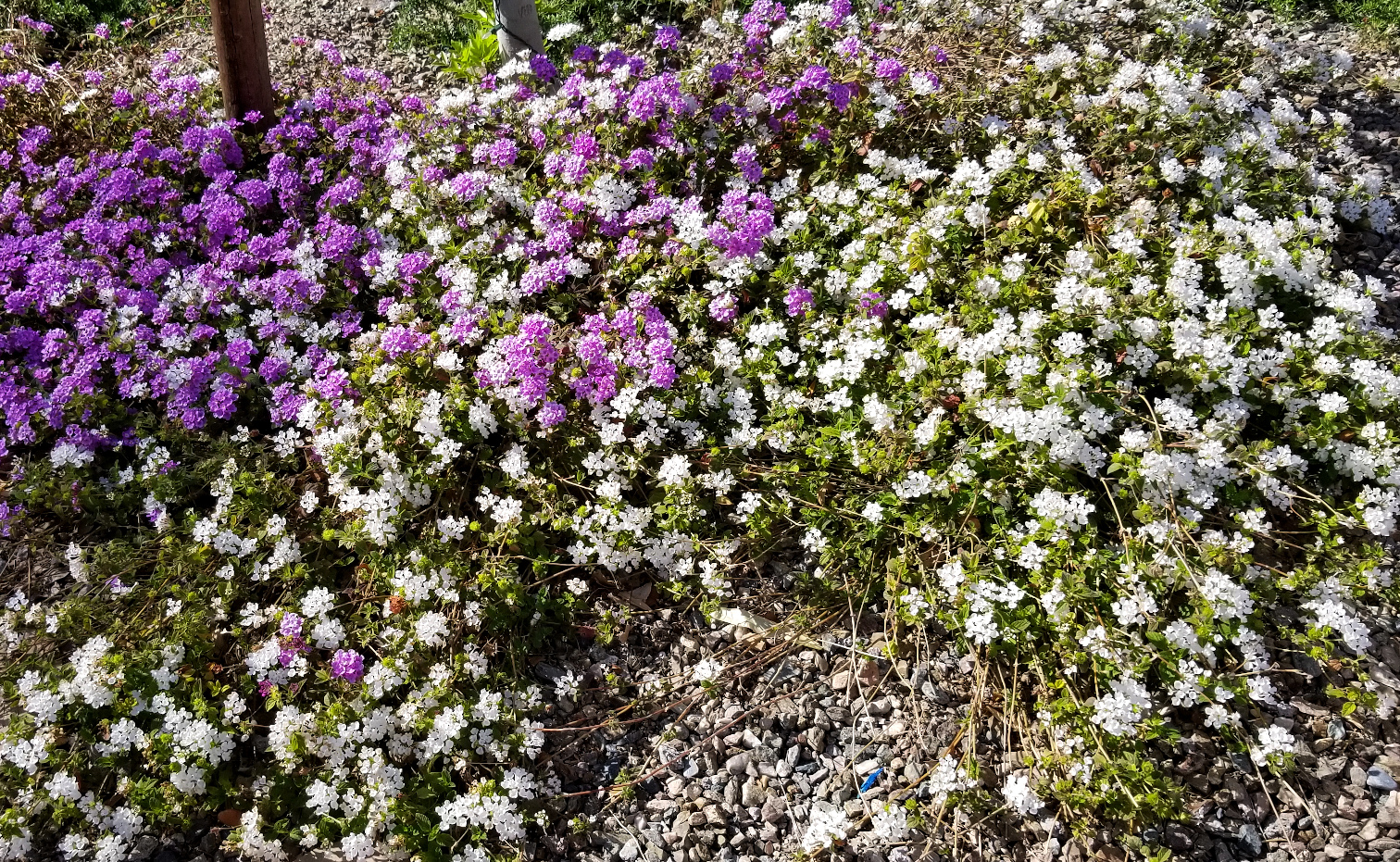
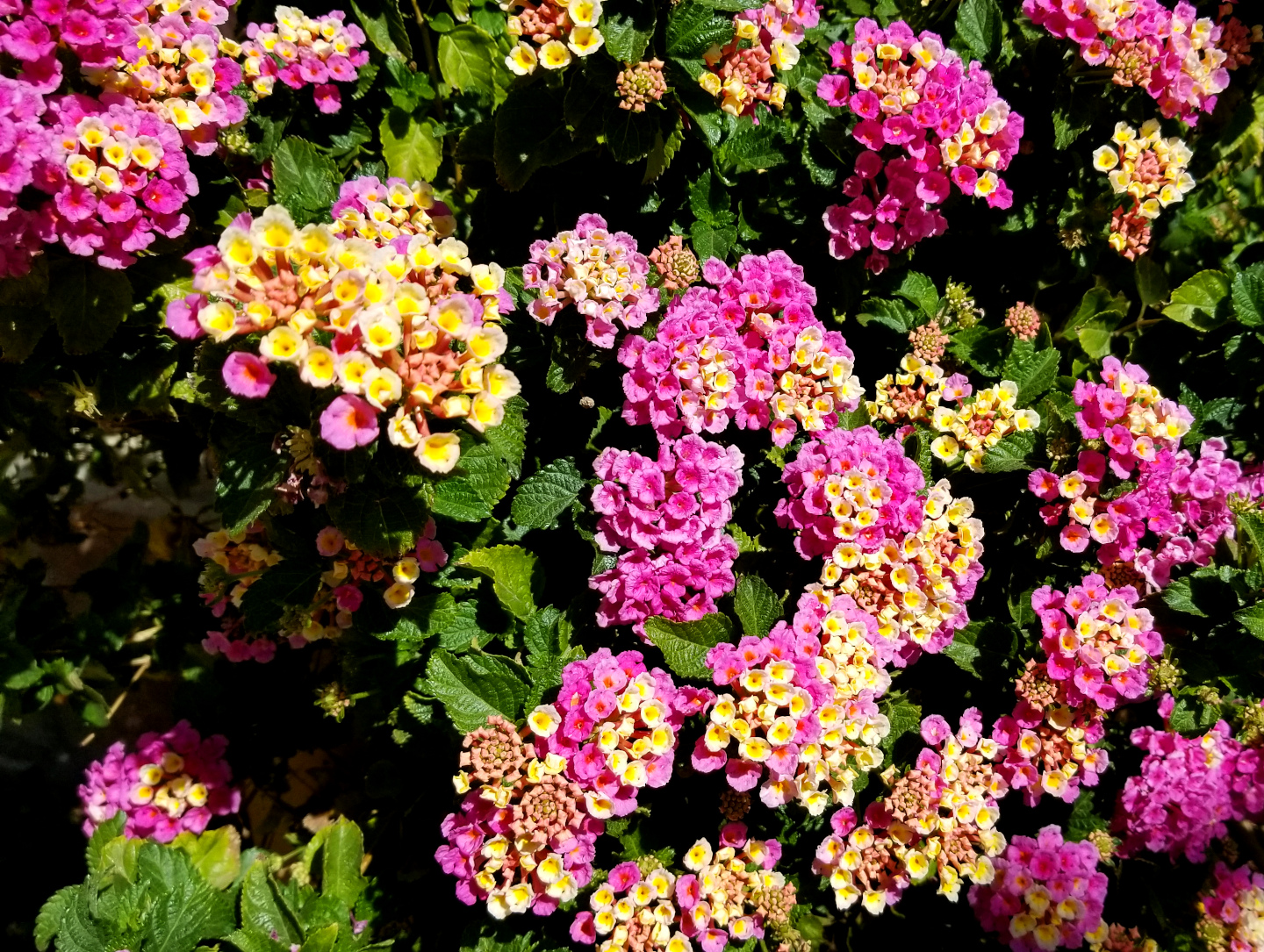
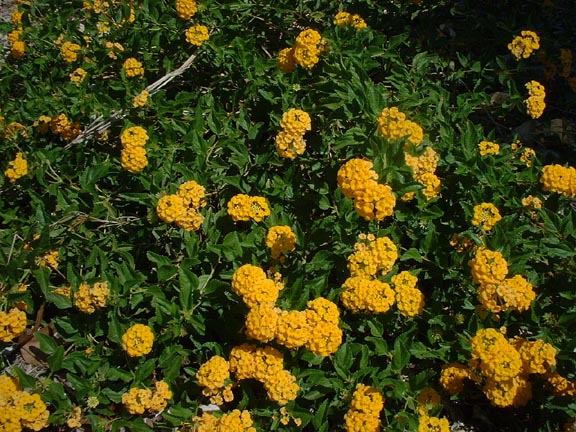
Flowers & Fruits: Lantana hybrids have terminal cluster of flowers, many colors from white, to orange to pink to red, multi-colored, followed by black berries. All prostrate lantanas with purple flowers are Lantana montevidensis.
Seasonal Color: All lantana can produce flowers for most of the year.
Temperature: Heat loving, but feeze intolerant. Most lantana will suffer frost and/or freeze injury in exposed sites during colder Phoenix winters. Otherwise, Lantana hybrids are more sparsely foliated and sometimes dormant during 'normal' winters. Lantana montevidensis however is a bit the most cold tolerant, but will still suffer freeze damage below 27oF.
Light: Full sun to partial shade, no full shade.
Soil: Tolerant
Watering: Lantana has limited drought tolerance in Phoenix. Regular applications of supplemental water especially during summer months is best.
Pruning: Prune lightly as needed or head back hard to near ground level in early spring after the danger of frost has past. In Phoenix, if lantana is frost or freeze damaged during winter (happens less frequently lately because of the expanding urban heat island), then don't immediately remove the unsightly, dead shoots (wait until early spring) as these damaged shoots will protect underneath living shoots from further cold injury.
A pruning deep dive: 'Creative' landscape maintenance (un)professionals or 'Hort clods' for short, sometimes aspire to higher paying careers such as being a male barber or a cupcake baker. The effects of their 'creative pruning' on lantana growth and performance in the landscape are often tragically comical.
Propagation: Lantana is VERY EASY to propagate by vegetative softwood cuttings. Local plant nurseries nearly all pick lantana as the first plant they will grow. Seed propagation is reserved mostly for cross breeding of species.
Disease and Pests: In the late summer and early fall there are white flies!!!!.......or at least there used to be back in the 20th century when Phoenix was surrounded by cotton fields.
Additional comments: Overall, lantana is a "bullet proof", "go to" plant for amenity landscaping in Phoenix. So very dependable!
For ground covers most horticulturist and landscape designers will select
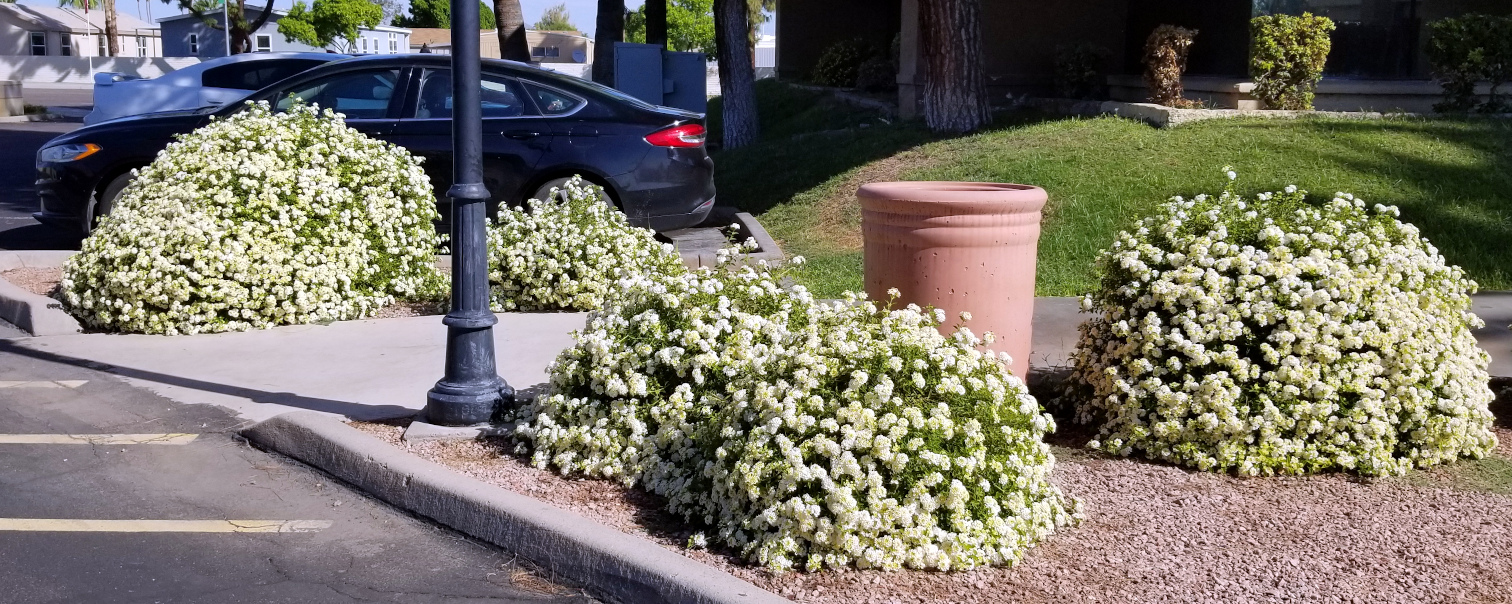
Lantana montevidensis (mostly purple flowers, sometimes white, most of the year) because of its trailing, prostrate habit. Note however that new hybrid cultivars of the lantana hybrids with other flower colors such as red, yellow and orange that have prostrate trailing habits are being grown and marketed each year.
Some common lantana hybrids cultivars include:
Health advisory: Lantana is mildly to acutely poisonous. Some people develop a mild skin dermatitis rash upon contact with plant tissues. Fruits are poisonous if ingested causing dizziness, weakness, vomiting, cardiac arrhythmia, and even death.
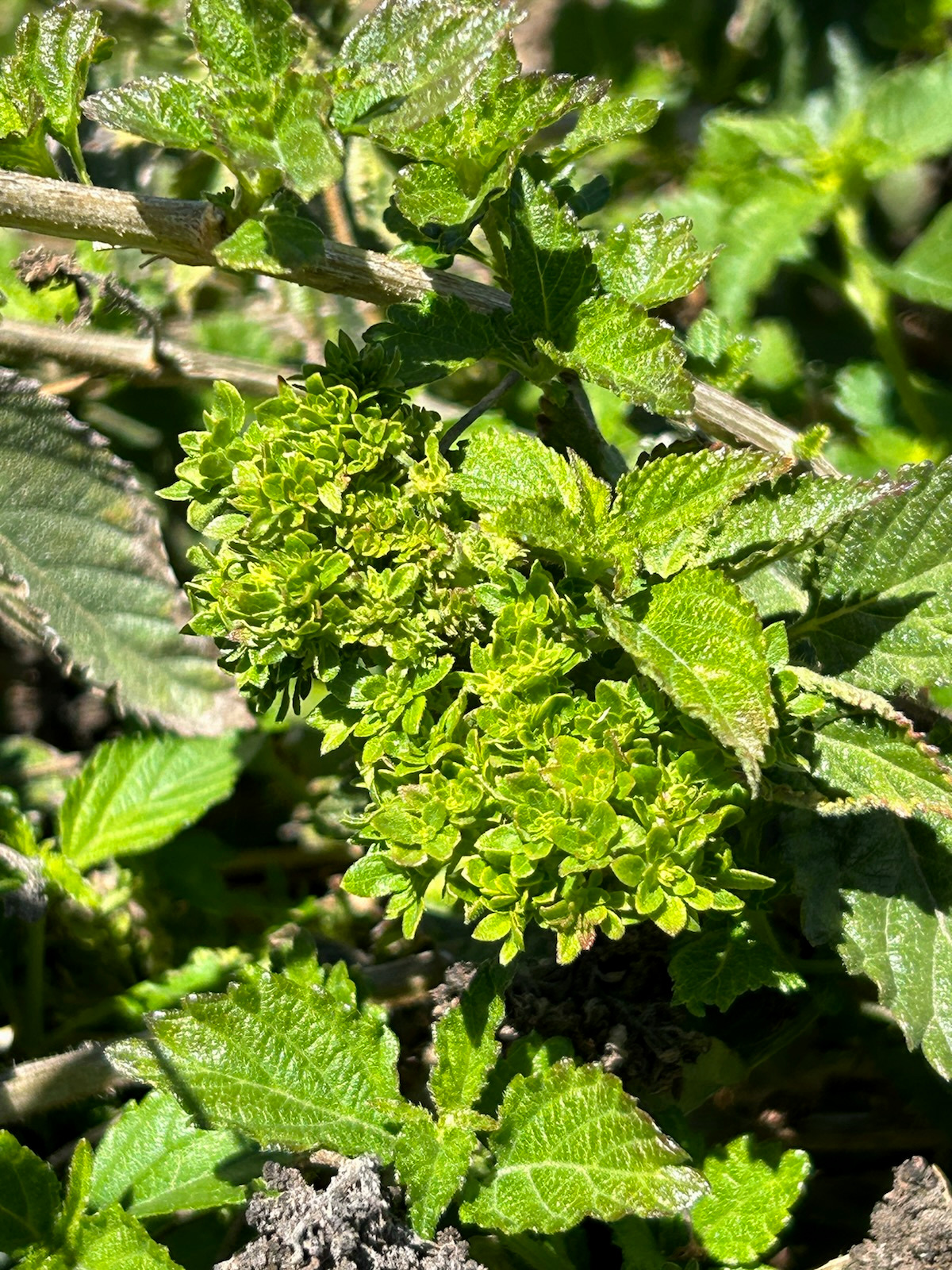
For the horticulturally curious only: Plant fasciations are unique, weird, and poorly understood. The causal mechanisms for its occurrence are many. Here an example of lantana fasciation (image by Cindy James-Richman, February 2024).