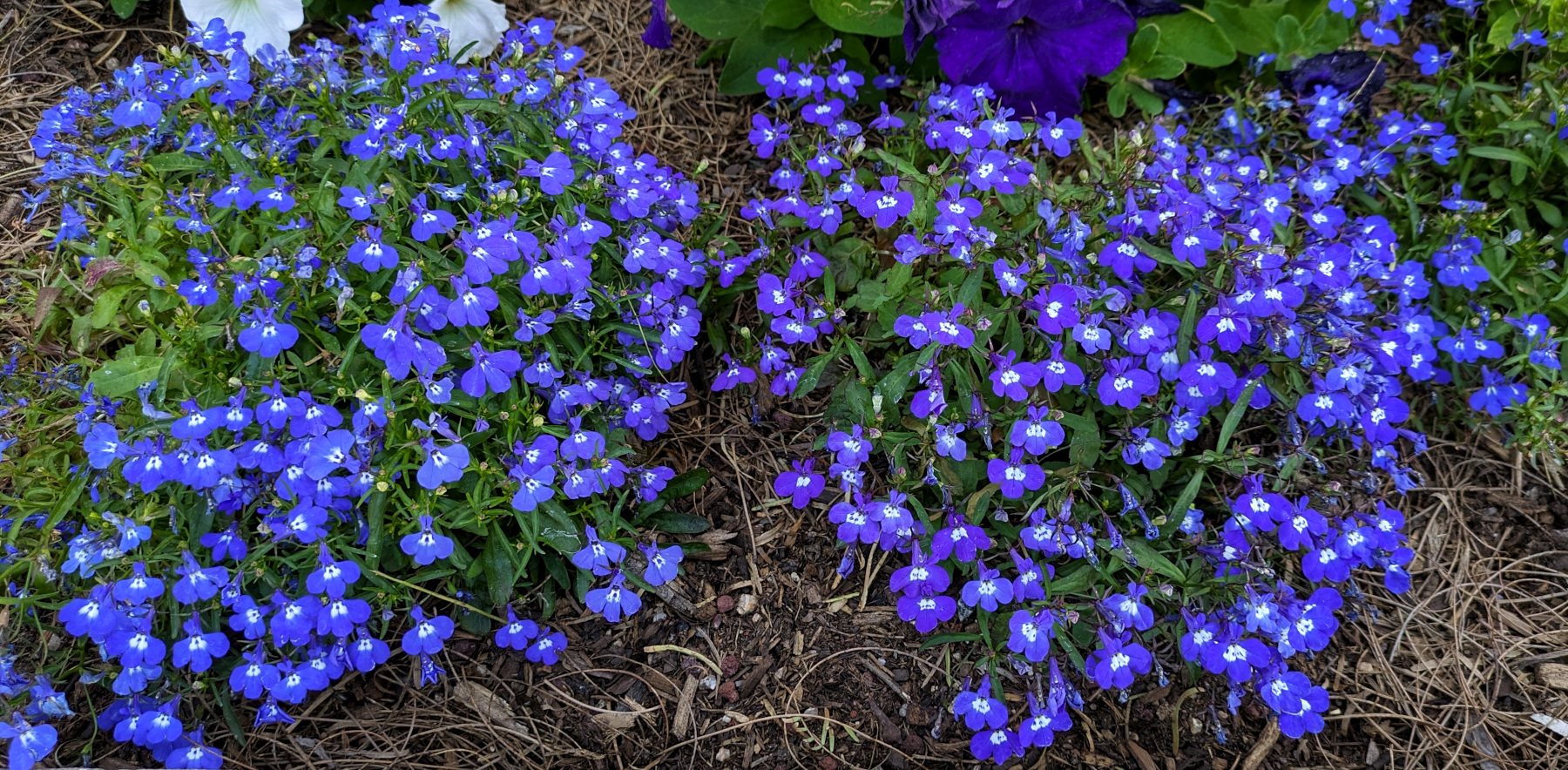
Scientific: Lobelia erinus
Common: lobelia
Family: Campanulaceae
Origin: South Africa
Pronounciation: Lo-BE-lee-a e-RYE-nus
Hardiness zones
Sunset All
USDA All
Landscape Use: Excellent annual for winter flower gardens, mixed borders and mass color, edging plant, hanging baskets and patio containers.
Form & Character: Low, somewhat trailing, diminuative, regal, colorful.
Growth Habit: Evergreen, herbaceous annual or short-lived perennial, matting to trailing to 6-inches high with a 12-inches spread.
Foliage/Texture: Green to purple green, small lanceolate leaves to 1/2 inch in length. Lobelia leaves are that are slightly serrate, alternate, lower leaves more obovate while upper leaves are more linear; medium fine texture.
Flowers & Fruits: Small, terminal clusters of flowers ranging in color from white, pink, red, magenta, light blue to deep blue/purple.
Seasonal Color: Colorful flowers in winter and spring.
Temperature: Lobelia prefers winter temperatures in the cardinal range of 40oF to 80oF.
Light: Full sun to partial shade, lobelia grows rank in full shade and blooms less too!
Soil: Lobelia grows best in an organic amended soil, yet will tolerate most soil types. In Arizona, good drainage is required and performance is enhanced with additions of a balanced fertilizer containing nitrogen, phosphorus, and potassium.
Watering: Lobelia must have a moist and well-drained soil; thus, frequent waterings are to be expected in Phoenix if winter rains are sparse. Lobelia as a genus, is comprised of species that generally prefer moist and somewhat acidic soil conditions.
Pruning: None
Propagation: Seed, only sometimes reseeds.
Disease and Pests: None, mostly because it is only in southwestern desert landscapes a short while.
Additional comments: Lobelia is an excellent winter accent color plant that mixes nicely as a bedding plant with other cool season bedding plants such as Dianthus deltoides. Lobelia can occassionally reseed in moist garden sites. There are so many cultivated varieties that have variations in flowering habit ranging in color from white, pink, red, magenta to deep
royal blue and purple.
Some of the many popular cultivars include:
Minor factoids: Lobelia is named for Matthias de Lobel, botanist and physician for King James I of England in the 16th century. Lobelia foliage contains the compounds lobelamine and lobeline. These compounds are similar to nicotine and can cause in humans cardiac problems, vomiting, tremors and paralysis if ingested.