Scientific: Myrtus communis
Common: common myrtle
Family: Myrtaceae
Origin: Southwest Asia
Pronounciation: MIR-tus com-MU-nis
Hardiness zones
Sunset 8-24
USDA 8-11
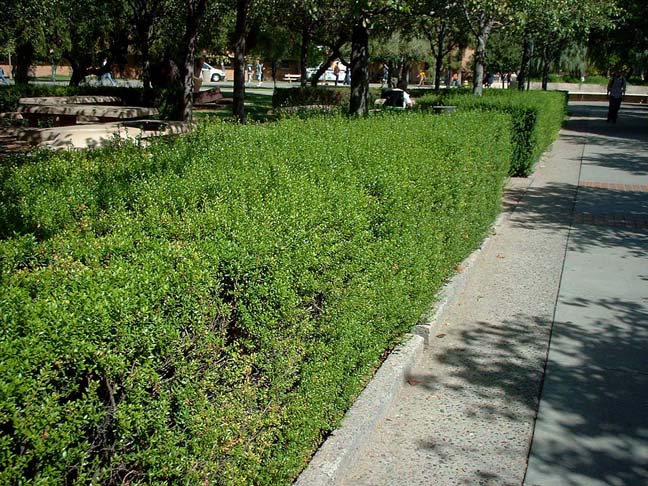
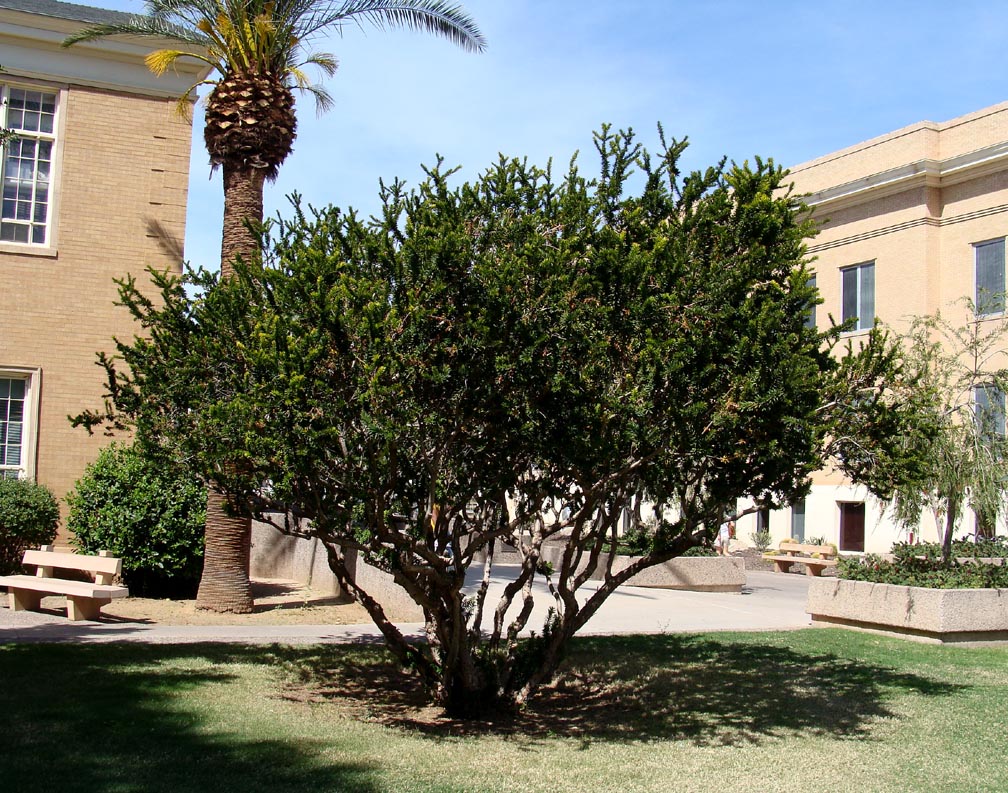
Landscape Use: Low edging, formal hedge to small multiple-trunk tree. A versatile plant with many landscape uses that are mostly cultivar specific. Ergo, know your cultivar differences!
Form & Character: Highly versatile ranging from low, dense and mounding to upright, arborescent, spreading and pendulous, clean, Mediterranean, sensual. The shedding, cinnamon-brown trunk is very attractive.
Growth Habit: Evergreen, woody, broadleaf perennial shurb or small tree, moderate growth rate to variable sizes ranging from 3- to 15-feet tall with equal or greated spread. Dwarf cultivars grow as low as only 3-feet tall. In contrast, the straight species is upright and spreading to 15-feet tall with a somewhat greater spread.
Foliage/Texture: Medium green, glabrous, simple leaf, lanceolate and sessile to 1-inch long, distinctly aromatic; fine to medium fine texture.
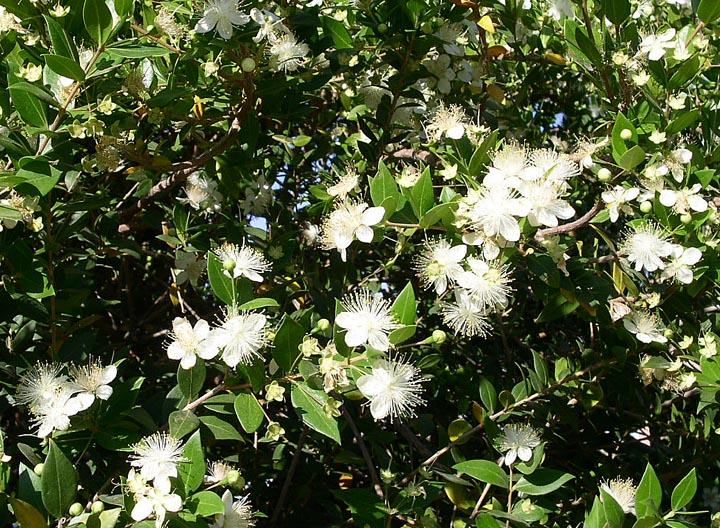
Flowers & Fruits: Small, cream-white flowers arising from axillary flower buds followed by small bluish-black, drupe-like fruits that look like elongated blueberries in the fall.
Seasonal Color: Common myrtle produces a plethora of small, cream-white flowers in April to May.
Temperature: Very tolerant of Phoenix heat and cold hardy to 20oF. Will occassionally show reddening of foliage during colder Phoenix winters.
Light: Partial to full sun, no shade.
Soil: Soils must be well drained. Iron chlorosis on leaves will manifest when growing in highly alkaline, wet soil conditions, and I don't recommend use of common myrtle if the soil pH is above 8.3. If chlorosis occurs because of high soil alkalinity, then regularly treat with elemental sulfur and use NH4+ or urea forms of nitrogen fertilizer to help lower soil pH.
Watering: Common myrtle is surprisingly drought tolerant in Phoenix, but will respond best to regular though not frequent deep waterings.
Pruning: Common myrtle responds well to any type of pruning. Large specimens may be trained into beautiful, multiple trunk small trees with amazing cinnamon-colored, twisted trunk patterns; whereas, dwarf cultivars can be sheared with great success by experienced or inexperienced 'Horticultural clods of Phoenix' (aka 'Hort clods') into any number of different formal shapes.
Propagation: Cutting or seed.
Disease and Pests: Rare outbreaks of spider mites during the summer are the only biotic problem this plant ever seems to have in Phoenix.
Additional comments: One of the more serviceable and versatile shrubs
in Southwest landscapes for mesic landscape designs. Common myrtle makes a great formal hedge plant (hint, hint for all you people who like landscape loaves of bread, boxes, beer kegs and bowling balls). Myrtle is the perfect firewood. The bark and roots are used to tan the finest Turkish and Russian leather to which it imparts a delicate scent. Common myrtle has a rich middle eastern, Biblical tradition.
"Instead of the thorn shall come up the fir tree, and instead
of the brier shall come up the myrtle tree." - Isaiah 55:13
Some landscape cultivated selections include: