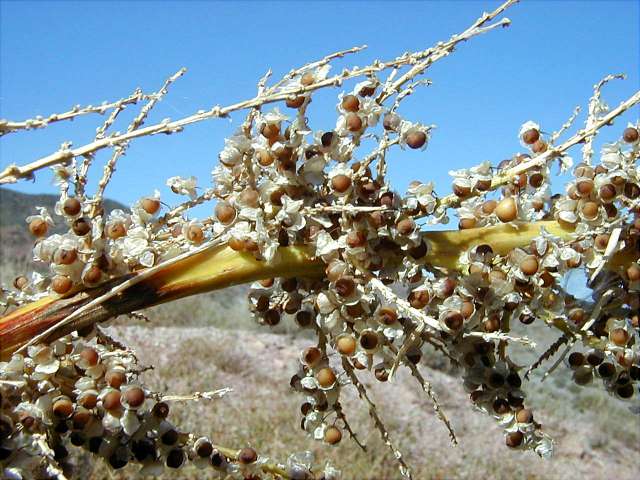
Scientific: Nolina microcarpa (Synonyms: Nolina bigelovii var. parryi, Nolina bigelovii var. wolfii, Nolina parryi ssp. wolfii)
Common: bear grass, saw grass, Sacahuista
Family: Asparagaceae (subfamily Nolinoideae)
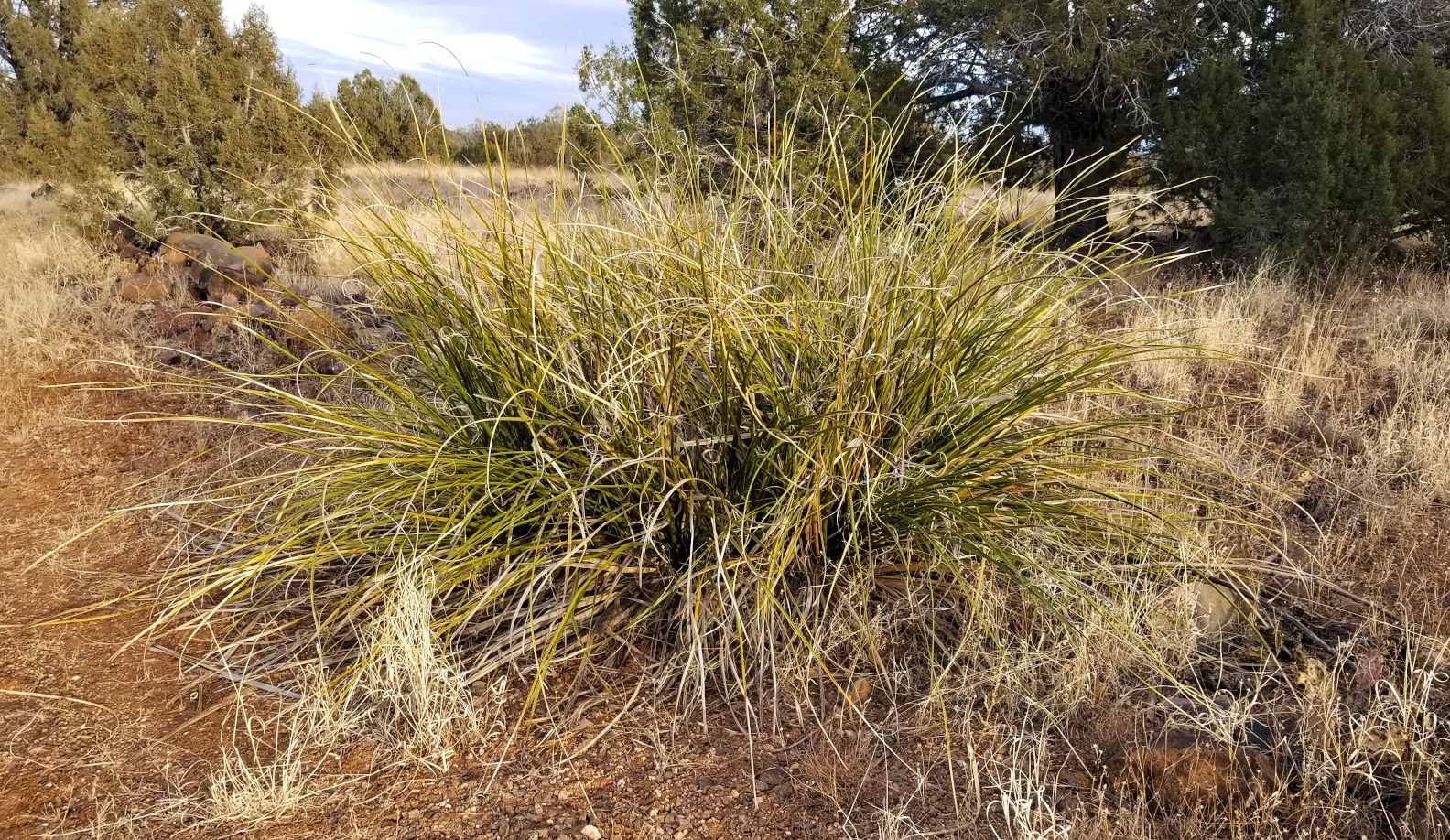
Origin: Southwestern United States at elevations from 3,000 to 6,000 feet. Here's a majestic specimen along the head waters of the Verde River in northern Yavapi County in northern Arizona.
Pronounciation: No-LEE-na my-crow-CAR-pa-ka
Hardiness zones
Sunset 3, 10-13
USDA 7-9
Landscape Use: Foliar and flowering accent for large landscape areas
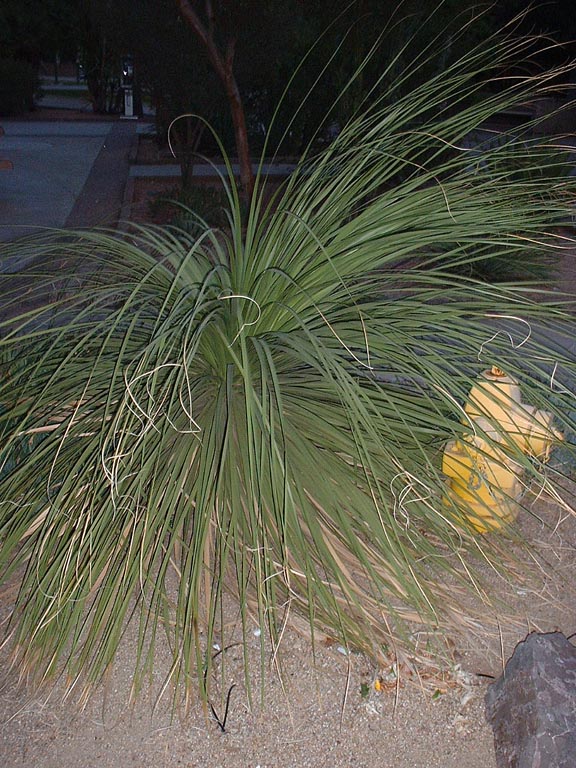
Form & Character: Stiffly pendant, acaulescent, clumping and grass like.
Growth Habit: Evergreen, fibrous perennial monocot, moderate to eventually 5-feet tall with 8-feet spread.
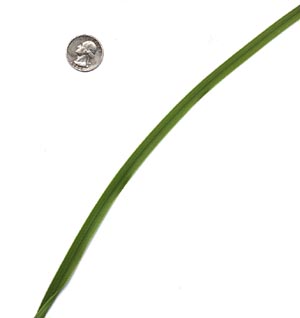
Foliage/Texture: Medium green, very finely serrulate (major paper cut time if mishandled!), 1/2- inch wide by 3-feet long, slightly thickened and concave. Foliage rosetting and emerging from a caudex (palm like trunk) that is mostly subterranean; medium fine texture.
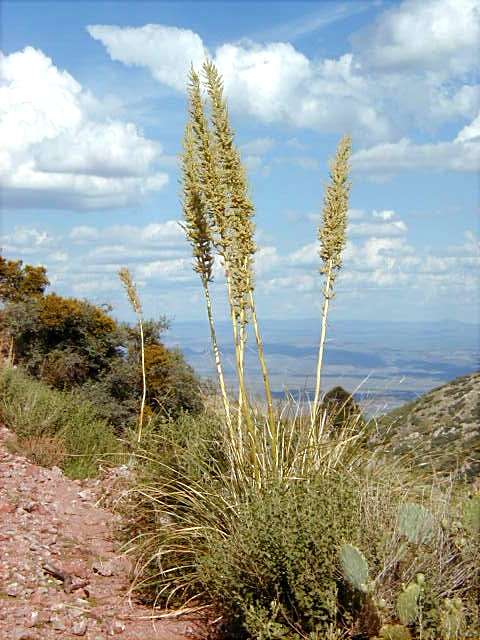
Flowers & Fruits: Paniculate, small yellowish white flowers on a 6-feet tall stalk; fruits 3-lobed, somewhat inflated.
Seasonal Color: Summer flowers when plants mature.
Temperature: Tolerant
Light: Full sun
Soil: Soils MUST be well drained, especially in winter when soils can be damp and cold.
Watering: Some deep and infrequent water is needed during summer if this plant is being grown in lower desert landscapes. No water other than rainfall is needed in winter.
Pruning: None
Propagation: Seed, cold stratification quickens germination. Very slow to establish growing only 10 leaves in first 2 years.
Disease and Pests: Fungal root rot common in cold damp soils.
Additional comments: Bear grass needs adequate space to accommodate
spread. It shows some phenotypic variation. Its foliage laden with calcium oxalate and saponin/sapogenin.
Nolina factoids: The genus Nolina was first described 1803 by Michaux, based on plants of
Nolina georgiana. In 1911, Trelease recognized 25 species of Nolina. While most beargrass species do not have sharp spines,
leaves can have sharp edges, so caution should still be taken around them.