Scientific: Olea europaea
Common: olive
Family: Oleaceae
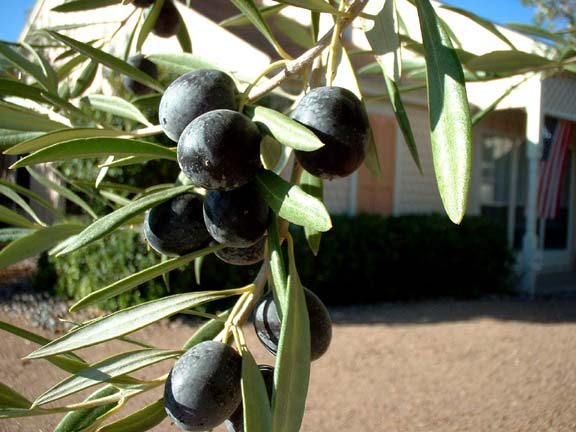
Origin: northern Mediterranean, primarily Italy and Greece (image captured by C. Martin in northern Greece near the coastal town of Makri).
Pronounciation: O-LEY-a eur-oo-PAY-ee-a
Hardiness zones
Sunset 8, 9, 11-24
USDA 9-11 (arid and semi arid regions only)
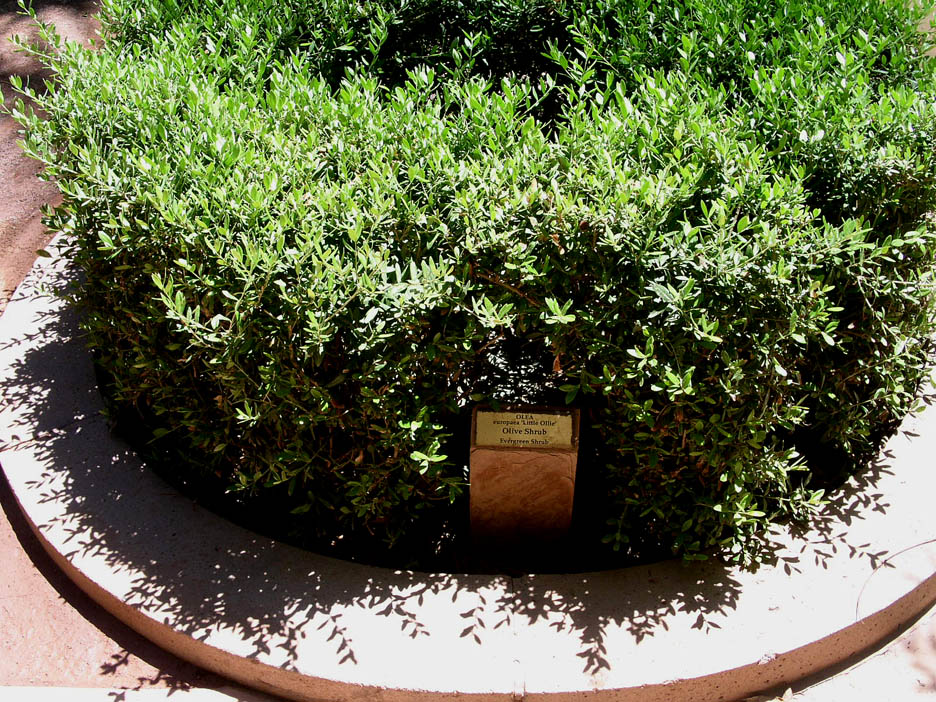
Landscape Use: Olive is a tree for Mediterranean, xeric, or oasis design themes, residential, commercial, or industrial plantings, not a good shade tree, but sometimes used as a "parking lot shade tree" because it's so tough. Dwarf sterile cultivars are quite popular in Phoenix and are used as landscape subshrubs.
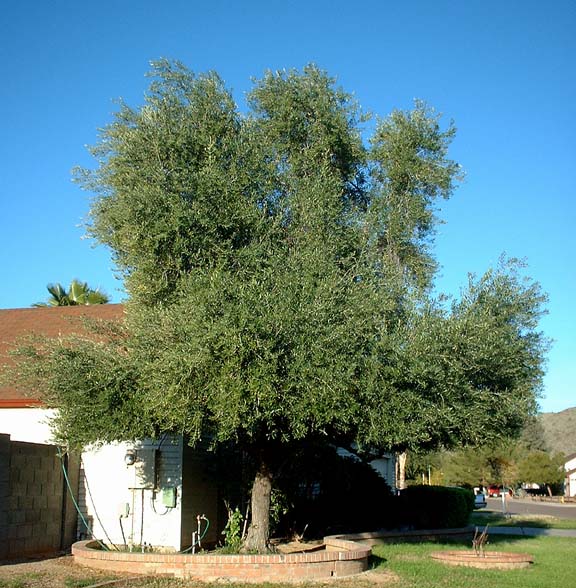
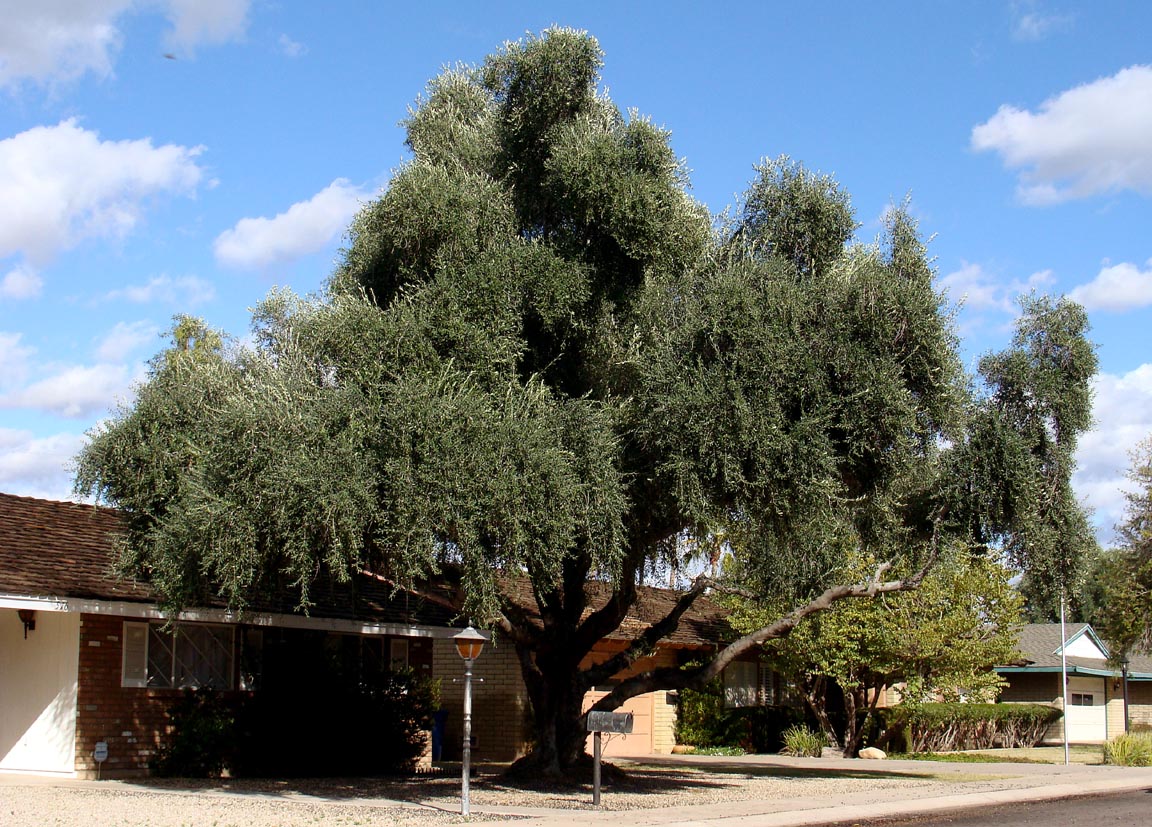
Form & Character: Naturally rounded and frumpy like some floppy shaggy dog, rugged, glaucous, Mediterranean.
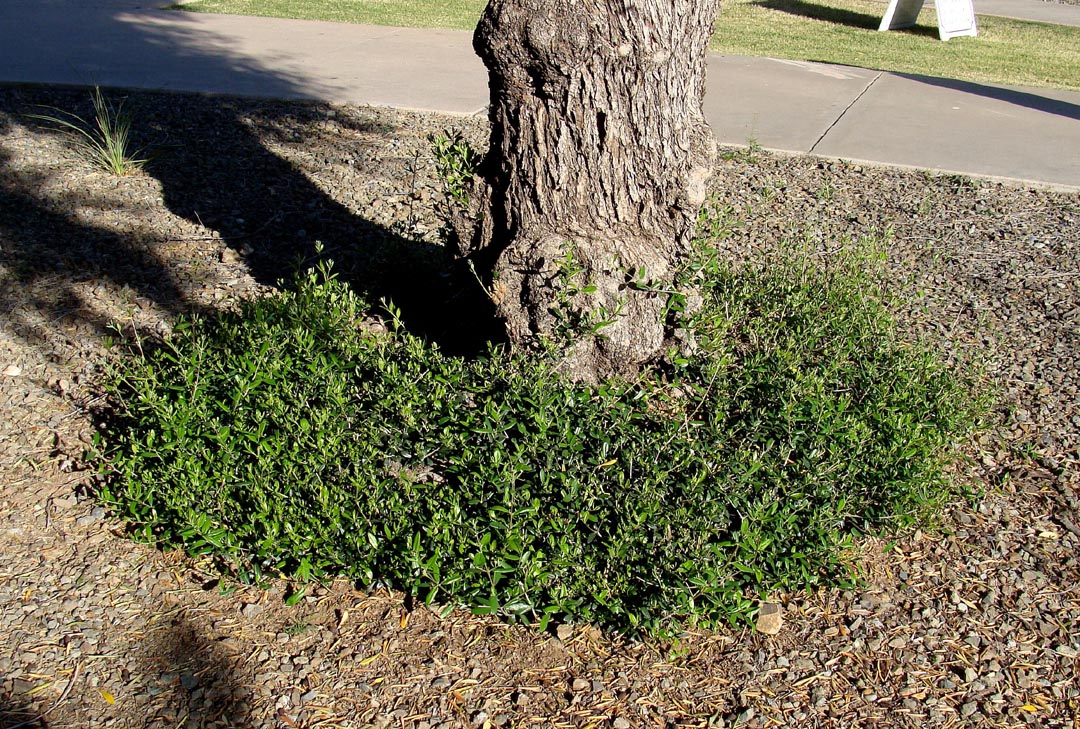
Growth Habit: Evergreen, woody, perennial broadleaf multi-trunk tree, slow to moderate growth rate to 30 to 50 feet in height with near equal spread, profuse basal suckering is common. With age, olive trees will form a pronounced trunk flare.
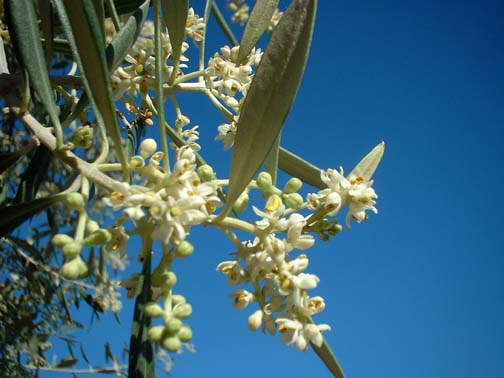
Foliage/Texture: Small, elliptic to lanceolate leaves with prominent midvein, gray-green above to silver white underneath due to tomentose hairs, less than 2-inches long; medium-fine texture.
Flowers & Fruits: Male flowers yellow and in panicles, followed by smaller, greenish yellow female flowers, Spring, male flowers fragrant and allergenic, fruit is oblong, black to 1.5-inch long stains, must be leached to be edible, high oil content
Seasonal Color: None
Temperature: Tolerant of cold to 15oF, and boy, do olive trees love the desert summer heat!
Light: Full sun
Soil: Tolerant of alkaline soil.
Watering: Infrequent deep supplemental irrigations are all that's required.
Pruning: Olive trees as landscape ornamentals typically have high maintenance requirements because of our modern day 21st century fetish with creating 'clean, organized, and highly structured' landscape spaces. In that light, pruning demands are many including removal of basal trunk suckers and water sprouts, crossing branches and misdirected limbs, crown raising and/or crown thinning. Crown thinning is best practiced in late February as one way of reducing the number of April flowers. Tree training requirements are especially high when olive trees are young. Sometimes tree pruning wizards (aka the 'Horticultural clods of Phoenix' or locally known as 'Hort clods') resort to shearing and create olive topiaries as a way of controlling these scruffy landscape trees. The end products are sometimes comical such as these landscape balloons, landscape toad stools, or the proverbial olive tree in a pot.
Propagation: Seed, cutting
Disease and Pests: Olive knot forms galls on twigs and branches, verticillium wilt, scale and spider mites.
Additional comments: Olive trees are easily transplanted. Many
municipalities now require the planting of non-flowering forms due to the allergenic properties of the olive tree's male flowers and the surface staining of concrete and asphalt surfaces by smashed olive fruits. Olive trees in old northern Greek olive orchards have a picturesque trunk.
Some common, partially or fully sterile olive cultivars that grow few or no flowers or fruits include:
Healthy living: The health benefits of consuming olive oil as a regular part of one's diet are well documented. Olive trees are highly revered for fruit production within the United States, especially in the central Valley of California. In Europe, olive is primarily grown for oil extraction. Cultivars most commonly employed for fruit production include 'Manzanillo', 'Mission', 'Ascolano' and 'Sevilano'.