Scientific: Parkinsonia praecox (Synonyms: Cercidium praecox; synonyms include Caesalpinia praecox, Cercidium australe, Cercidium goldmannii, Cercidium plurifoliatum, Cercidium spinosum, Cercidium viride)
Common: palo brea or Sonoran palo verde
Family: Fabaceae (Leguminosae)
Origin: Southern Sonoran Desert south of Hermosillo, Sonora and southern Baja California into Michoacan, Mexico and also south into subtropical, seasonally dry areas of Columbia, Peru and Ecuador.
Pronounciation: Par-kin-SONE-ee-a PRAY-cox
Hardiness zones:
Sunset 10-14, 18-20
USDA 9-11 in arid climates only
Landscape Use: Palo brea is a large specimen tree for use exclusively in large, spacious, desert landscape gardens and large, open xeric landscape spaces; it creates excellent habitat for native birds.
A special note to aspiring landscape architects: Palo brea is NOT a street or parking lot tree!
Form & Character: Wide spreading and broad, loose and unruly yet with refined feminine qualities, pendulous, Spanish architectural when properly trained, umbrella top with age and proper pruning, medusa character.
Growth Habit: Semi-deciduous, soft-wooded, perennial tree, moderately vigorous growth rate to 30-feet tall with much greater spread, coarse branching pattern with a plethora of short spur branches and stems with many directional changes.
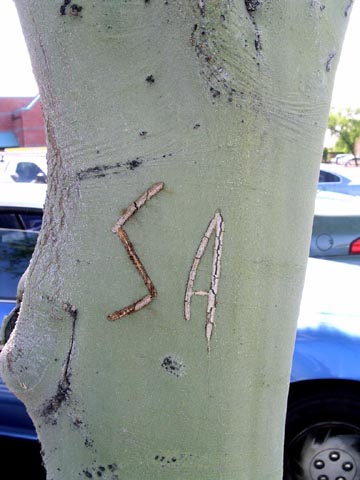
Foliage/Texture: Small pinnately compound leaves, transient stipular spines on young stems, trunk and branches lime green (photosynthetic) with a waxy bloom, sometimes very smooth; medium fine texture from afar, medium coarse texture up close.
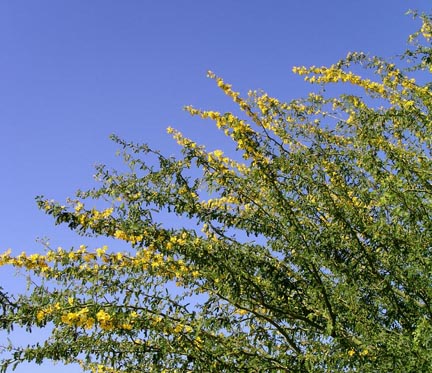
Flowers & Fruits: Masses of yellow flowers in axillary clusters followed by light brown pods.
Seasonal Color: Brilliant yellow flowers will color the entire tree (and all the ground beneath) in mid to later April.
Temperature: Tolerant to 20oF.
Light: Full sun
Soil: Tolerant
Watering: Palo brea trees need little to no supplemental water once they're established in desert landscape gardens. Do not over irrigate these desert wonders as this will encourage a vigorous rank growth habit that is prone to catastrophic failure.
Pruning: The pruning requirements of palo brea can be extremely high, especially when it is planted in an urban setting that has any sort of above ground space limitations, because of its broadly spreading and pendulous crown and irregular to random branching pattern. Sometimes the 'Horticultural clods of Phoenix (aka 'hort clods') practice their frustrations about landscape non-conformity on vulnerable, solitary palo brea trees and butcher this free-spirited tree.
A personal request: PLEASE 'hort clods', resist your urge to multilate. Instead, go natural and show this wonderful Sonoran Desert native tree some respect.
Propagation: Seed, readily hybridizes with other Parkinsonia species. Many nursery trees that look like palo brea are actually interspecific palo verde hybrids in which palo brea has been crossed with other Parkinsonia species.
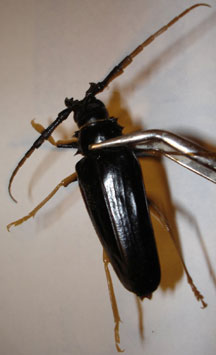
Disease and Pests: Palo verde beetle (Derobrachus geminatus) is a large beetle that looks much like an Apache attack helicopter. The immature white larval grubs (up to 2- to 3-inches long by up to 1-inch wide) of the adult hatch from eggs laid inside rounded broom handle-sized soil burrows near tree roots. Grubs feed on the roots and later emerge as adult beetles in early to mid-Summer. Outside the city, adult beetles are found in indigenous palo verde stands, but are rumored to be attracted to city lights. This pest might also infrequently infect other trees. As a last resort, treat grubs with an insecticidal soil drench. Parkinsonia praecox and Parkinsonia microphylla are subject to a condition called "trunk blister" in Phoenix urban landscapes, the casual agent as yet has not been identified.
Additional comments: Palo brea is a great tree for large, open desert gardens where its architectural uniqueness can be featured and not butchered. Its trunk character is truly beautiful. So I reiterate! Palo brea IS NOT a street or parking lot tree and should not be planted in areas where its crown needs to be raised or deformed to accommodate traffic patterns or urban space limitations. The smooth trunk of palo brea is prone to vandalism in public areas.
Neat freak alert: Flower and fruit litter can and will make quite a mess in any landscape.