Scientific: Carya illinoinensis
Common: pecan
Family: Juglandaceae
Origin: Found in alluvial soils of the lower Mississippi River basin and its tributaries, as well
as other river bottoms throughout its range. The pecan extends southward into
Central Mexico, and ranges northward through Texas, Louisiana, Mississippi, Arkansas, Oklahoma, Kansas, and Missouri. It extends as far north as southern Nebraska, Iowa, Illinois, and Indiana, to the Texas panhandle in the west, and western Kentucky and Tennessee to the east.
Pronounciation: CAR-ee-uh El-lin-no-i-EN-sis
Hardiness zones
Sunset 2-3, 6-10, 12-14, 18-20
USDA 5-10
Landscape Use: Mesic shade tree grows best in a lush green landscape, large shade tree, edible nut crop.
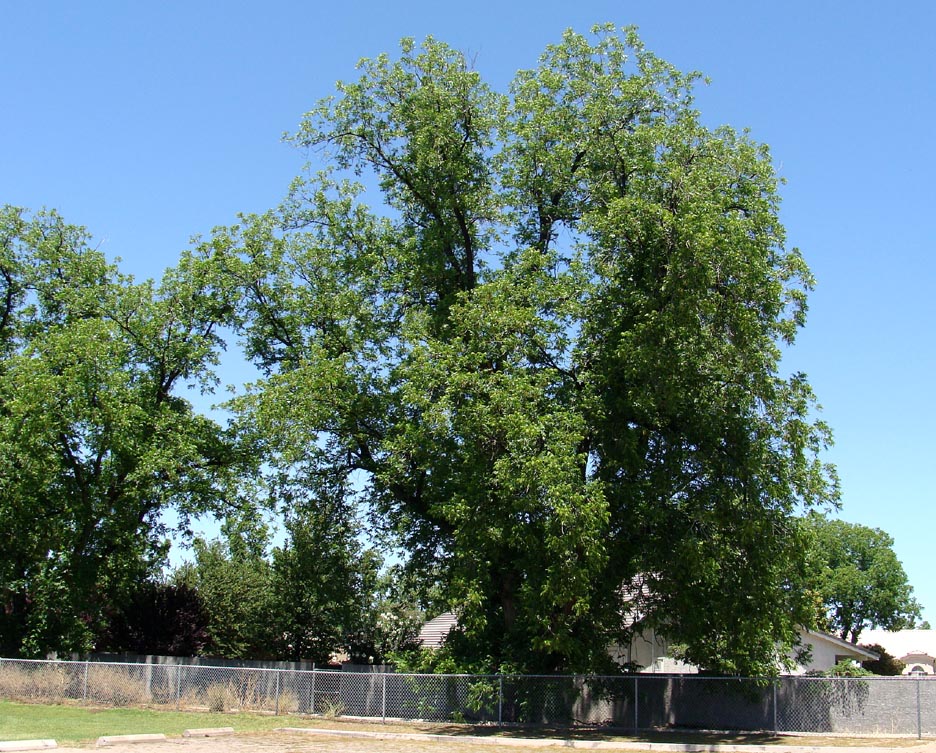
Form & Character: Upright and umbrella top, heavy, large and assuming, shaggy, seasonally unkept.
Growth Habit: Winter deciduous, woody perennial tree with a moderately upright growth habit to 50- to 70-feet tall with near equal to sometimes greater spread.
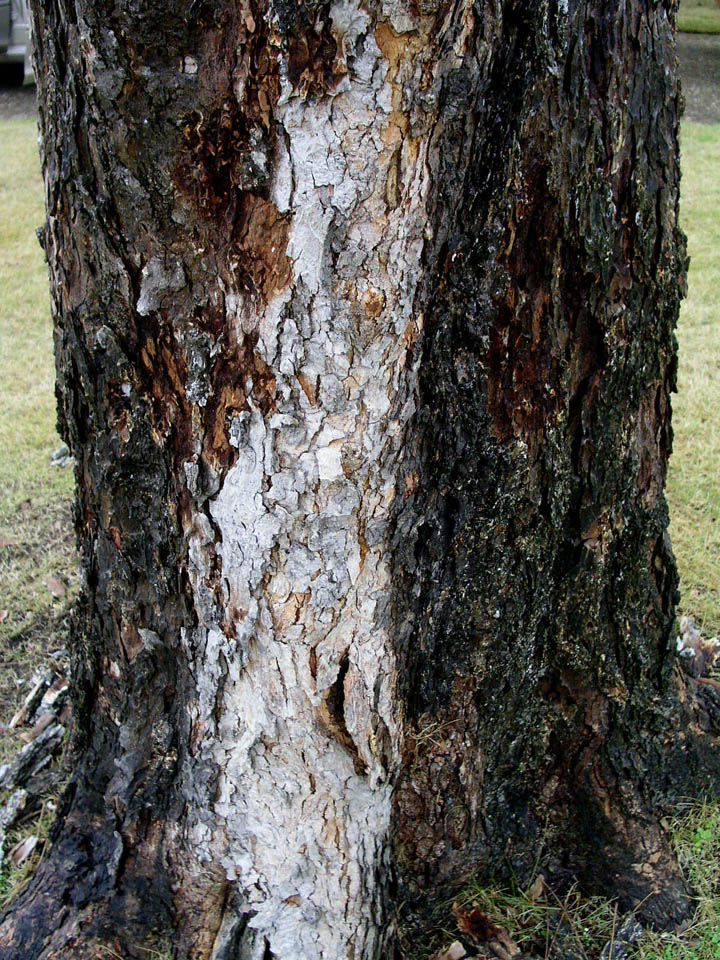
Foliage/Texture: Alternate, odd-pinnately compound leaflets, 11 to 17, each 4- to 7-inches long with an inequalateral base, shaggy and shredding bark; medium texture.
Flowers & Fruits: Monoecious, male and females flowers of pecan are borne on the same tree, but often not at the same time thus requiring cross pollination for successful yields. The flowers develop during the early spring and are for the most part ornamentally inconspicuous. Male flowers are a borne on clusters of long green catkins. The tasty pecan fruit is a two-segmented nut.
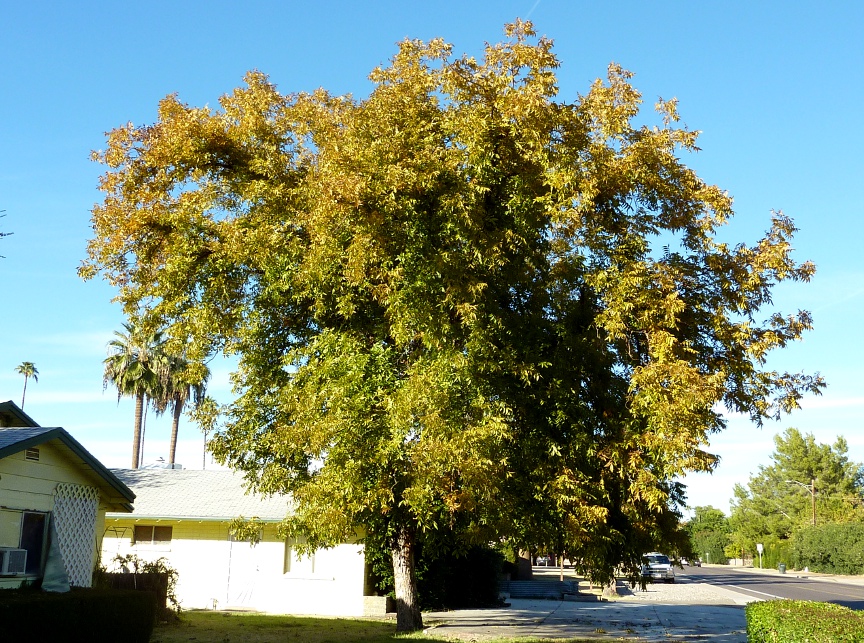
Seasonal Color: In Phoenix, pecan trees generally display yellowed foliage during late fall.
Temperature: With proper deep waterings and soil fertility management, pecan trees are very tolerant of the desert summer heat, except when grown in xeric sites that lack ample surrounding vegetative cover.
Light: Full sun
Soil: Well drained, loamy soils are best, avoid caliche. Pecan trees in Arizona typically require annual applications of supplemental zinc fertilizer during late winter, chelated zinc fertilizers are most effective, but zinc sulfate will suffice.
Watering: In Phoenix, pecan trees desperately NEED regular, deep waterings from April to late September. No drip irrigation, flood or large basin irrigation is best.
Pruning: Depending on the site, conservatively elevate the canopy base by raising the crown, but do not overly raise or thin the crown as removal of too much canopy foliage will readily lead to trunk and branch sunscald injury from the desert sun.
Propagation: Cutting and grafting; for grafting, scion-rootstock graft incompatibilities are a problem and can result in some bizarre looking lower trunks.
Disease and Pests: Presently there are restrictions against interstate transfer of pecan trees because of the many known pecan fruit diseases and pests.
Additional comments: Pecans have many named cultivated varieties and is a long standing commercial nut crop in the desert Southwest. In fact, many central Arizona residential neighborhood developments have been built within formal pecan orchards. The pecan is the most important commercial nut crop in the eastern United States.
Fire and pie factoids: Pecan and other hickory woods are used for cooking and open fires because of their unique fragrance. Some great pie eating here too!