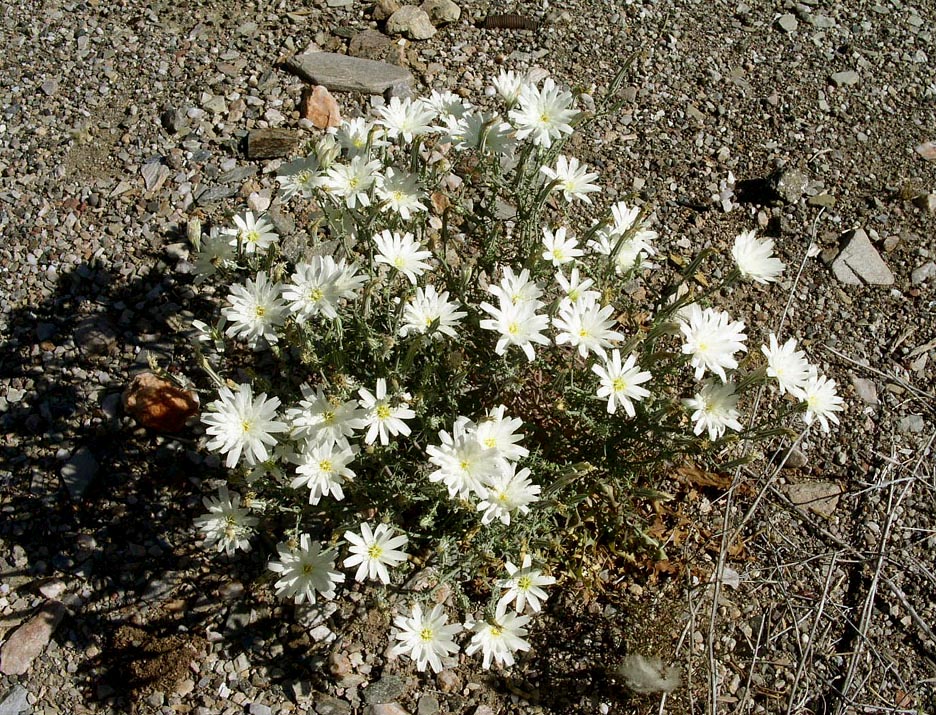
Scientific: Rafinesquia neomexicana (Synonym: Rafinesquia californica)
Common: Desert chicory, New Mexico plumseed
Family: Asteraceae
Origin: Arid portions of the southwestern United States (southeast California, Arizona, New Mexico, Nevada, Texas, Utah) into northern Mexico.
Pronounciation: Ra-fi-NES-qui-a knee-o-mex-i-KAY-na
Hardiness zones:
Sunset Depends on use (arid regions only)
USDA Depends on use (arid regions only)
Landscape Use: Southwestern desert wild flower gardens, local native habitat restoration, color accent, xeriscape low water gardens winter and spring color accent.
Form & Character: Compact annual, showy, clean, innocent, arid, delicate.
Growth Habit: Evergreen, herbaceous annual, clumping, somewhat sparsely foliated to 20-inches tall with nearly equal spread.
Foliage/Texture: Small to medium sized (depending on water availability), glaucous to gray or green leaves, somewhat pinntified, stems produce a milky latex sap; medium fine texture.
Flowers & Fruits: Perfect white ray flowers with slight yellow centers, flowers 1- to 2-inches wide, borne on short terminal stalks, flower sepals an emerging petals sometimes show pink before full anthesis; fruits inconspicuous.
Seasonal Color: Early spring flower color in lower central Arizona.
Temperature: Desert chicory thrives in the 40o to 100oF temperature range.
Light: Full sun
Soil: Best in alkaline, light to gravelly soils that are fast draining.
Watering: Only light supplemental water needed during abnormally dry winters.
Pruning: None, allow to reseed in late spring and summer if reseeded is desired.
Propagation: Seed sown lightly in fall.
Disease and Pests: None
Additional comments: Desert chicory is a wonderful, small white-flowering
annual for desert gardens and dry landscapes. It is not very attractive before
bloom; in fact most people will think it's a weed. But then it blooms....and WOW!!
Taxonomic tidbit: The genus Rafinesquia is named after the eccentric 19th century French naturalist Constantine Samuel Rafinesque.