Scientific: Russelia equisetiformis
Common: firecracker plant, coral bush, coral fountain, fountainbush
Family: Plantaginaceae
Origin: Mexico and Guatemala but has naturalized
pan tropically
Pronounciation: Rus-SELL-ee-a e-que-se-ti-FOR-mis
Hardiness zones
Sunset 13-24
USDA 9-11
Landscape Use: Oasis and xeric landscape gardens (but not desert gardens), informal rock gardens, raised planters, hanging baskets, foundation planting.
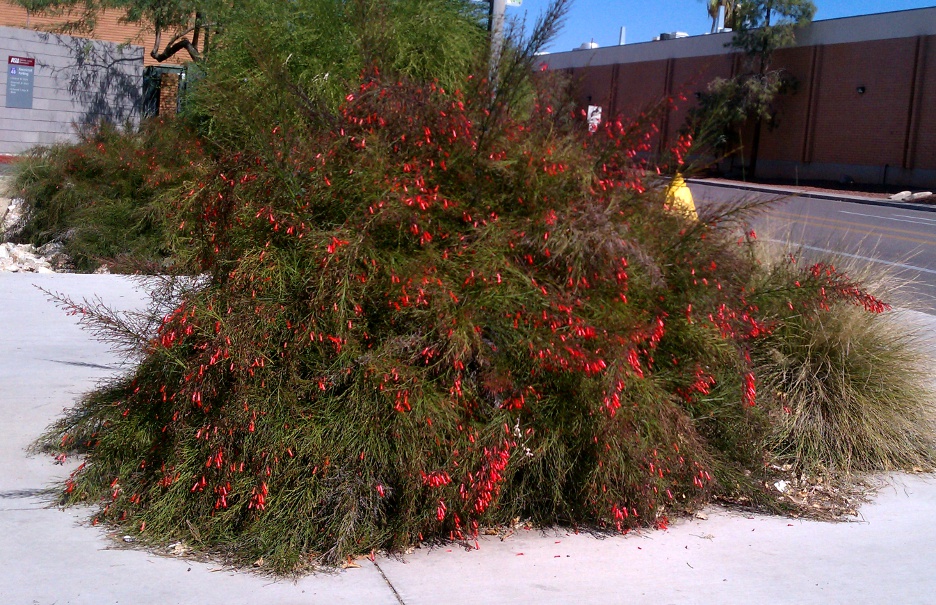
Form & Character: Wispy, arching and spreading, cascading, informal, free spirit, open, random.
Growth Habit: Evergreen, mostly herbaceous, ephemeral-leaved perennial shrub with moderately fast growth rate to 3- to 5-feet tall with similar or greater spread.
Foliage/Texture: Wirey green, photosynthetic, angular stems, leaves ephemeral to 1-inch long, ovate, whorled, highly variable ranging up to 7 in a whorl, but mostly reduced to very small linear scales; fine texture.
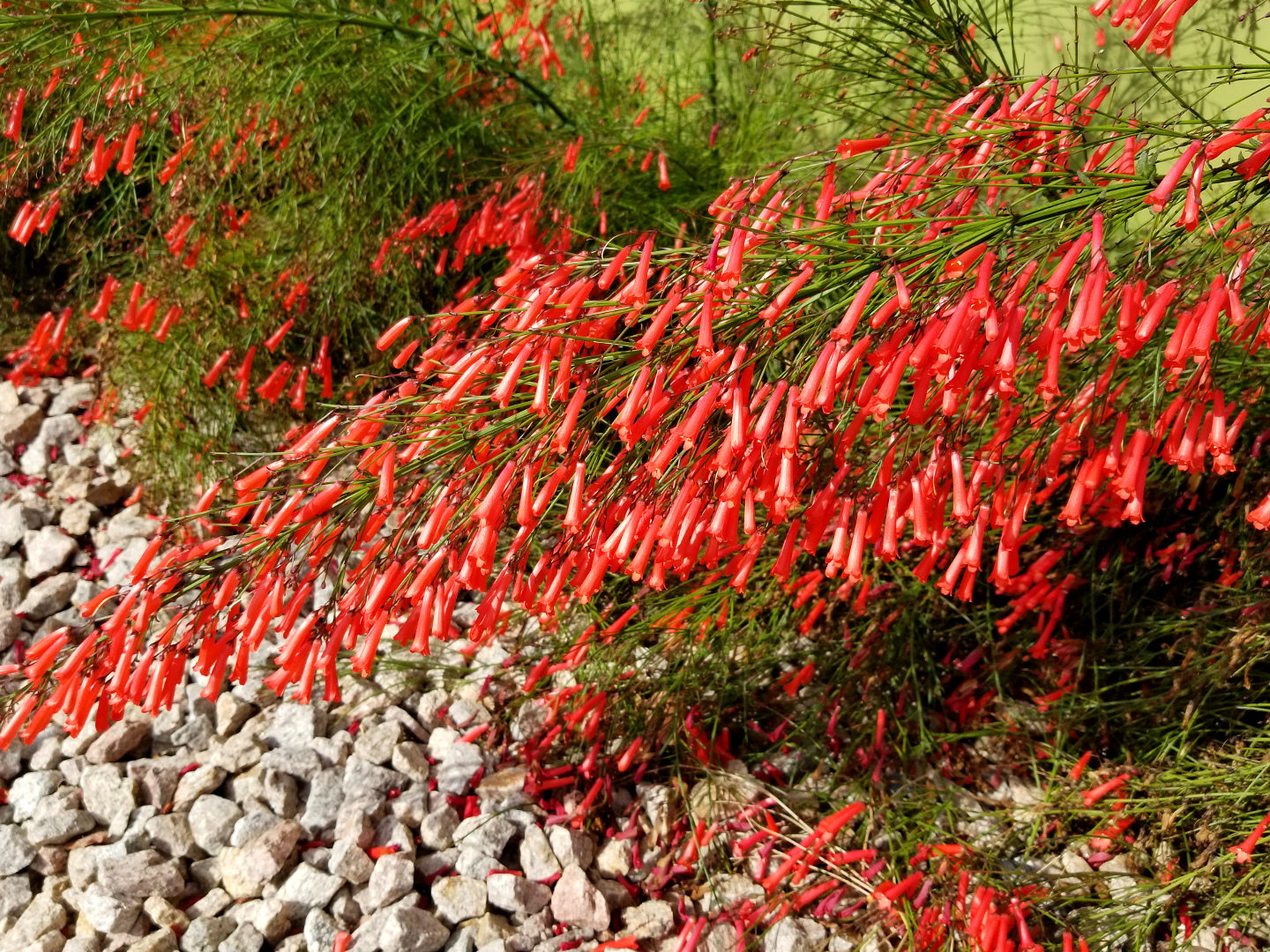
Flowers & Fruits: Hanging clusters of
scarlet tubular flowers about 1-inch long; flowers look like small firecrackers,
thus the common name; fruit inconspicuous.
Seasonal Color: Free flowering most of the year.
Temperature: Heat loving, cold tolerant to 25oF.
Light: Full sun to partial sun.
Soil: Tolerant, though prefers a rich, organic, well drained soil.
Watering: Deeply and at regularly infrequent intervals is the operating mantra for growing coral bush in the desert. Regular frequent irrigations will cause firecracker plant to rapidly grow crazy.
Pruning: Firecracker plant cannot be trained formally; it will resist you! Pruning should therefore
consist of periodically using heading and/or reduction cuts to
control/reduce shrub size all the while preserving its informal, natural shape.
Propagation: Relatively easy to propagate vegetatively by using stem tip cuttings.
Disease and Pests: Firecracker plant is prone to soil borne fungal pathogens in poorly drained
soil.
Additional comments: Firecracker plant is a wonderful, 'free spirit' of a plant. It attracts butterflies. Be careful not to let around Bermuda grass
or other perennial grasses establish around and beneath it. These grasses will tend to grow up into the coral bush crown. If that happens, then eradication of these grasses will be tough. Firecracker plant has naturalized in central and south Florida and is considered to be moderately invasive in some parts of the world.
Taxonomic tidbit: The species name 'equisetiformis' means having the form of Equisetum (horsetails).