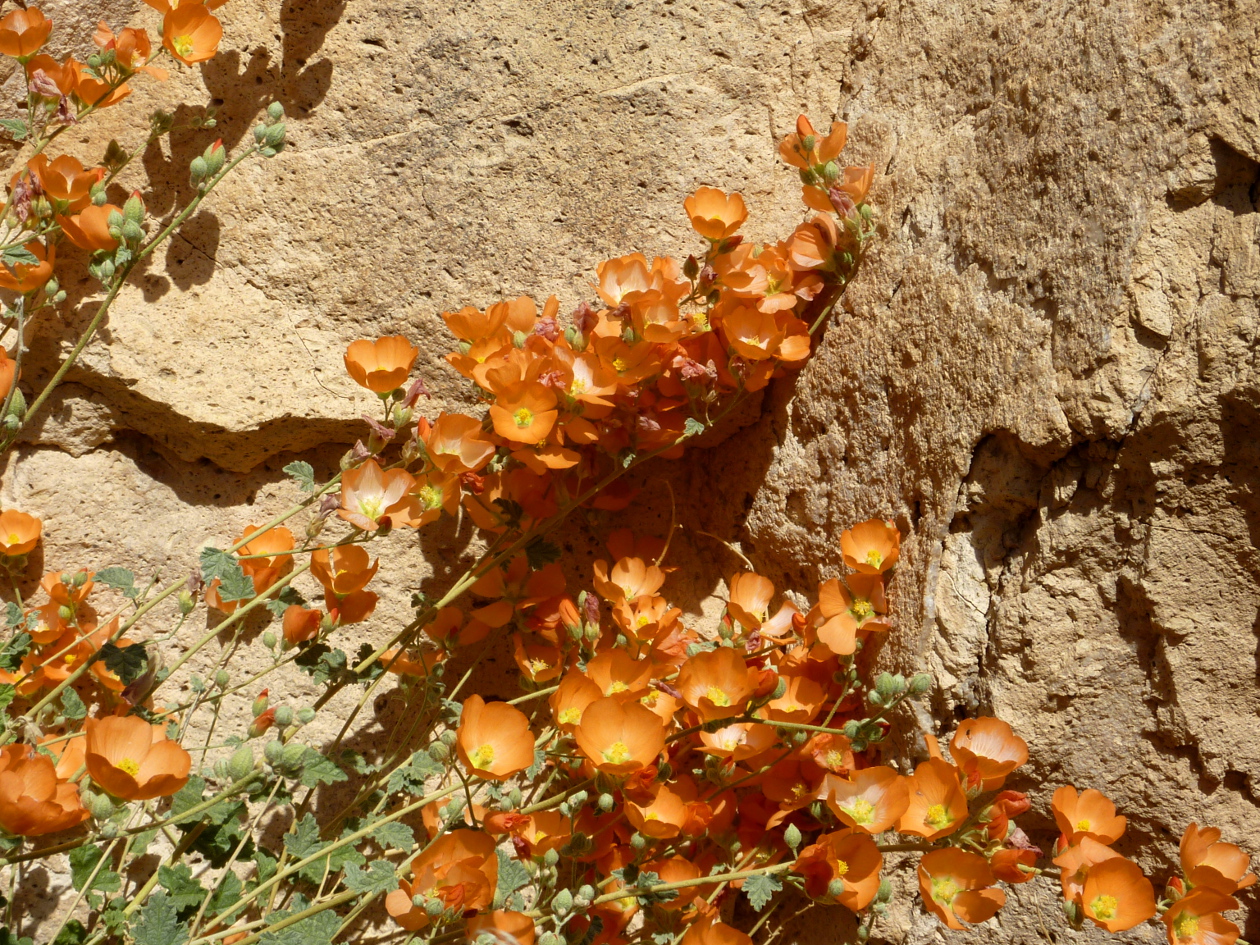
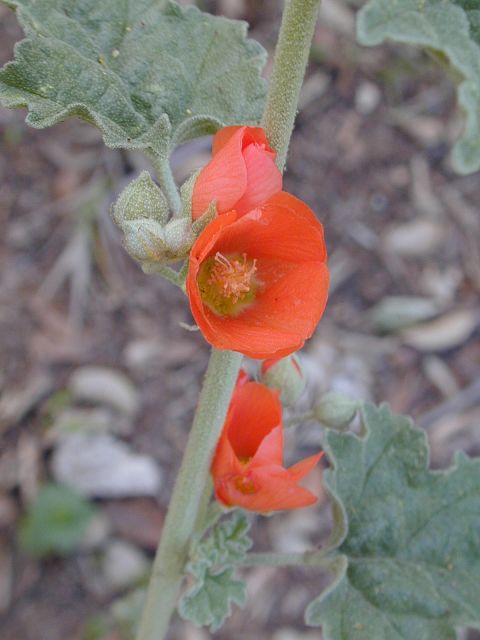
Scientific: Sphaeralcea ambigua
Common: Desert mallow, desert hollyhock, apricot mallow, desert globe mallow
Family: Malvaceae
Origin: Arizona, south and east California, south Utah and Nevada south into Sonora, Mexico.
Pronounciation: Spha-er-AL-see-a am-BIG-u-a
Hardiness zones
Sunset 11-13
USDA 8
Landscape Use: Xeriscape floral accent, mixed dry borders and rock gardens, desert restoration.
Form & Character: Upright and arching, informal, open and rangy, similar in landscape character to Buddleja marrubiifolia, but generally not near as large or robust.
Growth Habit: Evergreen, herbaceous, short-lived perennial, biologically active in the lower Sonoran Desert from October to May. Globe mallow has a basal clumping habit, with an overall vigor in urban desert landscapes that is much dependent on seasonal water availability, height and spread can range from 1 to 6 feet.
Foliage/Texture: Variably ovate, orbicular to three lobed, often serrate, gray olive green, densely pubescent; medium fine texture.
Flowers & Fruits: Axillary open paniculate inflorescence in many colors ranging from orange, red, pink, lavender to white. Individual flowers to 1 1/4-inches long, showy; fruits are a two-seeded mericarp, not showy.
Seasonal Color: Brilliant floral displays in later winter and spring. Many different flower colors available at plant nurseries.
Temperature: Tolerant
Light: Full sun
Soil: Tolerant of most desert soils; prefers light warm soil with decomposing granite or a crushed stone mulch cover.
Watering: Little to none to keep compact, responds to irrigation with encourages luxuriant vegetative growth.
Pruning: Head back severely to the ground anytime from September through November in order to rejuvenate during the winter active growing season.
Propagation: Seeds germinate readily; softwood cutting are somewhat difficult to root.
Disease and Pests: None
Additional comments: Globe mallow will delightfully reseed in desert or drier Phoenix landscape garden sites. Locally native globe mallow plants have orange flowers. The genus Sphaeralcea contains over 50 species of herbaceous perennials or small shrubs in arid zones of the new world; 16 of those species are native to Arizona.
There are three varieties of Sphaeralcea ambigua. They are:
Taxonomic cousin: Sphaeralcea subhastata (spreading globe mallow) grows in northern Arizona at elevations above 2,500 feet and blooms heavily in late May.