Scientific: Syagrus romanzoffiana (Synonyms: Syagrus romanzoffianum, Arecastrum
romanzoffianum, Cocus plumosa)
Common: queen palm
Family: Arecaceae
Origin: South America from Argentina, Paraguay, Uruguay, Bolivia, into Brazil.
Pronounciation: See-A-grus ro-man-zof-fee-A-na
Hardiness zones
Sunset 12, 13, 15-17, 19-24
USDA 9 (may struggle)-11
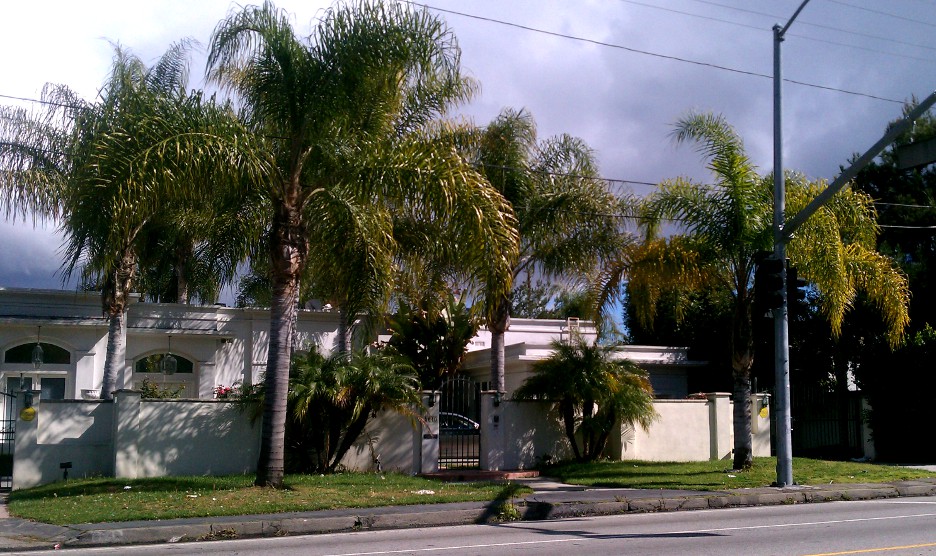
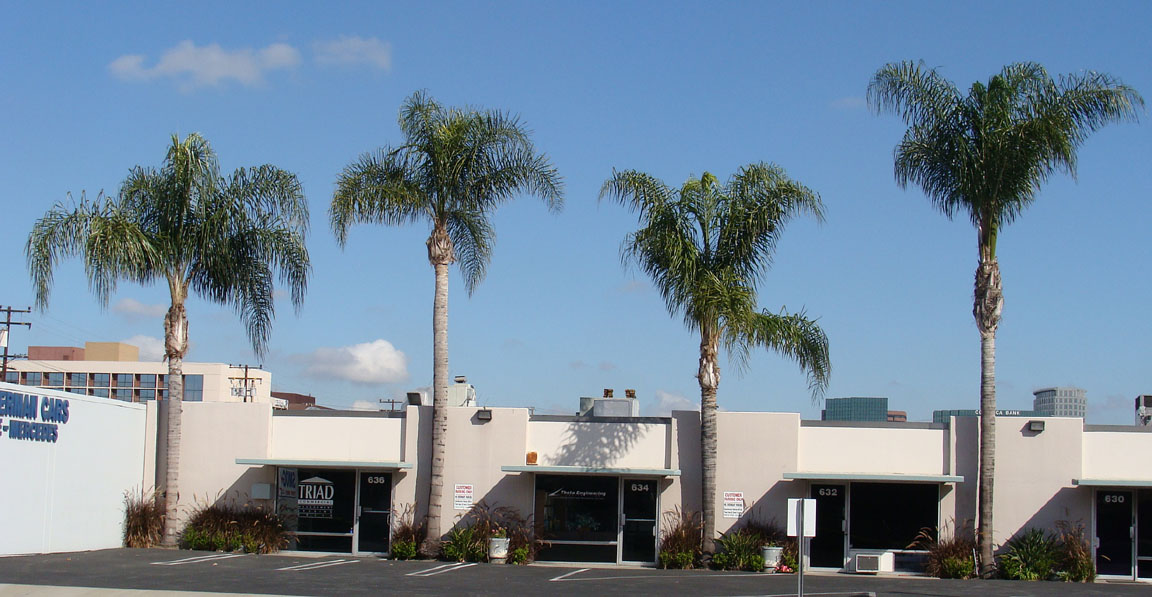
Landscape Use: Focal point, strong accent, vertical statement, tropical effect, good around water, bad in the dry desert air.
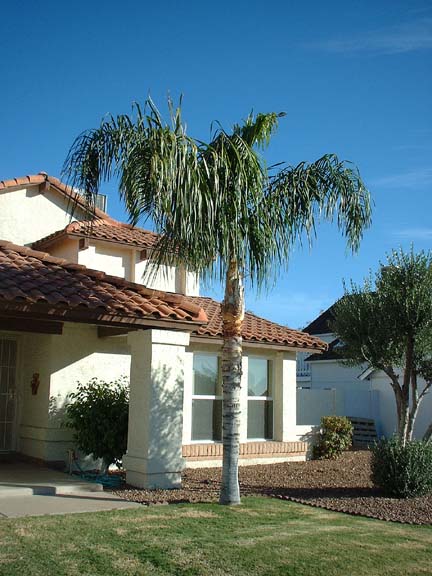
Form & Character: Upright yet graceful, except in Phoenix where it looks rather trashy and taddered.
Growth Habit: Evergreen, perennial monocot, moderately fast to 50-feet tall, though rarely above 30-feet tall in Phoenix.
Foliage/Texture: Elongated, arching pinnately-compound fronds to 10-feet long with distinct frond sheaths and up to 200 pinnae per frond, bright glossy green, partially self-shedding to reveal smooth light very straight gray trunk with prominent frond sheath scars; coarse texture.
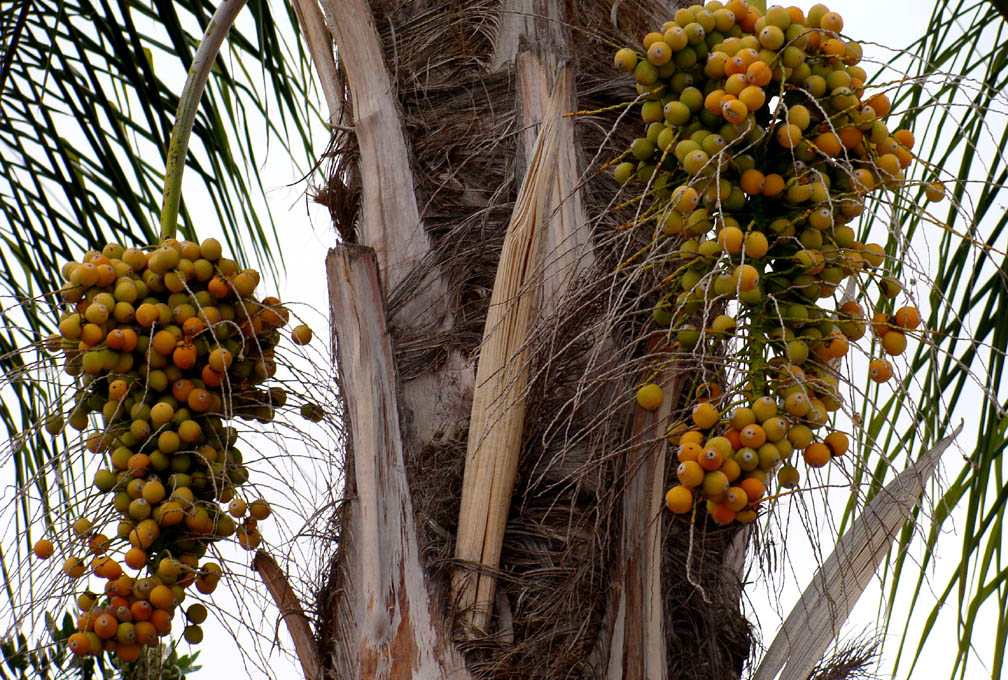
Flowers & Fruits: Flowers are yellow to 3/8-inch long in long panicled, clusters, fruit are yellow to orange and are from 1- to 1.5-inches long in an ovoid shape, clustered.
Seasonal Color: None
Temperature: Hardy to 25oF, killed at about
16oF.
Light: Full sun to partial shade, avoid western exposures, eastern exposires best.
Soil: Avoid rocky alkaline soils (hard to do in Phoenix) because of severe iron chlorosis problems. Queen palms in Phoenix need a regular nutritional program that includes supplemental micronutrients (Fe, Zn, and Mn) and magnesium (Epsom salts) fertilizers.
Watering: Regular
Pruning: Removal of old fronds.
Propagation: Seed
Disease and Pests: Mites, phytophthora root rot, ganoderma butt rot (enters through lower trunk wounds, no control), rarely palm leaf skeletonizer and scale.
Additional comments: As palms go, queen palm is a bad choice for the Phoenix area because of its sensitivity to winter cold, summer heat and alkaline soils. Also, frond tatter is a locally universal problem due to high transpirational water loss and drying winds. Otherwise, queen palm is a very graceful palm that is much better suited for landscape use in south Florida and coastal southern California. In Phoenix, queen palm is hardier than king palm (though frankly in Phoenix that's not saying very much).