Scientific: Thevetia peruviana (Synonyms: Cascabela thevetia, Cerbera thevetia)
Common: yellow oleander, luckynut
Family: Apocynaceae
Origin: Tropical America
A Taxonomic note: The World Flora Online recognizes Cascabela thevetia as the accepted scientific name for yellow oleander; however, ITIS recognizes Thevetia peruviana as the accepted scientific name and this is the resource that I defer too when a plant's scientific name is in dispute.
Pronounciation: The-ve-TEE-a per-u-vee-A-na
Hardiness zones
Sunset 12 (with protection), 13, 21-24
USDA 9-11
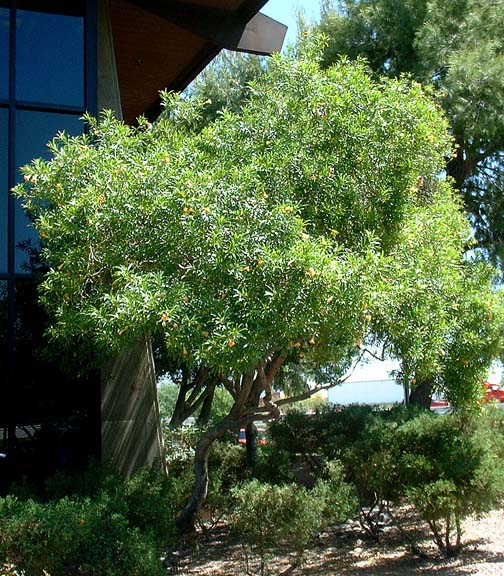
Landscape Use: Mostly found as a large background screening shrub, foundation plant for large buildings, or as a small multiple-trunk tree. Extended flowering creates an accent effect over the entire warm growing season in Phoenix.
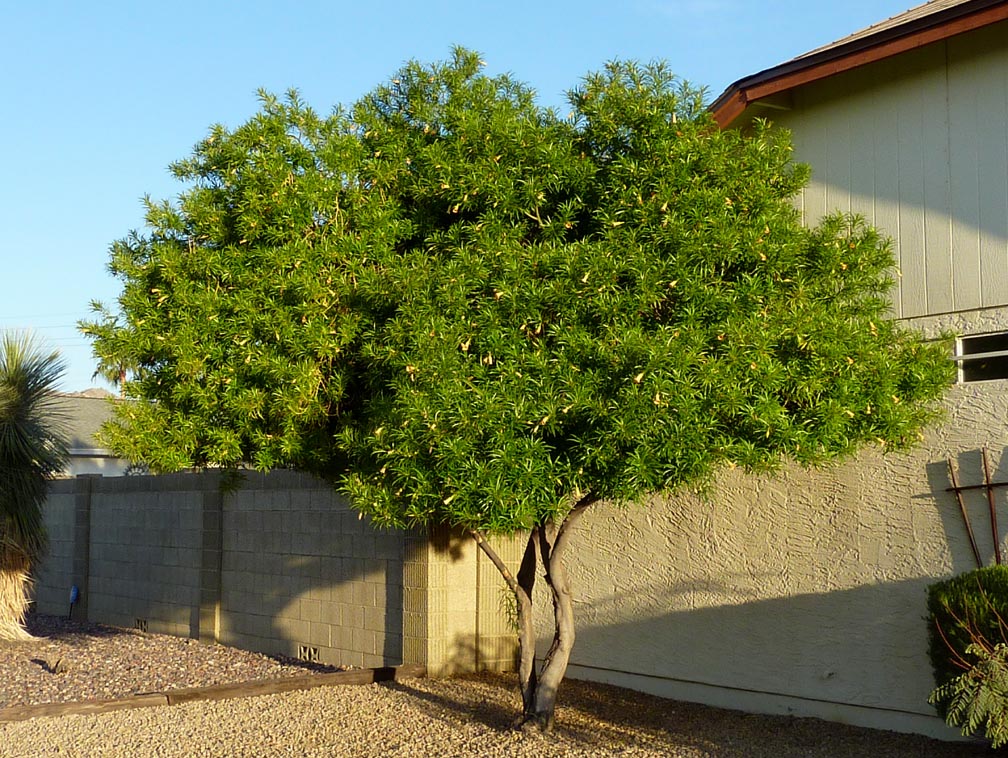
Form & Character: This is an intermediate, awkward-sized, "tweener" plant that can be trained in the landscape as either a large shrub or small tree. It is upright and spreading to rounded, clean and shiny with a tropical appearance.
Growth Habit: Evergreen, woody, broadleaf perennial shrub or small tree, moderately vigorous to 20-feet tall with equal spread, but can be effectively maintained at 6 to 12 feet in height.
Foliage/Texture: Bright green, glabrous, linear to lanceolate leaves to 6-inches long, nearly sessile; medium fine texture.
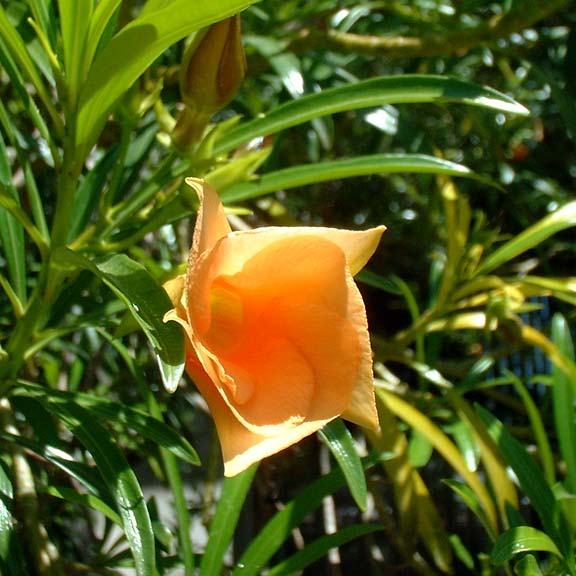
Flowers & Fruits: Terminal clusters of yellow apricot to orange tubular flowers (rarely white) followed by multicarpulate, greenish, nondescript and generally hidden fruits.
Seasonal Color: Yellow or orange flowers during warm season.
Temperature: Hardy to 25oF.
Light: Full sun, but the trunk of yellow oleander will easily sunscald if the plant's canopy base is elevated and the trunk is exposed to direct sunlight. Avoid western exposures!!
Soil: Tolerant
Watering: Yellow oleander, being a shrub that originates from the tropical New World will require regular and frequent waterings in the Phoenix area to stay vigorous and resistant to heat stress injury, especially during 'The Long Hot Summer'.
Pruning: Light pruning is sometimes warranted to improve shape. Sometimes this large shrub is trained into a small, multiple-trunked tree.
Propagation: Seed and cutting.
Disease and Pests: None
Additional comments: This was once a prototypical 'mesic plant' for green landscapes in Phoenix and was quite popular in Phoenix before 1990. Today however, it is far, far less popular because of the greater societal emphasis on water conservation and desert landscaping. A white flowering cultivar is rarely available at local Phoenix plant nurseries.
Toxicity warning: Similar to Nerium oleander,
all plant parts of Thevetia peruviana are poisonous!