Scientific: Tipuana tipu
Common: tipu tree, pride of Bolivia
Family: Fabaceae (Leguminosae)
Origin: Bolivia
Pronounciation: Ti-pooh-A-na TEE-pooh
Hardiness zones
Sunset 13-16, 18-24
USDA 9 (may freeze in coldest winters), 10-11
Landscape Use: Flowering accent, oasis or mesic shade and accent tree for Spanish architectural building designs, pan-tropic as a landscape tree. Tipu tree is classified as an invasive species in South Africa and yet is a widely-planted street tree in tropical cities.
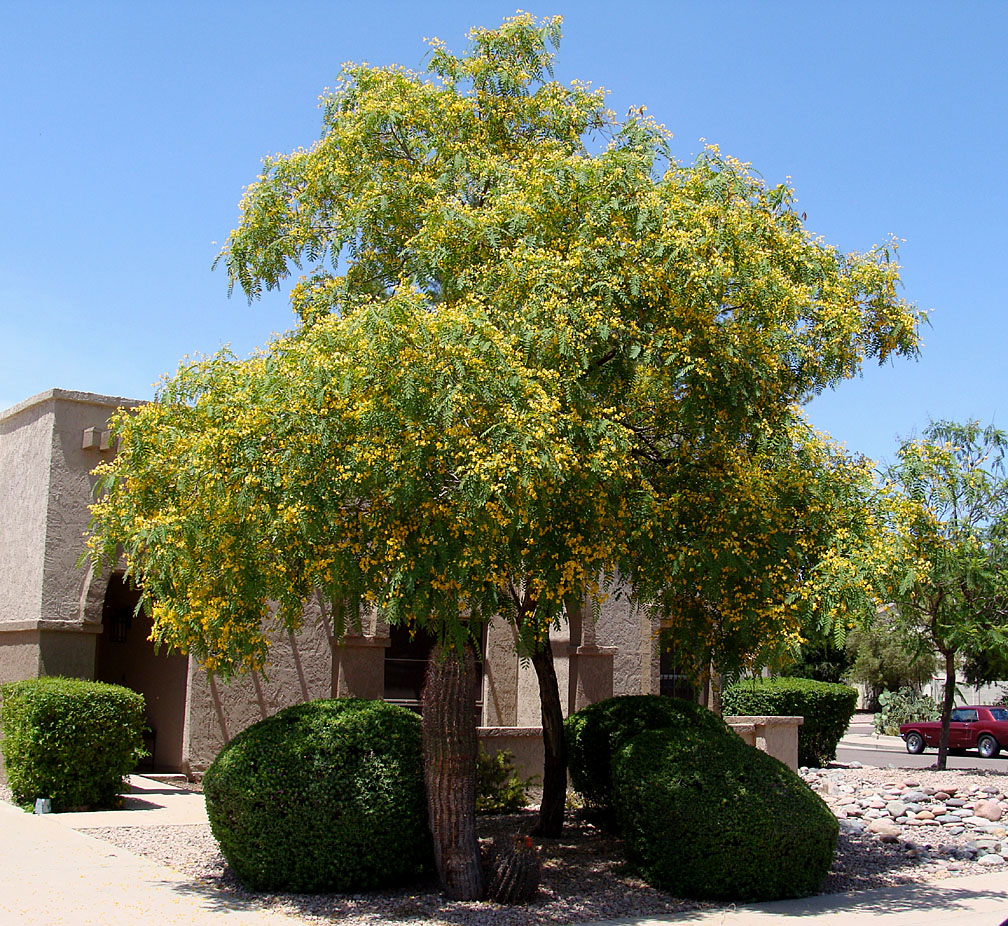
Form & Character: Upright and broadly spreading with age, open umbrella-like canopy, festive, lacey, semi tropical.
Growth Habit: This is an evergreen to partially deciduous, woody, perennial broadleaf tree. In Phoenix, tipu tree has a moderate growth rate to 35-feet tall, but can eventually reach 50-feet tall with an equal or greater speard. Trunk and branches have a roughened bark. This tree is much larger when grown in coastal southern California than in the southeastern California or southern Arizona deserts.
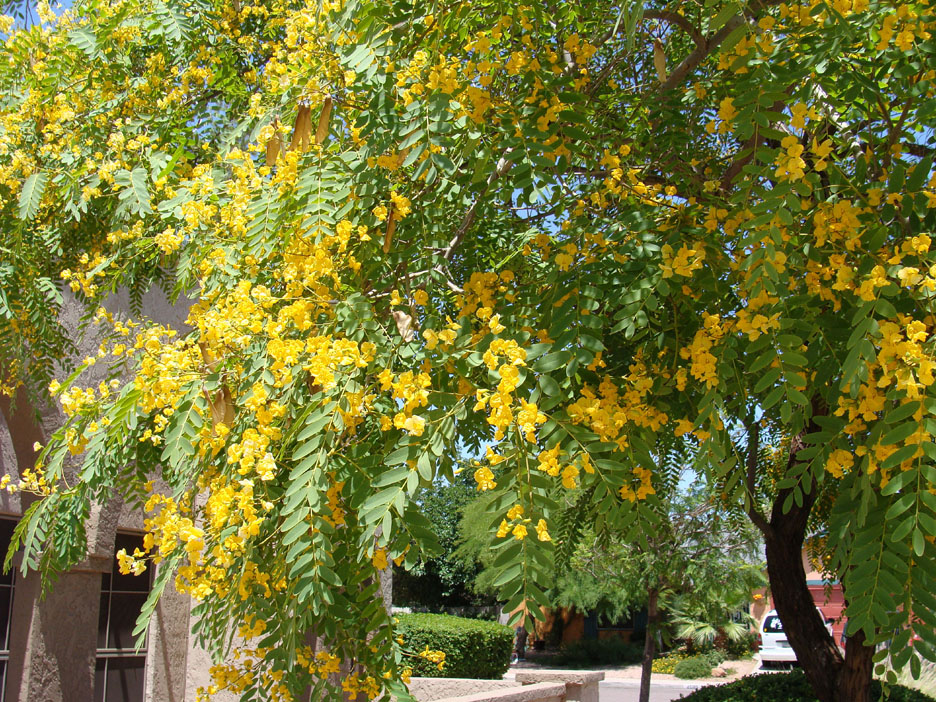
Foliage/Texture: Odd pinnately-compound leaves (number of leaflets per leaf, not that they look weird), 11 to 21 oblong leaflets, light green in color; medium texture.
Flowers & Fruits: Yellow to apricot pea shaped flowers, fruit is a samara-like, 1- to 3-seeded winged pod.
Seasonal Color: Flowers in the early summer.
Temperature: Hardy to 25oF and shows summer heat stress especially when grown around built surfaces of concrete and asphalt. Young trees are damaged by freezing temperatures during Phoenix winters (on the rare occasions that that happens), especially in southeast and western reaches of the Phoenix metro area. Most all tipu trees in non-mesic settings were fried by the extreme heat during the crazy hot summers of 2020 and 2023.
Light: Full sun
Soil: Some intervenal chlorosis might occur in alkaline central Arizona soils.
Watering: Tipu tree needs ample regular supplemental water in Phoenix to grow a lush dense canopy and not suffer heat damage during summer. In more moderate locations such as southern California coastal regions, tipu tree is considered fairly drought tolerant.
Pruning: Crown raise so as to elevate canopy base to desired height and train tree into an inverted vase crown architecture. Tipu tree tends to form low co-dominant stems that if left unpruned might form bark inclusions resulting in catastrophic limb failure. As a result, significant training for strong branch attachments should be considered as a normal part of this tree's regular maintenance especially after transplanting young specimens into the landscape.
Propagation: Seed
Disease and Pests: None
Additional comments: In Phoenix, tipu tree is a beautiful, ornamental mesic tree that needs needs a good deal of supplemental water to look good. As an Arizona desert shade tree, it has reduced vigor compared with its growth habit in coastal southern California where
it can become massive in size.
Neat freak alert: Tipu tree will seasonally produce copious foliage, flower and fruit litter. Local swimming pool owners and pool service companies quickly learn to detest this tree.