Scientific: Vinca major
Common: greater periwinkle, blue periwinkle, vinca
Family: Apocynaceae
Origin: Europe
Invasive Alert: Greater periwinkle has become an invasive species in many areas of the United States. For example, periwinkle will naturalize in moist wooded canyons and hillsides at higher elevations of Arizona between 4,000 and 8,000 feet and also in coastal canyons along the Pacific coast. Once established, it is nearly impossible to control by hand weeding (EXTREMELY labor intensive) and must be controlled chemically by use of a combination of glyphosate and triclopyr herbicides applied as sprays during mid summer.
Pronounciation: VIN-na MA-jor
Hardiness zones
Sunset 5-24
USDA 7-11
Landscape Use: Mesic ground cover, accent plant for shaded areas in the lower desert, indoor mall and atriums plantings.
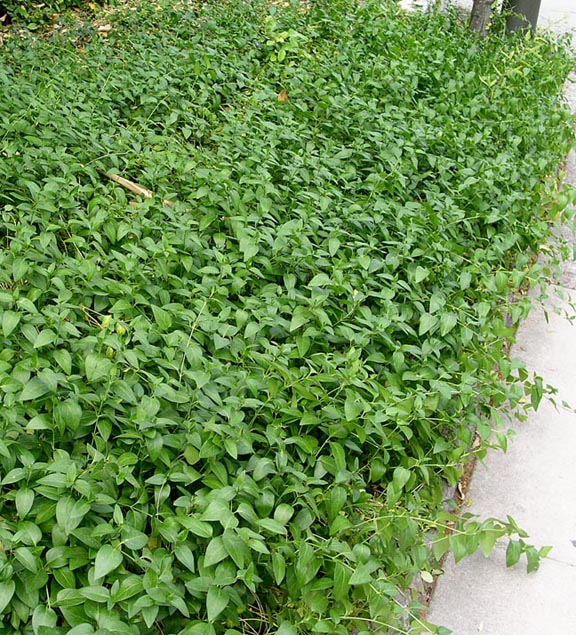
Form & Character: Trailing, vining prostrate, seasonally coloful, peaceful, recessive, forest understory.
Growth Habit: Evergreen, herbaceous perennial vine, stoloniferous, running on the ground surface and rooting at nodes.
Foliage/Texture: Opposite, elliptic to ovate medium to dark
green leaves, 3- to 5-inches long, veins pronounced; medium texture.
Flowers & Fruits: Powder blue flowers in axillary meristems; fruit inconspicuous.
Seasonal Color: Flowers in spring, though the shady conditions that are required to grow Vinca in Phoenix limit its flower potential.
Temperature: In Phoenix, greater periwinkle is tolerant of desert temperatures extremes (especially heat) only if grown in partial to full shade.
Light: Partial to full shade best, and absolutely NO western sun in Phoenix.
Soil: Tolerant
Watering: In Arizona desert landscapes, periwinkle must be irrigated regularly and frequently. It does take some drought in higher elevation locations.
Pruning: One can mow every 18 to 24 months to induce vigor.
Propagation: Stem cuttings with rooting hormone during late summer.
Disease and Pests: Powdery mildew in shade with poor air circulation.
Poison Alert: Greater periwinkle is mildly poisonous, especially to dogs.
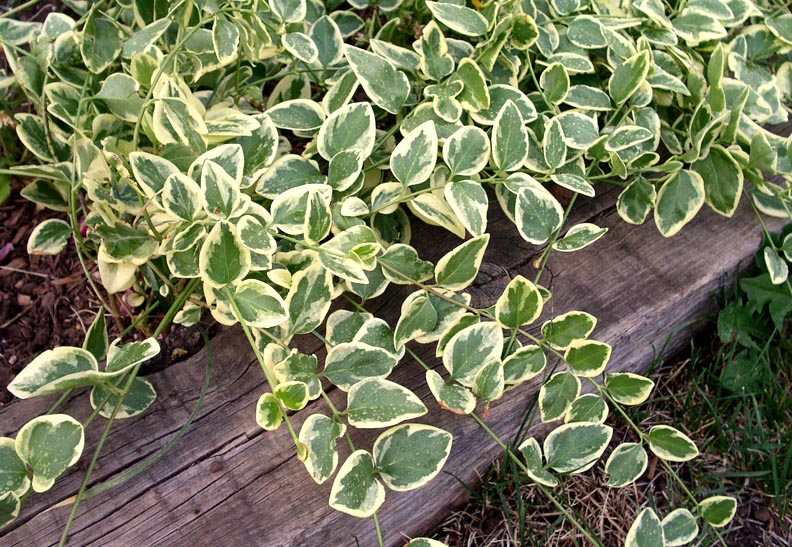
Additional comments: This is a difficult plant to effectively use in Phoenix due to its desert heat and sun sensitivities. In the Southwest United States, periwinkle will normally yellow during the dry summer months and can freeze to the ground in higher elevations during winter. The cultivar 'Variegata' has white leaf margins and is very
popular in large indoor situations such as malls and atriums.
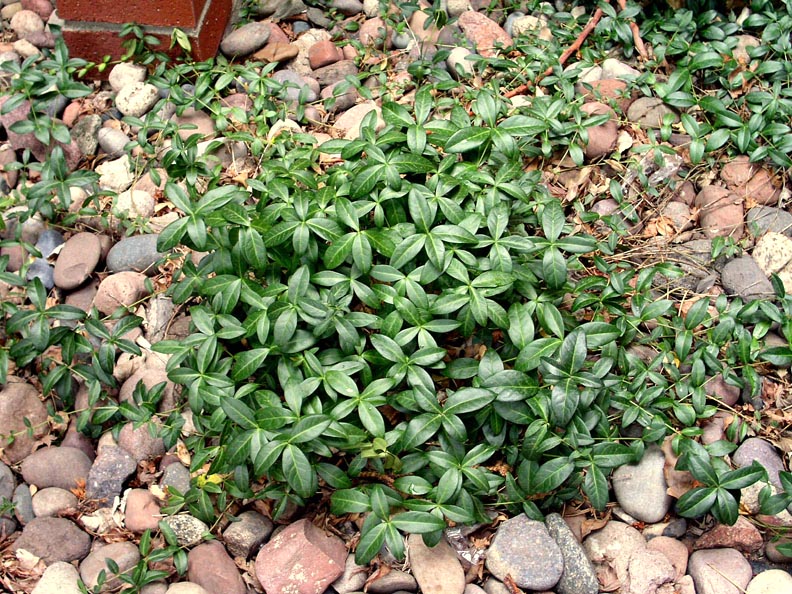
Vinca minor (little leaf periwinkle) is a less vigorous species and is not heat hardy enough to grow well in Phoenix. It is better suited landscape gardens in cooler climates such as those that occur at higher elevations in northern and southern Arizona. Here it is in a small shaded planter bed at the historic Boyana church in Sofia, Bulgaria.