
Horn Articles Online
Playing the Natural Horn
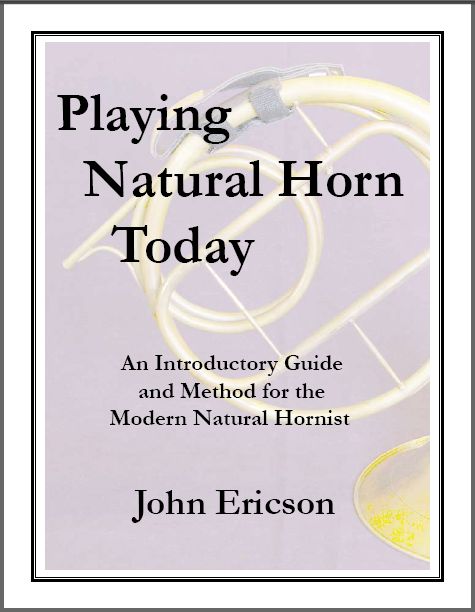
While horn players visit this site for a variety of reasons, one reason is clearly because they are looking for information on the natural horn--historical information and also practical information on how to play it today. For much more information see my publication Playing Natural Horn Today, described beow:
 Playing
Natural Horn Today, second edition
Playing
Natural Horn Today, second edition
A concise, modern method for the natural horn,
developed with the needs of horn players in mind. This updated second
edition is focused toward introducing the natural horn effectively for
players who already play the valved horn and wish to learn the older
instrument. Topics covered include equipment choices, hand positions, and
much more, presented in a practical manner. Short exercises and etudes are
included to build technique, making this an ideal resource for learning to
play the natural horn.
Available from Horn Notes Edition | Print version -- Kindle version
I have been fascinated by horn history and the natural horn for many years. I was very fortunate during my Doctoral studies at Indiana University to work closely with natural horn maker and performer Richard Seraphinoff. I was able not only to work with him as the coach of a very active natural horn quartet (the Grand Quartet) but also to study and perform with him, to play natural horn in the IU Baroque Orchestra, and to work with him in his shop.
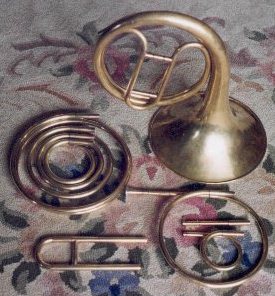
The fruit of these labors was the instrument below, constructed with his help and supervision, a great little natural horn based, believe it or not, on a French
concert mellophone bell from around the turn of the twentieth century. It can be crooked in every key from C alto to B-flat basso and plays quite well.
Why play natural horn today? While it may seem especially pointless in the age of triple horns to play anything on an "obsolete" instrument from the past, there are actually many good reasons to play the natural horn today:
- Development of accuracy. Doing things “the hard way” on natural horn makes the normal way on valved horn seem that much easier. One has to develop note placements and articulations to a higher degree.
- Development of the ear. Natural horn work certainly opens the ear to hearing in new ways, especially when crooked in keys other than F, and you must work much harder to make the instrument play in tune. This work will also pay off later on valved horn.
- Improved stopped horn technique on modern horn. You will develop a much quicker, more fluid manipulation of the right hand through practice of the natural horn.
- A better understanding of musical style. This should be the ultimate goal. Good composers write music in a way that fits the instrument it is written for. Especially for literature from the Classical period, natural horn study gives important clues to how the works would have actually been phrased and performed in the original performances.
For me in many ways natural horn performance is a window into the past. The whole concept of trying to replicate the sound that would have been heard by the original audiences remains an important motivator in my natural horn playing. I regularly play natural horn today, and own two, the instrument pictured on this page and also an orchestral horn constructed by Richard Seraphinoff.
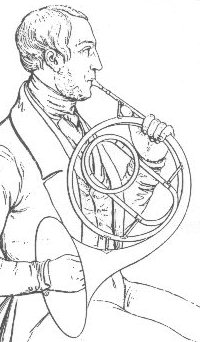 My Doctoral research focused on the development of valved horn technique in the nineteenth century. The basis of any understanding of this transition era is the natural horn, and from this research I developed several online articles which are of interest from both an historical perspective and from the perspective of learning to play the natural horn today:
The Natural Horn and Its
Technique
A brief overview of the natural horn, including basics on the performing techniques--article based on materials from my dissertation
Heinrich Domnich and the
Natural Horn
Excerpts from his important method, including practical information on the use of crooks and right hand technique--based on an article published in
The Horn Call Annual
Dauprat on the Tone of the
Natural Horn
The covered notes provided "shades and nuances" of color, and along with the crooks were a huge part of what made a horn sound like a horn--based on an article published in
The Historic Brass Society Journal
E. C. Lewy and Beethoven's
Symphony No. 9
The famous fourth horn solo was in fact written for the natural horn--based on an article published in
The Horn Call Annual
Brahms and the Orchestral Horn
With Brahms it is all written for natural horn--expanded from materials presented at the 2001 International Horn Symposium
 BONUS ARTICLE:
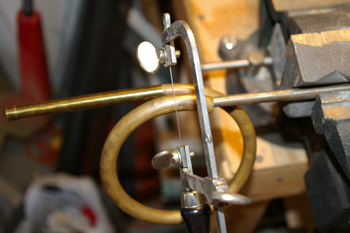
Making a Crook for a Natural Horn
A photo/essay documenting the assembly and finishing of an A crook, an online exclusive.
Periodically I post items on playing the natural horn in Horn Matters. Click on the category "Natural horn" or use the search function located in the header of the site. There are articles there on materials I like to use for natural horn study and many other topics of interest.
And check out my method for natural horn at Horn Notes Edition! It is an ideal resource for the modern horn student who wants to learn to play the natural horn. More at www.hornnotes.com