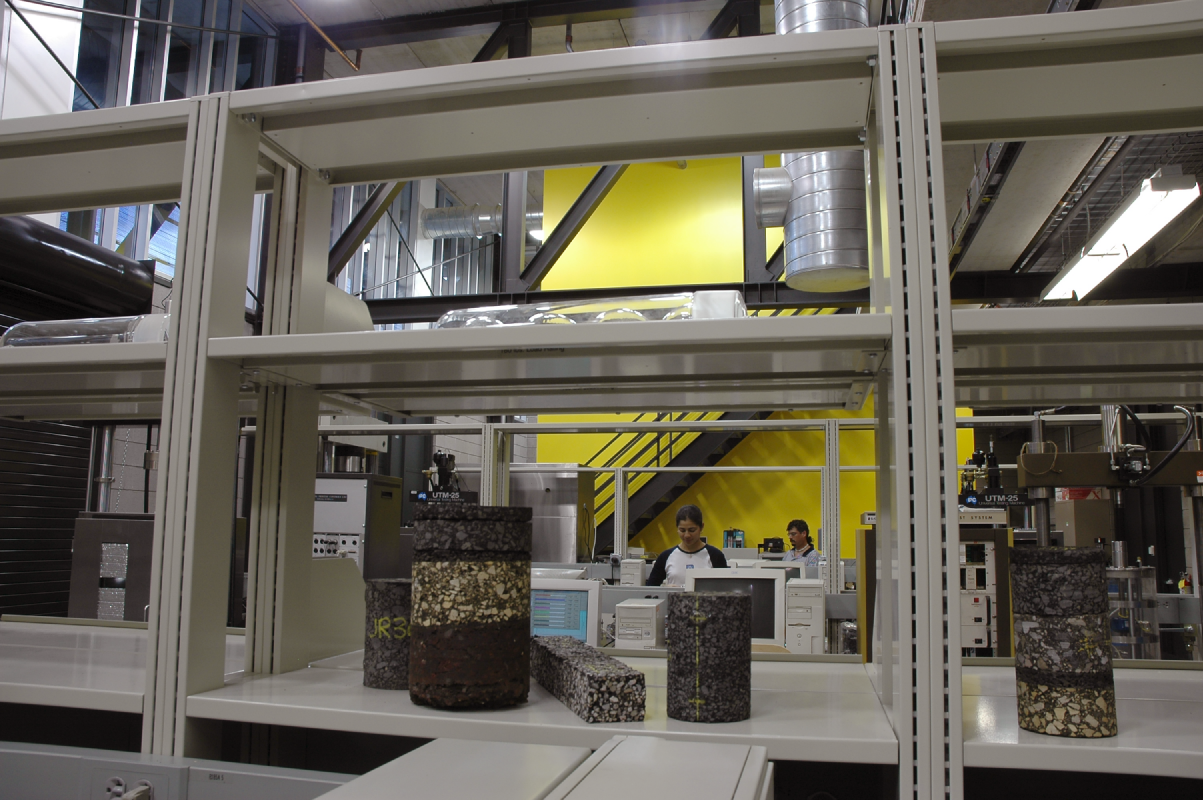
ASU is a world-class university with state-of-the-art facilities for education and research. The School of Sustainable Engineering and the Built Environment is located on the main campus, about 10 minutes from the Sky Harbor International Airport. Facilities are available that will provide ample space and equipment for the conduct of research.
The Advanced Pavements Laboratory (APL) at ASU is a state-of-the-art facility that provides full capability for characterizing asphalt concrete mixtures, unbound materials, and complete asphalt binder characterization. The APL is considered one of the best and most advanced laboratories in the United States. The APL occupies more than 4000 square feet in the Interdisciplinary Science and Technology Building II. The entire testing laboratory comprises of four main sections depending upon the specific functionality. The APL is fully equipped with ovens, scales, mixers, Marshall Mix design molds, water baths and compactors. A compression machine for concrete cylinders and a vibratory compacter for unbound materials are also available. An adjacent area to the laboratory is dedicated for aggregate storage and handling. This includes sieving and batching of aggregates for preparing asphalt mixtures. The area is also equipped with state-of-the-art automated coring machine, and two saws for preparing various sizes and geometry of test specimens.
Binder Laboratory: This section of the laboratory has state-of-the-art equipment for asphalt binder testing and characterization. The main equipment includes Superpave Rotational Viscometer, Bending Beam Rheometer (BBR), Dynamic Shear Rheometer (DSR), Rolling Thin Film Oven (RTFO), and Pressure Aging Vessel (PAV).
Mixing Laboratory: Asphalt sample preparation is carried out using an SHRP approved procedure using a Superpave Gyratory compactor. The laboratory has two Troxler and one IPC Servopac compactors. Four large ovens for controlling the mixing, aging, and compaction temperatures are available within this laboratory, as well as specific gravity apparatus for density measurements of fabricated specimens. A Troxler ignition oven is also available in this section.
Advanced Material Testing Laboratory: This is the main research laboratory for advanced material characterization testing of asphalt mixtures and unbound materials. Several state of the art servo-hydraulic closed loop systems are housed in this section of the laboratory. These include two 25 kN and one 100 kN Universal Testing machine (Industrial Process Control – IPC) for uniaxial and triaxial testing of paving materials. All these three systems have environmental chambers for temperature conditioning. In addition, an Instron system dedicated for Indirect Tensile testing and an SBEL system that has triaxial capabilities for unbound material are also available within this section.
Two beam fatigue apparatus for fatigue life evaluation of asphalt mixtures are also available. Each beam fatigue apparatus is a stand-alone system with environmental chamber and data acquisition software that performs the SHRP designated M009 test protocols. The test can be run either in strain or stress controlled loadings.
All machines have digital servo-controlled actuators with integrated control and data acquisition systems to provide accurate force or displacement waveform generation. All of the machines are equipped with customized data acquisition software that provides a user-friendly interface with the system to carry out a wide range of tests and analysis procedures. Some of the tests that are run on asphalt concrete on a routine basis include:
Dynamic Complex Modulus
Resilient / Elastic Modulus – Compression and tension
Strength – Compressive and tensile
Repeated Load Permanent Deformation
Static Creep / Flow Time
Work / Energy – Compressive and tensile loading
Indirect Tensile Strength, Creep and Fatigue
Beam Flexural Stiffness / Fatigue
Poisson’s Ratio evaluation
Rapid Triaxial Test for Rutting Evaluation
CoreLok device to measure specific gravity and air voids of samples
The figures below show some of the equipment available at the APL.
APL Laboratory
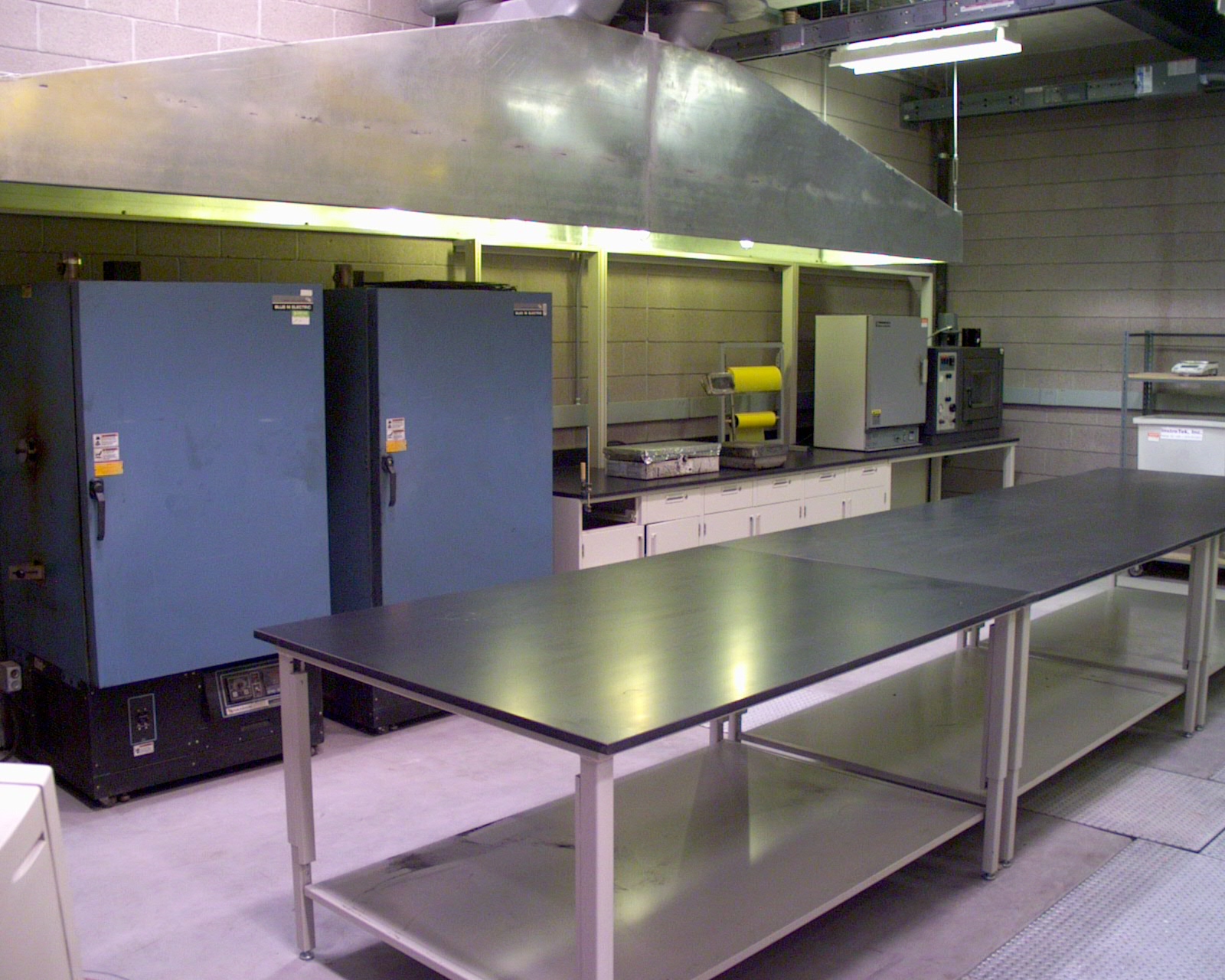
HMA Mixture Preparation Area.
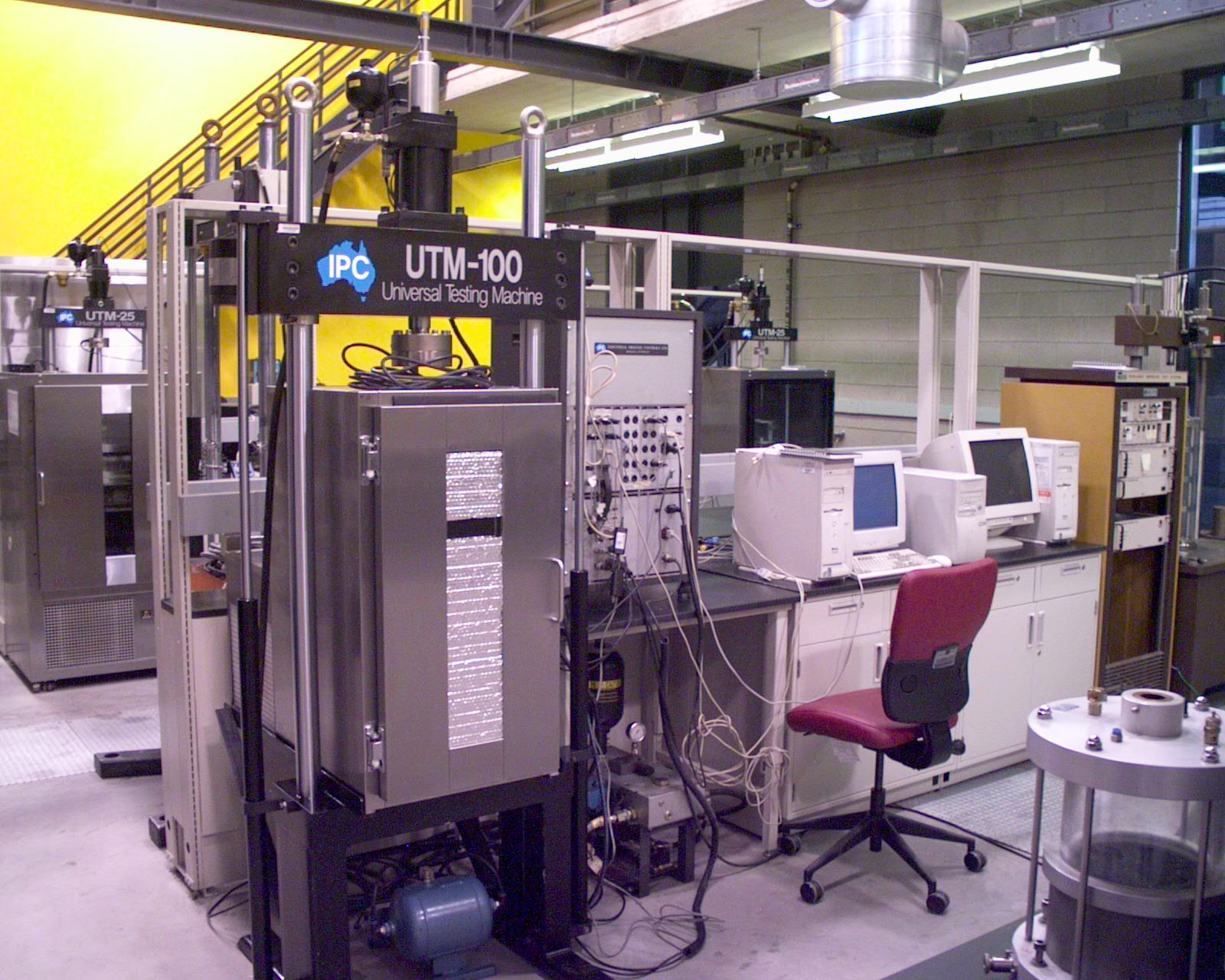
Material Testing Systems.
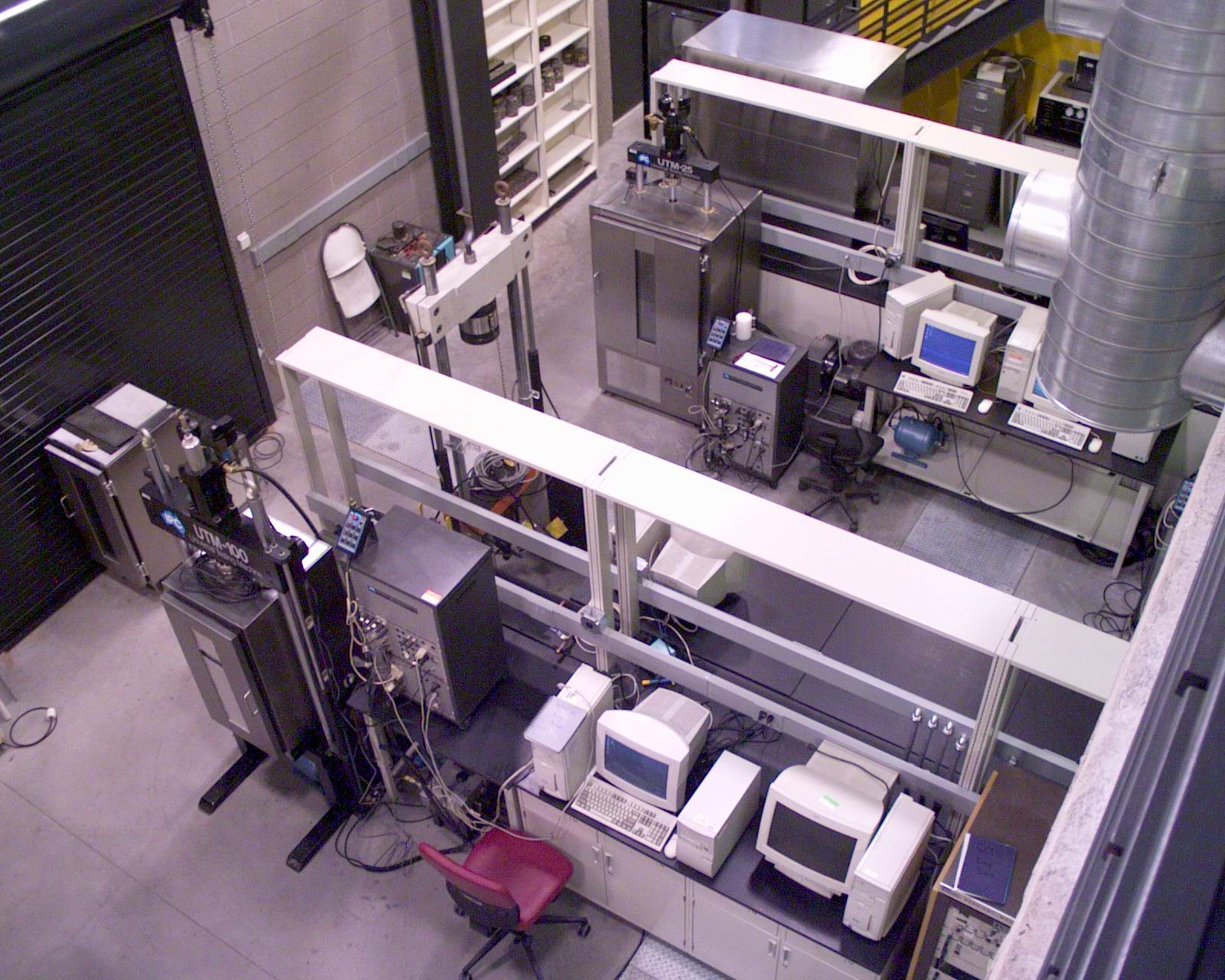
Material Testing Systems.
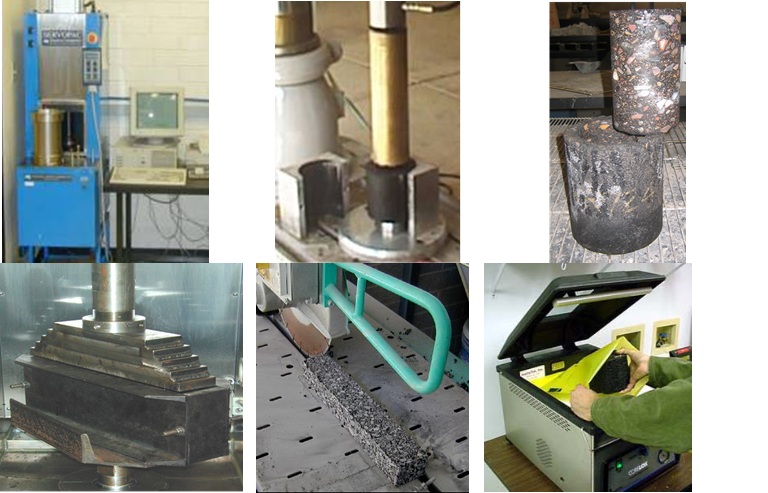
Specimen preparation equipment.
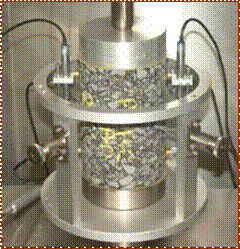
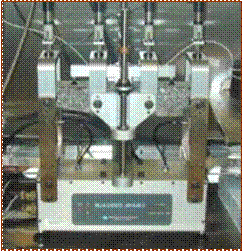
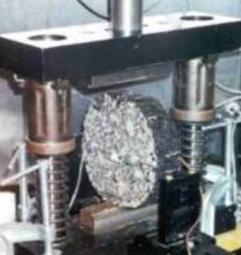
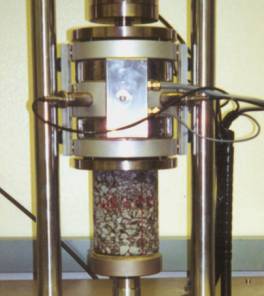
Material characterization test equipment.
Thermal Characterization Lab
At the National Center of Excellence for SMART Innovations.

Location
Integrated Science and Technology Building II
Phone: (480) 727-9124 Fax: (480) 965-8087
Web Site: http://ncesmart.asu.edu
The Thermal Storage and Radiative Characterization laboratory is part of the EPA designated National Center of Excellence for SMART Innovations. One focus area in this laboratory is dedicated to better understand how paving materials interact with the urban climate and contribute to surface and subsurface temperature fluctuations. Laboratory thermal properties tests are conducted in addition to field instrumentation and experiments. The data are used to model the pavement heat absorption and transfer, and evaluating impact on energy and safety.
Go back to home page.