
Beasts of Burden
Forthcoming with SUNY Press in Spring of 2017.
The British Romantic period is the dawn of biopolitics—the age in which biological life and its abilities become regulated by the state through data and statistics. Nowhere is this felt more powerfully than in the fields, commons, and enclosures and borne by workers and livestock. Using literature, art, and cultural texts of the period, Beasts of Burden explores the apparatus of biopolitics during the age of Adam Smith and Thomas Malthus. It explores how the growing instruments of data collection turned everyday life into the formation of citizenship and how labor-class poets and artists recorded and resisted the burden of this new biopolitical Britain.
Trout Fishing in America and Other stories
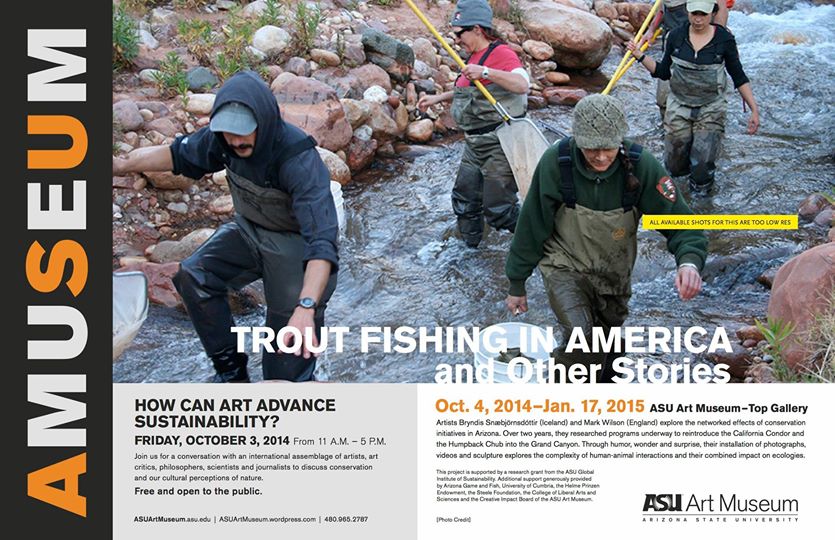
Project Manager, field researcher, and co‐curator with Heather Lineberry. Included in the exhibition is the video "A Field Marshal of the Animal Revolution" featuring Ron Broglio as Field Marshal. At ASU Art Museum. Exhibition book publication forthcoming. Surface Encounters: Thinking with Animals and Art . Art remains at the service of the human even as it tries to undo previous definitions of humanism to arrive at a "becoming" that is in affinity with animals. My own project takes a tangential approach to that of Steve Baker's exemplary Postmodern Animal. I am interested in the way art reveals the worlds of animals as a necessary lacuna in human knowledge. That is, art reveals the inability to articulate the world of the animal. Art sets a limit, a blindness to our insight, while at the same time providing us with the palpable biotopic zones of interaction where the boundaries of worlds jostle one another. These places of meeting or "contact zones" become the productive surface of human-animal interaction where artists forge "pidgin language" to speak alongside the Other. What happens when a chimp takes hold of temporality? This question drives the performance art work Santino’s Gift. The project began with Santino the chimpanzee who likes to throw rocks at visitors to the Furuvik Zoo in Sweden. What is strikingly uncommon about Santinois his forethought in collecting the rocks before visitors arrive. The philosopher Martin Heidegger uses forethought as the scaffolding for explaining human uniqueness in his work Being and Time. Visualizing a future allows humans to plan and build, to make objects function as equipment toward future ends, and to fashion technology. In response to the chimp’s rupturing human preeminence, scientists studied and reported on the his ability while the zoo keepers castrated Santino as a mode of control over his behavior and future plans. Santino’s Gift is an art project designed to give Santino a present which he can make use of while in confinement and down on his luck. In Santino’s Gift I spent part of an afternoon wrapping a copy of Being and Time and fitting it into a hand-crafted wooden box. The present along with an accompanying letter have been mailed to Santino care of the Furuvik Zoo. I am awaiting a response and hopes Santino likes the work. Technologies of the Picturesque: British Art, Poetry, This book examines how art and technology mutually
align their representations of nature in order to transform land into
intelligible landscapes. The author has selected three technological
fields burgeoning in 18th century Britain whose influence on the picturesque
aesthetic has been overlooked: cartography, meteorology, and animal breeding. Technologies
of the Picturesque traces how these scientific fields influence
the works of Wordsworth, Gilpin, Constable, Gainsborough and other key
figures of the period. Technology and interior experience of the poetic
subject overlap in their means and methods of removing the viewer from
nature while presenting the land as a comprehensible object. With each
chapter archival research is paired with a phenomenological critique
of how representation abstracts from the lived engagement with the land
and how artists are both complicit with such objectification of nature
and at other moments work toward a more vivid connection to the environment.
Book Reviews. Dairy Diary &Teat Tweet for Critical Media Lab and Render Art Gallery University of Waterloo Teat Tweet is
a technological interventions into the dairy production process. While
current production of meat and dairy use technology as a means of distancing
human contact with animals, this project is intended to connect consumers
with the animals as producers and product. Moreover, the site specific work connects rural Ontario dairy farms with urban consumers. Cows send tweets about their milking--teat tweets. Consumers are linked back to the sites of
production and the techno-animal nexus of production. Hopefully the twittering cattle spark consumer interest in the history of production of their
neatly packaged products. Such images reconfigure the ideology
of the farm and images of the pastoral. Animality Animality has been a prototype
film only partly produced. It was designed to reveal the creative process
which artists undergo in developing and making their work.The complexity
is both heightened and made more visible in this film by focusing on
artists who work alongside each other rather than alone and who work
with the wild card willfulness of animals. Animality investigates
three established artists’ partnerships: Steve Baker and Kate Downhill,
Olly and Suzi and Snaebjornsdottir/Wilson.
University of Minnesota Press, 2011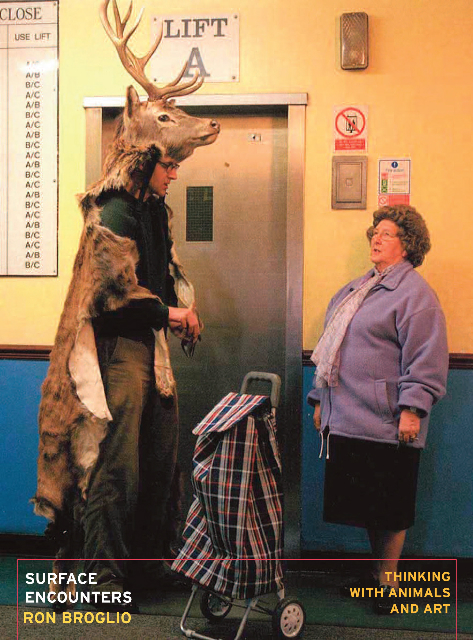
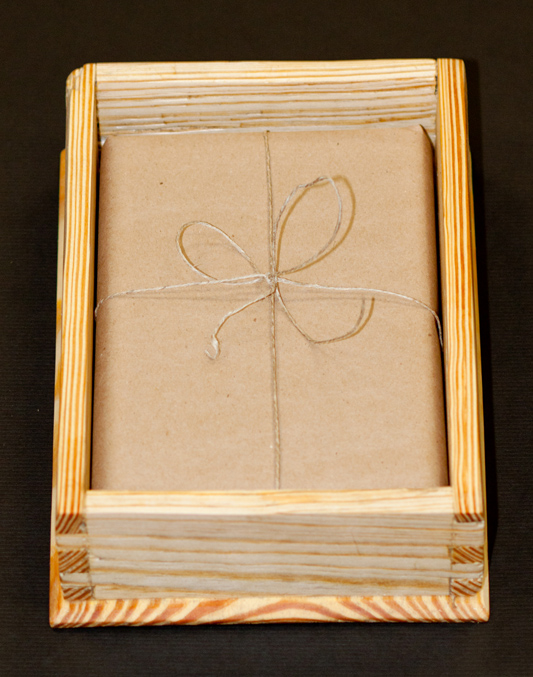 Santion's Gift
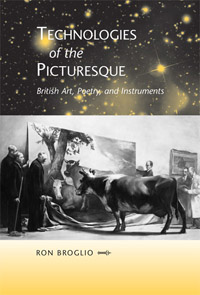 and Instruments
1760-1830. Part of Bucknell Studies in Eighteenth-Century Literature and Culture Series, Bucknell University Press, Spring 2008.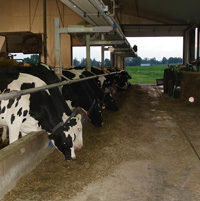
Exhibition December 11, 2009 - December 1, 2010 (with parts of project ongoing).
The conversations and exchanges of ideas by means of words, gestures,
and the manipulation of materials allow thought to be made palpably visible
and thus, captured on film. Viewers watch thinking and art evolve as
each group takes a work from initial concept to a final gallery show.
Baker describes the task as "trusting in the process of what was
being done, which of course involved botching a lot of stuff along the
way, and was itself the manner in which the work was emerging." Rather
than simply have artists discuss their finalized work, the film reveals
the fragility and adventure of art as it unfolds.