 |
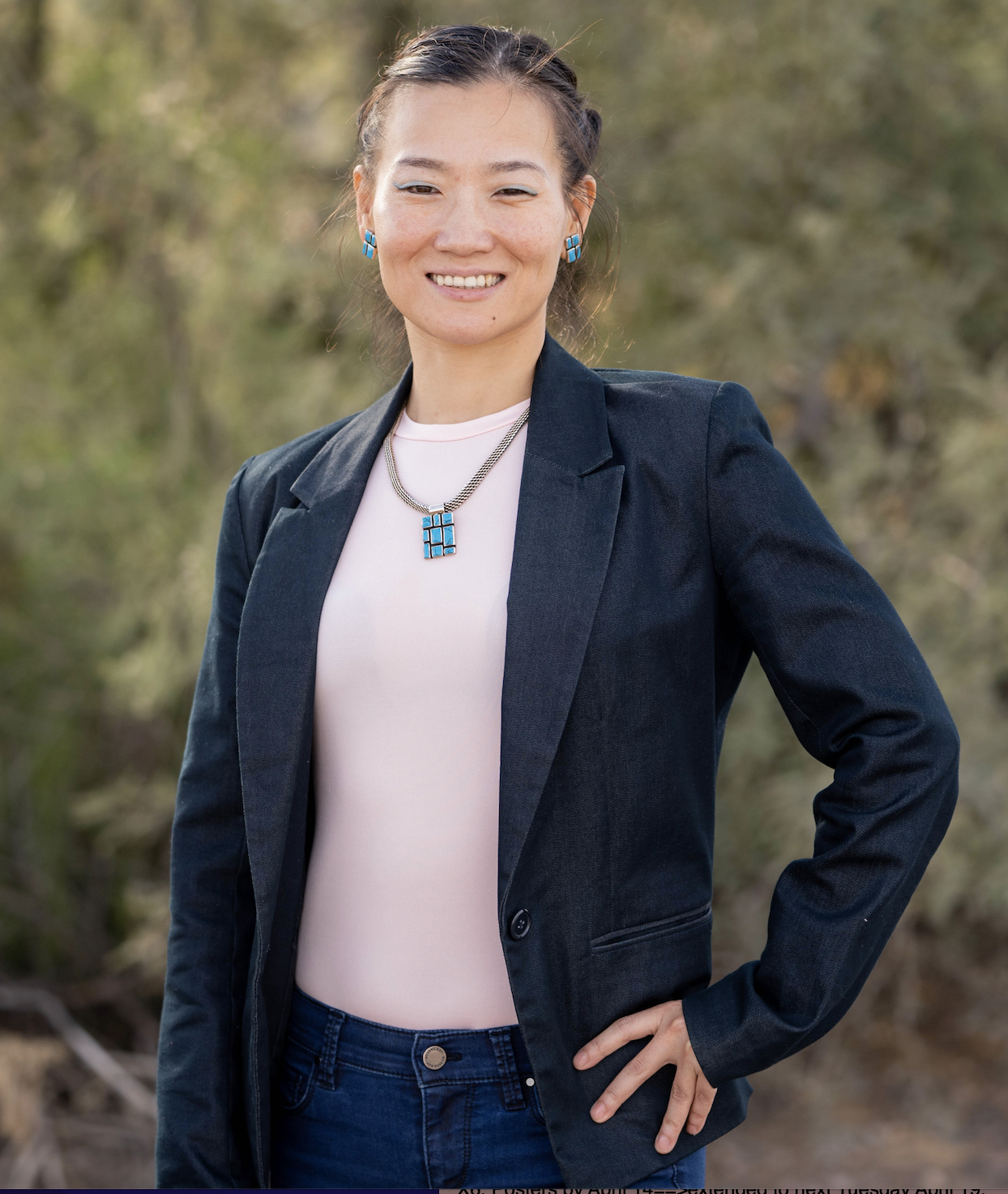
Dr. Yun Kang, Professor
Science and Mathematics Faculty
College of Integrative Sciences and Arts
7001 E. Williams Field Road,
Mesa, AZ 85212, USA
Office at Poly: Wanner Hall 301G
Phone number at Poly: 480-727-5004
Email: yun.kang@asu.edu
Area of Research: Dynamical system
theory and Mathematical biology
Curriculum Vitae
My greatest achievement in 2008,2013
Science and Mathematics Faculty
College of Integrative Sciences and Arts
7001 E. Williams Field Road,
Mesa, AZ 85212, USA
Office at Poly: Wanner Hall 301G
Phone number at Poly: 480-727-5004
Email: yun.kang@asu.edu
Area of Research: Dynamical system
theory and Mathematical biology
Curriculum Vitae
My greatest achievement in 2008,2013
Current Research Program in Our Team:
-
(1) Mathematical Modeling of Honeybee Populations in Heterogenous Environments:
Linking Disease, Parasite, Nutrition, and Behavior.
The honeybee, Apis mellifera, is not only crucial in maintaining biodiversity by pollinating 85% plant species but also is the most economically valuable pollinator of agricultural crops worldwide with value between $15 and $20 billion annually as commercial pollinators in the U.S. Unfortunately, the recent sharp declines in honeybee population have been considered a global crisis. The primary cause of colony losses is the parasitic Varroa mites (Varroa destructor Anderson and Trueman). The study to unfold the mystery of the dramatic decline in honeybee populations and for developing control strategies for Varroa that reduce colony losses presents both challenges and opportunities for research and education.
This collaborative research between Arizona State University and Carl Hayden Bee Research Center fosters a culture of theory-experiment collaboration with aims to develop realistic and mathematically tractable models that will be validated and parameterized via using field data. Our interdisciplinary collaboration will enable us to study the integrated effects of disease, parasitism, nutrition and behavior in changing environments and the effects on honeybee colony mortality across multiscale in time and space. Rigorous mathematics will be integrated with extensive field and lab data to investigate:
1. How parasite migration into colonies via foragers from other hives located at different landscape structures could affect the honeybee-parasite population dynamics with stage structures.
2. How the honeybee-parasite-virus interactions with the honeybee foraging behavior in seasonal environments cause colony losses.
3. How the crucial feedback mechanisms linking disease, parasitism, nutrient and honeybee foraging behavior might be responsible for the colony growth dynamics and survival in a dynamical environment with multilevel spatial components.
Nonlinear nonautonomous differential equations within metapopulation frameworks and individual based models will be used to model the honeybee population with spatial scales ranging from the individual, the colony, to the regional level and timescale spanning from seconds, days, to months.
This research project has been recommended for funding from NSF DMS 1716802. Our ecologist collaborator is Dr. Gloria DeGrandi-Hoffman
-
(2) Research Program on Complex Adaptive Systems of Social Insect Colonies.
This is partially supported by The James S. McDonnell Foundation 21st Century Science Initiative in
Studying Complex Systems Scholar Award.
Social insect colonies show a decentralized system of the division of labor and its related task allocation. Both are resulting from multi-level interactions among members of the colony and between the colony and the environment, as the size of colony increases. Social insect biologists face the challenge of integrating the individual and colony levels of organization. Mathematical models have begun to show how colony-level patterns of division of labor result from simple individual behavioral rules. However, these models do not integrate the different levels of interactions in a colony nor do they consider the influence of a dynamically changing environment. In addition they lack validation and parameterization through data. We are developing multi-scale ecological and evolutionary models to explore important and interconnected questions like: 1. How do task organization and work performance scale with colony size? 2. How does the scaling of work organization affect colony metabolism and growth? 3. How do social interaction network structure and the related information flow scale with colony size? 4. What are the emergent dynamics inherent in early social group formation? 5.How are social phenotypes shaped by the transition to cooperative associations? 6. How do costs and benefits of cooperation balance across colony founding and reproduction?
As part of this research program, we are collaborating with behavior and evolutionary biologist Dr. Fewell Jennifer to develop dynamical network models of divison of labor in social insects to investigate questions like (a). How the underlying topology of the interaction network of a colony evolves and adapts at different scales of the organization. (b). How to characterize the crucial feedback mechanisms linking both structure and dynamics of the division of labor in a dynamical environment. And (c). How the decentralized social insect system based on many independent and simple individual interactions leads to highly complex dynamics with great network properties such as scalability, robustness/ flexibility and simplicity. This research project has been supported by NSF DMS 1313312. Please check our website on the related modeling work of social insects Modeling Lab for Social Insects.
-
(3) The Impact of Positive Interactions, Disease and Dispersal on
Ecological Communities in Heterogeneous Environments: Both
positive and interspecific interactions have essential roles in
community structure and diversity. The combinations of positive
interactions and competition or predation can lead to
Allee/Allee-like effects that may generate a critical threshold
below which at least one species goes extinct. Allee effects are
believed to be strong regulators of coexistence, disease,
extinction, and invasion of alien species, which have been
detected in natural populations of a wide array of taxa. During
the past 3 years, I have been developing mathematical models and
the related dynamical system theory to study population dynamics
in the presence of Allee effects. In particular, I study
discrete-time models on the interactions of Allee effects and
interspecific interactions as well as continuous-time models on
the interplay among the Allee effects, disease and dispersal.
These preliminary studies result more than 11 publications (see our publication page for more detailed work. ). Some highlights of our work include
i) Allee effects may promote the coexistence of species in
both prey-predator and competition systems when species have
scramble competition; ii) Susceptible-Infective models with Allee
effects and disease-modified fitness have rich dynamics with
implications that the quantification of management or general
intervention measures cannot be measured exclusively by the
disease's basic reproduction number R0; iii) Allee/Allee-like
effects with dispersal may save species from extinction.
-
This study has provided a foundation to seek a framework that can
integrate community ecology (species interactions), population
dynamics (Allee/Allee-like effects), animal (including human) behavior (e.g., dispersal as
well as the theory of predations in different environments) and
epidemiology (disease) as a whole through strong understanding of
mathematical tools. My current work has focused on
eco-epidemiological models through collaboration with Professor Weiming Wang,
Professor Carlos Castillo-Chaves, and Ph.D students from
the Simon A. Levin Mathematical, Computational & Modeling Sciences Center at ASU.
Our long-term goal is to introduce a framework that incorporates the following features: (a)
disease-modified fitness; (b) positive interactions that can lead
to Allee/Allee-like effects; and (c) topological structures of
landscape involving a number of patches. My recent graduated Ph.D student
Sourav Kumar Sasmal (Indian Statistical Institute, Kolkata, India) worked on this project as part of
his dissertation.
-
(4) Global Dynamics of Discrete-time Biological Systems:
Coexistence of interacting species in nature is a central theme in
theoretical ecology. For deterministic models, the idea of
permanent coexistence, which guarantees convergence to an interior
attractor from any strictly positive initial conditions, is
regarded as a strong form of coexistence. Permanence, however, has
not been widely used in discrete-time ecological models due to its
complicated boundary attractors (e.g., the standard quadratic
map). To ameliorate this problem, we apply the relative
nonlinearity concept to give an easy-to-check criterion to
imply permanence for general multiple-species-interacting discrete
time population models. The work on classical
two-species-interacting discrete time population models has been
done with Peter
Chesson in Theoretical Population Biology (2010). Recently,
I have extended this work to a general two-species-interacting
discrete time population models that is published in Discrete and
Continuous Dynamical Systems-B (2013). Now we are working on
general n-species models.
-
The traditional concept of permanence, which would fail due to
exceptional behavior on sets of measure zero is unlikely to be
broadly useful, because the noise in nature implies that the
system would not stay in such sets. For this reason, I have
developed a new concept of coexistence, relative permanence. This
new concept is a generalization of permanence that excludes sets
of measure zero. By proving the traditional permanence theory in a
proper new space and deriving key properties of critical curves of
non-invertible maps, we can expect to identify the conditions
under which discrete-time two species population dynamics are
relatively permanent. I have shown the concept of relative
permanence through a simple discrete competition model in two
publications: one is in the Journal of Difference Equations &
Applications (2012) and the second one with Hal Smith is in the
Journal of Biological Dynamics (2012).
-
(5) Mathematical modeling on mutualistic symbiosis: Mutualistic
symbiosis is a type of mutualism in which individuals interact
physically, or even live within the body of the other mutualist.
Frequently, the relationship is essential for the survival of at
least one member. In general, there are two types of mutualistic
symbiosis: facultative and obligate mutualisms. Facultative
mutualisms are not essential for the survival of either species.
Individuals of each species engage in mutualism when the other
species is present. Obligate mutualisms are esstential for the
survivial of one or both species.
- Obligate Mutualisim: Leaf-cutting ants cannot eat leaves.
Instead, they carry the cut pieces back to the nest and use it
as compost to cultivate the fungus. The fungus cannot survive
outside the nest or reproduce without the ants help. Here is an
article that may give you a general view of the interaction
between leave cutter ants and its fungus-ants.
According to data, the division of labor is a very important
factor that determines whether the cololy can survive at its
early stage (one of the supporting evidences is the
poster by Leah Drake, Rebecca Clark and Jennifer Fewell).
We have developed a mathematical model to study the interaction
between leaves cutter ants and fungus growth during early colony
expansion, which is able to address the functional/numerical
responses between ants and fungus, and the importance of the
labor division at the early stage of colony expansion. This is
an ongoing collaboration with Fewell
Jennifer and her former Ph.D student Clark
Rebecca . See our publication on this topic in 2011.
- Facultative Mutualisim: Mycorrhizal fungi form symbiotic
associations with roots of plants that benefit plants primarily
by improving uptake of soil nutrients and increasing stress
tolerance. Most plants are colonized by one functional type of
mycorrhizal fungi, but some plants such as the important
riparian tree Populus fremontii (cottonwood) are colonized by 3
different functional fungal groups; ectomycorrhizal (EM),
arbuscular mycorrhizal (AM) and dark septate endophyte fungi
(DSE) each contributing different benefits. Shifts in
colonization patterns are known to occur and various factors
such as life stage and environmental variables. Our current
ongoing project (with Jean Stutz) is to develop a mathematical
model to examine these fungal colonization patterns over time in
heterogenous enviornment.