|
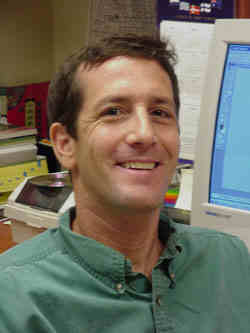
Dr. Michael Kuby, Professor Arizona State University |
Office Location: Coor
Building 5568 Email: mikekuby AT asu.edu ·
Tues. 2:00-3:30 pm ·
Fri. 11:00am-noon |
|
Research Interests
My research
focuses on transportation, energy, and the environment, with a specialization
in optimization models. I create new kinds of optimization models to help
decision-makers solve transport, energy, and environmental problems sustainably
and efficiently. See my Curriculum
Vita for details.
My recent
focus is on optimal location of alternative-fuel stations. Lack of refueling
infrastructure is the biggest barrier to our transition to alternative fuels
(the “chicken-and-egg problem), and so it is crucial that the initial networks
of stations be sited where they will enable the greatest number of people to
adopt the new technologies and refuel conveniently. My approach to this
problem, known as the Flow Refueling Location Model (FRLM), is based on flow-intercepting
models and the idea that early stations be located “on the way” to where people
are already going rather than near their homes. This research direction has grown
to include:
o heuristic algorithms for solving the model (with
Seow Lim of Salt River Project)
o new MIP formulations for solving the model (with
Ismail Capar of Texas A&M)
o driver deviations off their shortest routes (with
Jong-Geun Kim of Seoul National University)
o capacitated stations (with Chris Upchurch)
o home recharging (with Ismail Capar)
o stations for LNG trucking across European Union
member states (with Jong-Geun Kim and Ismail Capar)
o optimal AFV routing (working online prototype) with limited
driving range for H2 and CNG (with Ismail Capar (Texas A&M), Ozgur Araz (U
Minnesota) and Michael Palmer)
o survey research on drivers of CNG and gasoline vehicles
in Los Angeles on their refueling station choices (NSF project with Scott Kelley, ASU)
Most of my other
research has integrated technology choice with location decisions and network
design because of interdependencies among these decisions. Examples of such
interdependencies from my research are that new technologies:
o require new network infrastructure (e.g., carbon
capture and storage (CCS) pipeline networks, with Richard Middleton of Los
Alamos National Labs)
o might be able to pay for themselves with transport
cost savings (e.g., coal washing)
o might engender a shift from a centralized to a
distributed location pattern (e.g., solar photolytic waste detoxification)
o involve tradeoffs among multiple objectives such as
cost, risk, pollution, population coverage, equity, or habitat restoration
(e.g., dam removal)
In addition
to optimization models, I also apply statistical methods to energy and transport
topics such as how land use and weather affect light rail ridership, as well as
topics on air transport, transit-oriented development, scale-free networks, and
energy in China.
Classes
Grades and other class materials for my
current courses can be accessed via the My.ASU system. Here are the syllabi for the courses I
have taught recently.
o
GCU 102 Introduction to
Human Geography - online (usually every semester)
o
GCU 432 Geography
of China (Spring 2014, 2013, 2012, 2011)
o
GCU 442/542 Geographical
Analysis of Transportation (Fall 2014, 2013, 2012, 2010)
o
GCU 495 Quantitative
Methods in Geography (Fall 2007)
o
GCU 496 Geographic Research Methods for
Undergraduates (Spring 1999)
o
GCU 585 Advanced
Research Methods (Spring 2006)
o
GCU 591 Optimal
Facility Location Models (Fall 2007)
o
PUP 591 Transportation
Certificate Pro-Seminar (Fall 2011)
o
PUP 593 Transportation Capstone
Director of ASU Graduate Interdisciplinary Certificate
in Transportation Systems
This is a 5-course interdisciplinary
certificate program for degree and non-degree grad students from across ASU and
from the public and private sectors. I have been Director of the program since Spring 2011.
Some
Current and Past Research and Service
o
National
Climate Assessment - one of several Lead Authors of the Transportation
Chapter (2014). The NCA is a report by the US Global Change Research Program on
the likely impacts of, and adaptations to, climate change
o
Bicycle
Network Connectivity Study for Salt River Project Service Area (with Aaron
Golub, Shawn Monk, Matthew Messina of SGSUP and Mick Dalrymple and Andy Stein
of Walton Sustainability
Solutions Initiative). Funded by SRP
and analyzed using ViaCity software.
o
NSF Grant on “Spatial Refueling
Patterns of Drivers of Alternative Fuel and Conventional Vehicles” (with
Scott Kelley). Links to papers, presentations, and available data.
o
Background Report on
Transportation for April 2009 Town Hall (co-edited with Aaron Golub, see
Ch. 1-Intro, Ch. 2-Gas Prices, and Ch. 16-Alternative Fuels)
o
Background Report on Transportation for April 2015 Town Hall (in
progress)
o
Carbon
Capture and Storage Pipeline Network Optimization (with Richard Middleton
and others at Los Alamos National Labs and Jeff Bielicki of U. of Minnesota)
o
Energize
Phoenix (with ASU Global Institute of Sustainability, City of Phoenix, and
Arizona Public Service)
o
Energy Systems Optimization Research (various
projects)
o
Waste Systems Optimization Research (various
projects)
o
Light Rail Study and GIS Buffering (with
Tony Barranda, Chris Upchurch, and Michael Zoldak). Code for buffering available on this
link
o
Human
Geography in Action (6th edition interactive textbook with CD, written with
John Harner and Patricia Gober)
o
Arizona’s 20-20 Challenge (hiking
website for AZ's 20 highest peaks and 20 deepest canyons, with Libby Wentz and
Brandon Vogt)
o
Florida
Hydrogen Initiative Final Report (Funded by US Dept
of Energy, this project analyzed optimal refueling station location strategies
in Orlando and across Florida, and explored the feasibility of a hydrogen
rental car business based at the Orlando International Airport. With Lee Lines
of Rollins College and Ron Schultz and Zhixiao Xie of
Florida Atlantic University).
o
China Railway Investment Study (with
the World Bank)
1994 Franz
Edelman Award (Finalist/Honorable Mention) from the Institute for Operations
Research and Management Science (INFORMS) (with the World Bank and
Chinese State Planning Commission)
o
I use XPRESS
math programming software and am a member of their Academic Partnership
Program.
o
I am involved with several scholarly journals:
o
Location Area Editor of Networks and Spatial
Economics
o
Editorial board of Journal of
Transport Geography
o
Editorial board of International Regional Science Review
Former Undergraduate and Graduate Advisees
o
Lawrence Joseph (PhD 2013) is Research Manager for West Marine (a boating retail chain),
Watsonville, CA
o
Michael Palmer (MA 2013) works at Progressive Insurance, and did the
programming on www.afvrouting.com
o
Jong-Geun Kim (PhD 2010) is a post-doc at Seoul National University.
o
Jason Kelley (M.A. 2008) is a Lecturer in Planning at ASU.
o
Alice Chen (M.A. 2007) works at the Maricopa Association of Governments in
the Transportation Program.
o Seow Lim (PhD 2007) works at Salt River Project.
o Tyler Roberts (M.A. 2006) is a PhD student in
Geography at University of Colorado.
o
Kedi Wang
(M.A. 2005) is a certified public accountant in China.
o
Sean Tierney (M.A. 2004),
is adjunct faculty at University of Denver. Winner, 2005 TGSG
Student Paper Award (M.A.)
o
Curt Sommer (M.A. 2000) is a renewable energy
consultant and head of Green Energy
Solutions in Portland, Oregon.
o
Gayle Wilkinson (M.A. 1997) Winner, 1998 Transportation
Geography Specialty Group Student Paper Award (M.A.).
o
Max Wyman (PhD 1994), winner of 2005 ASU Young Alumni Achievement
Award.
o
Paul Sweum (B.A. 1992), owner of Top Hat Word and Index,
who blogged
about his undergraduate experience with me at ASU.
o
Robert Gray (M.A. 1990) works at the Arizona
Corporation Commission in the Utilities Division.
Extracurricular Stuff
ASU Ultimate Frisbee Clubs (I'm the faculty advisor of the Men’s team, and ASU also has a Women’s club.
o
Valley of the Sun (VOTS) Ultimate Club.
o
Gamma Theta Upsilon (GTU)
Geography Club and Honor Society (I’m faculty advisor). We also have a facebook page.
o
Back in 9th grade I invented a strategy board game called Traverse, first
produced in 1985 and now licensed to Educational Insights.
o
My brother Adam Kuby is
an artist specializing in public and environmental art in Portland, Oregon, and
recently developed the Portland
Acupuncture Project, and is the main artist on the City of Phoenix’s Tres Rios project.
(Last revised September 2014)